
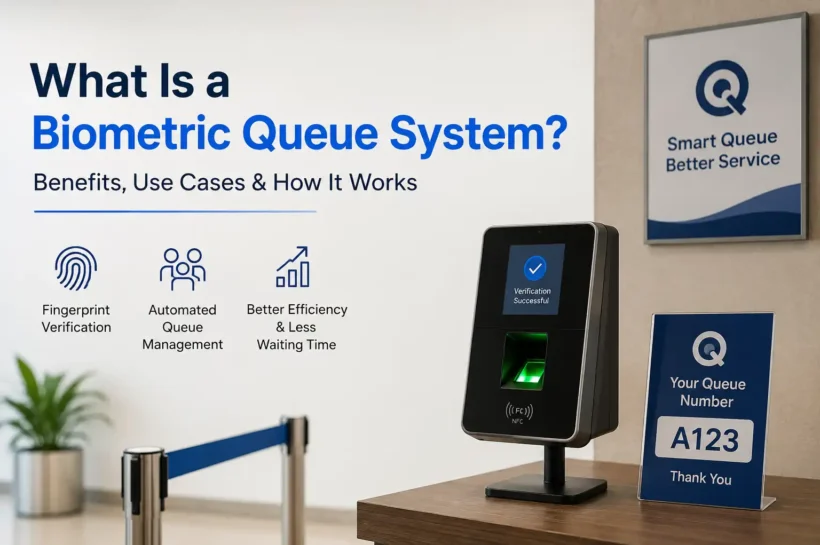

What Is a Biometric Queue System? Benefits, Use Cases & How It Works
Walk into a busy hospital, bank, or government office, and the experience is painfully familiar.
Long lines. Manual registrations. Repeated identity checks and frustrated customers.
Now imagine this instead:
You walk in. A camera recognizes you instantly. Your details are already in the system. You’re assigned a queue without touching a screen or filling a form. No waiting confusion. No repetition. No friction.
That’s not a futuristic concept. That’s what a biometric queue system delivers today.
And for businesses, this shift is bigger than speed; it’s about transforming how customer journeys begin.
What Is a Biometric Queue System?
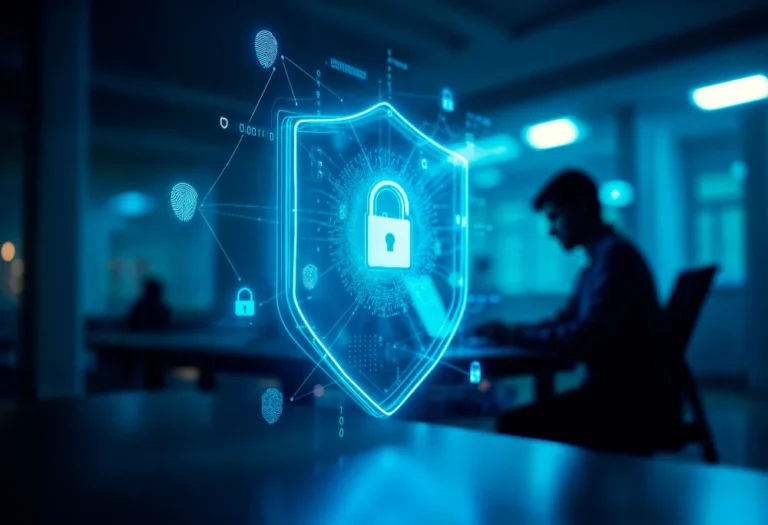
Biometric queuing systems use unique biological identifiers (like facial recognition, fingerprints, or the iris scan) in a technologically advanced, real-time manner to identify, register, and manage customers.
But here’s the real shift:
This isn’t just about managing queues. It’s about turning queues into identity-driven experiences.
Instead of:
– Tokens
– Manual forms
– Repeated verification
You get:
– Instant recognition
– Personalized service routing
– Seamless, touchless check-ins
At its core, a biometric queue system combines:
– Biometric capture technology (camera or scanner)
– Identity matching engine
– Queue orchestration platform
– Customer data integration
How a Biometric Queue System Works
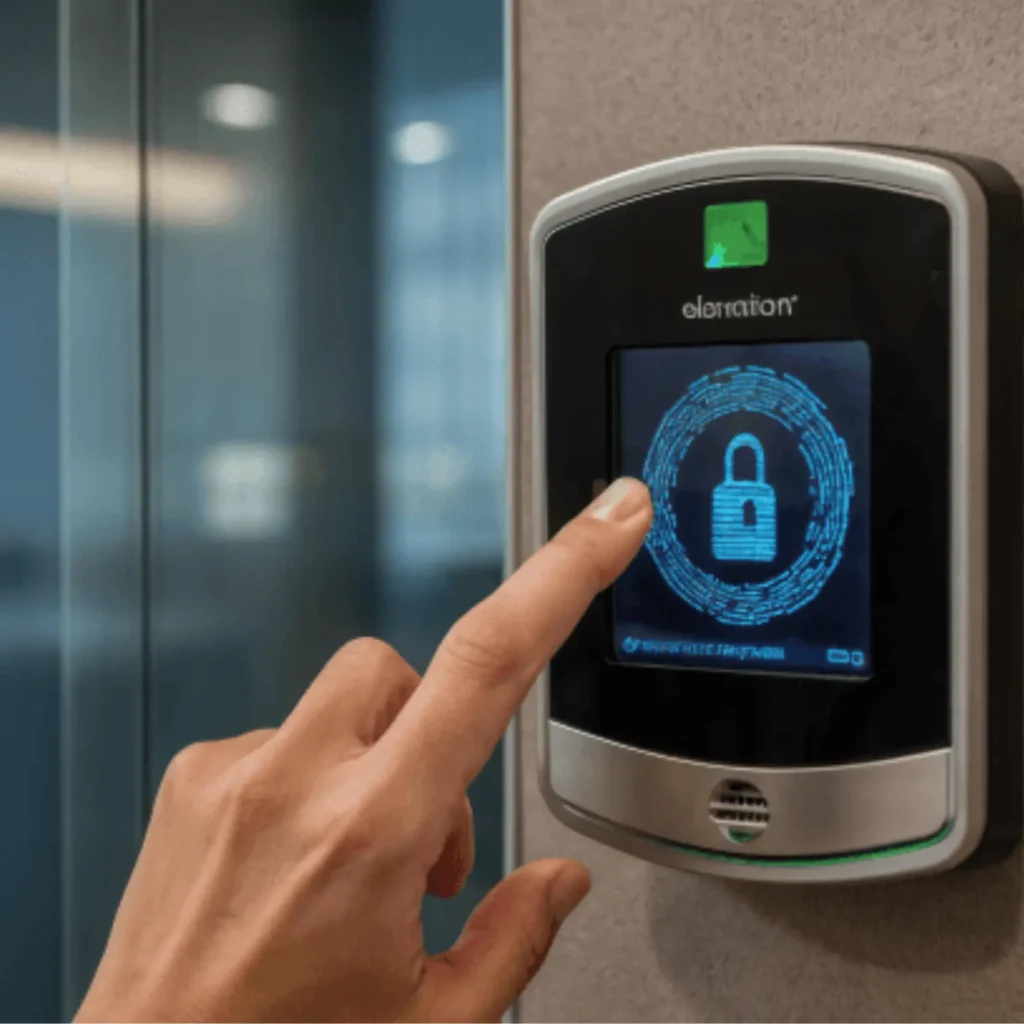
Let’s break it down into a real-world flow:
1. Customer Arrival
A customer walks into your location: no app, no paperwork required.
2. Biometric Identification
A camera or scanner captures facial or fingerprint data.
3. Instant Recognition
The system matches the data with stored profiles in seconds.
4. Smart Queue Assignment
Based on:
– Appointment
– Priority level
– Service type
The system automatically assigns the customer to the right queue.
5. Real-Time Notifications
Customers receive updates via SMS, WhatsApp, or display screens.
6. Service Delivery
Staff already know who the customer is before the interaction even begins.
The result?
Zero duplication. Zero confusion. Zero wasted time.
💚 You might also like: Best Email Management Tools for 2026 – Detailed Guide
Why Traditional Queue Systems Fall Short
The majority of businesses continue to use systems that are outdated and were not developed to meet current customer demands.
Here’s where they fail:
– Manual check-ins slow everything down
– Duplication or identity theft is not detected.
– Inadequacy of personalization: one size fits all.
– Heavy dependency on staff
– No or little insights
In large-scale settings, these problems scale quickly.
Biometric security solutions don’t just improve this; they eliminate it.
Key Benefits of a Biometric Queue System
1. Frictionless Customer Experience
No forms. No tokens. No confusion.
Customers move from entry to service effortlessly.
2. Faster Identity Verification
Whereas once it took minutes, now it takes only seconds.
This affects both efficiency and customer satisfaction.
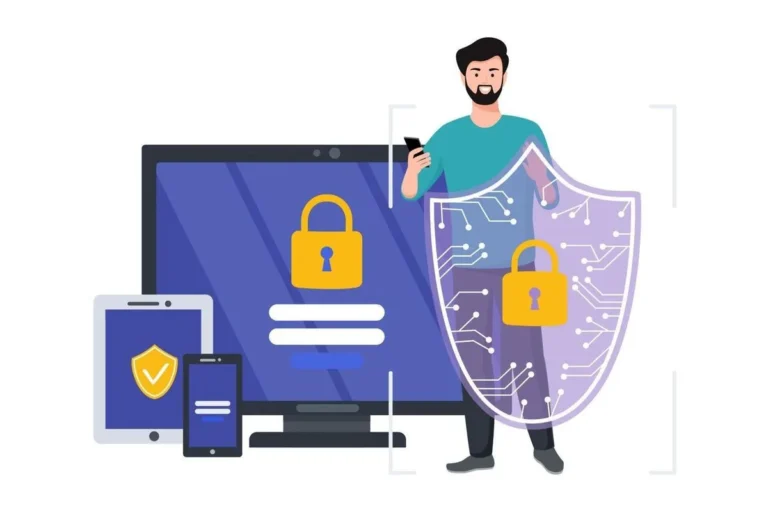
3. Increased Security and Fraud Protection
Each individual is uniquely identifiable.
Double bookings and impersonation are next to impossible.
4. Hyper-Personalization
Returning customers are instantly recognized.
Their preferences, history, and needs are already known.
5. Contactless & Hygienic Operations
No physical interaction required, ideal for healthcare and high-traffic environments.
6. Operational Efficiency at Scale
Less manual work. Fewer errors. Lower staffing pressure.
Your team focuses on service, not administration.
7. Real-Time Data & Analytics
Track:
– Customer flow
– Peak hours
– Repeat visits
– Service efficiency
This isn’t just data, it’s decision-making power.
Top Use Cases Across Industries
Healthcare
– Instant patient identification
– Faster check-ins
– Reduced administrative load
Impact: Shorter wait times, better patient experience.
Banking & Financial Institutions
– Secure identity verification
– Priority routing for premium customers
Impact: Faster service + stronger trust.
Government & Public Services
– Verified citizen services
– Prevention of multiple registrations
Impact: Transparency, efficiency, and reduced fraud.
Airports & Transportation
– Passenger identity verification
– Quick boarding and check-in
Impact: Efficient processing, fewer crowds.
Retail & Shopping Malls
– VIP recognition
– Loyalty-based prioritization
Impact: Personalized shopping experiences that increase retention.
Corporate Offices
– Employee + visitor management integration
Impact: Secure, streamlined workplace operations.
Biometric vs Traditional Queue Systems
| Factor | Traditional Queue System | Biometric Queue System |
| Check-in | Manual / Token-based | Automatic & identity-based |
| Speed | Slow | Instant |
| Security | Low | High |
| Personalization | None | Advanced |
| Data Insights | Limited | Deep, real-time |
| Experience | Fragmented | Seamless |
Is Biometric Queue Management Safe?
This is the question every decision-maker asks, and rightly so.
The answer depends on how the system is built.
Modern biometric systems are designed with:
– End-to-end encryption
– Secure data storage protocols
– User consent frameworks
– Compliance with global regulations (like GDPR)
The myth: “Biometrics are risky.”
The reality: Properly implemented systems are often more secure than traditional methods.
When Should You Consider a Biometric Queue System?
You don’t need biometrics everywhere, but in the right environment, it’s a game-changer.
Consider it if you have:
– High daily footfall
– Identity-sensitive operations
– Frequent repeat customers
– Security concerns
– A need for personalized service at scale
If your current system slows people down or treats everyone the same, you’re leaving value on the table.
The Future of Queue Management Is Identity-Driven
Queues are no longer just operational challenges.
They are customer journey entry points.
And the future belongs to businesses that can:
– Recognize customers instantly
– Predict their needs
– Route them intelligently
– Serve them personally
Biometrics, AI, and real-time analytics are converging to make that possible.
From Waiting Lines to Intelligent Experiences
A biometric queue system doesn’t just reduce wait times.
It transforms how your business interacts with every single customer.
From: Managing crowds
To: Orchestrating experiences
From: Anonymous visitors
To: Recognized individuals
Ready to Rethink How Your Queues Work?
If you have a business still using manual check-in and fixed queues, you’re not only stalling your business, you’re stalling the customer experience.
The question is:
How much longer can you afford to be “hidden” from your customers?
It might be time to move beyond queues and start building intelligent, identity-driven journeys.
✨ Don’t stop here, follow Tech Statar for daily upgrades.

























One thought on “What Is a Biometric Queue System? Benefits, Use Cases & How It Works”