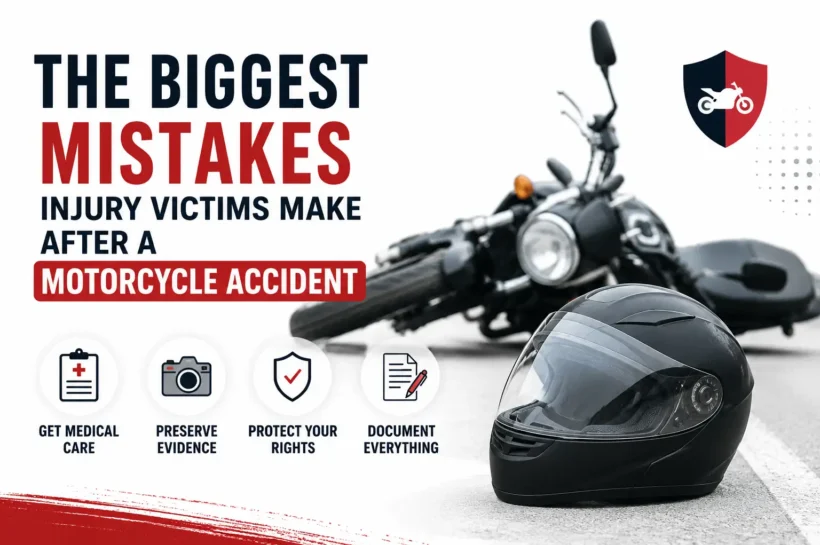

The Biggest Mistakes Injury Victims Make After A Motorcycle Accident
Motorcycle accident claims go bad faster than many riders expect. The injuries are often more severe, the scene evidence can disappear quickly, and insurance companies frequently approach the case with built-in assumptions about rider behavior. In Colorado, motorcycle risk is not theoretical: the state recorded 165 motorcycle fatalities in 2024, the highest annual total on record, and motorcycles accounted for about 24 percent of traffic deaths despite representing a small share of registered vehicles (Anderson Hemmat; Boesen Law). Advocates motorcycle accident lawyer guidance can help injury victims avoid common mistakes after a crash, including delays, poor evidence handling, and communication choices that allow the insurer to shape the rider’s story before all the facts are established.
Mistake 1: Treating the crash like a normal fender bender
One of the biggest errors riders make is assuming the claim will develop like an ordinary car crash. Motorcycle collisions tend to produce different injury patterns, different scene evidence, and different bias. The physical vulnerability of the rider means even a moderate impact can create fractures, head injury, soft-tissue damage, or longer recovery problems that are not obvious in the first few hours.
A motorcycle claim also faces immediate stereotype pressure. People may assume the rider was speeding, weaving, or taking unusual risk even when the other driver caused the crash. That makes disciplined evidence work more important from the very beginning.
Mistake 2: Delaying medical care because adrenaline masks symptoms
Riders often focus first on the bike, the road rash they can see, or the fact that they managed to stand up after the crash. That can create a false sense that the worst is over. In reality, adrenaline frequently masks pain, and symptoms involving the neck, back, shoulder, head, or lower extremities may get sharper over the next several days.
Delayed medical care hurts in two ways. It can worsen recovery, and it gives the insurer an opening to argue that the injury was minor or came from something else. The medical record is not just treatment history. It becomes the timeline tying the crash to the symptoms. When treatment starts late, the case becomes harder to defend.
Mistake 3: Failing to preserve the bike, helmet, and riding gear
In motorcycle cases, the damaged equipment can become part of the proof. Helmet damage, abrasion patterns, torn riding gear, bent components, lighting damage, and final bike condition may all help explain speed, angle of impact, rider position, and the severity of the event. If the bike is repaired too quickly or the gear is discarded, useful evidence may be lost for good.
The same goes for scene proof. Photos of the motorcycle, the other vehicle, skid marks, debris, lane position, road surface, signage, and sight lines can become crucial when the defense later argues that the rider was hard to see or primarily at fault. Good riders do not always get fair treatment from memory alone; they usually need physical proof.
💚 You Might Also Like: The Role of Electronic Logging Devices in Commercial Truck Accident Cases
Mistake 4: Speaking too freely before the injury and fault picture is clear
Motorcycle victims are especially vulnerable to damaging early statements because bias about riders already exists. An apology, a guess about speed, or a casual comment about “probably being fine” can get reused later in ways the rider did not intend. A recorded statement taken before symptoms mature or before the police report is reviewed may freeze the case around incomplete information.
That does not mean victims should refuse basic cooperation. It means they should be careful. The issue is timing. The insurer benefits when the rider speaks before understanding the injury path, the likely comparative-fault themes, and the evidence that still needs to be preserved.
Mistake 5: Underestimating how much comparative negligence matters
Colorado’s modified comparative negligence rule makes fault allocation decisive. If the insurer can assign enough blame to the rider, the recovery shrinks with every percentage point and can disappear entirely once the rider reaches the bar. In motorcycle claims, carriers often push on lane position, speed, visibility, helmet use, and rider judgment to build that argument.
That is why motorcycle cases need better proof, not just louder arguments. If a left-turn driver failed to yield, if a car changed lanes into the rider, or if visibility was poor for reasons unrelated to rider conduct, that has to be shown with facts. Letting the carrier rely on stereotype is one of the costliest mistakes a rider can make.
Mistake 6: Accepting a quick settlement before the real damage is known
Early settlement pressure is dangerous in any injury case, but especially in motorcycle crashes because the financial and physical fallout often expands over time. Follow-up imaging, orthopedic care, rehabilitation, missed work, lingering pain, and reduced mobility may not be clear when the first offer appears. Once a release is signed, those categories usually stop mattering.
This is a big reason motorcycle accident victims settle too cheaply. They evaluate the case around the first treatment bill instead of the full recovery path. The insurer benefits from that short view. The rider usually does not.
Mistake 7: Failing to document wage loss and daily disruption
A motorcycle crash can change more than the rider’s immediate medical situation. Time off work, reduced hours, missed contracts, transportation problems, household limitations, and ordinary mobility problems can all become meaningful parts of the claim. Those losses are strongest when they are tracked carefully rather than reconstructed from memory later.
Employer notes, pay records, receipts, appointment logs, mileage, and written descriptions of daily limitations give structure to the damages case. Without that structure, the insurer gets more room to pretend the disruption was minor.
💚 You Might Also Like: Are Drivers Always at Fault in Pedestrian Accidents?
Why motorcycle cases need faster and more focused claim protection
Motorcycle claims are not just car claims with different vehicles. They carry higher injury risk, stronger comparative-fault pressure, and more opportunity for the carrier to exploit incomplete proof. Colorado sources cited in recent research also point repeatedly to impairment, speed, and helmet nonuse in fatality discussions, which means insurers already know what themes they want to emphasize (Anderson Hemmat; Bell Pollock; Metier Law).
That is why riders benefit from focused early claim protection. The goal is not drama. The goal is control. Get evaluated promptly, preserve the bike and gear, document the scene, track the losses, and avoid locking the claim into a premature story.
The strongest riders’ claims are built before the insurer frames them
The biggest mistakes injury victims make after a motorcycle accident are usually avoidable. They happen when a rider waits too long, assumes the insurer will evaluate things fairly, or treats the crash like a routine dispute instead of a high-risk injury claim. Those assumptions cost money because they cost proof.
The stronger path is disciplined from the start. Preserve evidence. Stay consistent with treatment. Keep records. Be careful with statements. Build the case around what can be shown, not what you hope the adjuster will understand. In a Colorado motorcycle claim, that discipline often matters almost as much as the collision itself.
✨ If you love progress, you’ll love Tech Statar. Hit follow.