
The Role of Electronic Logging Devices in Commercial Truck Accident Cases
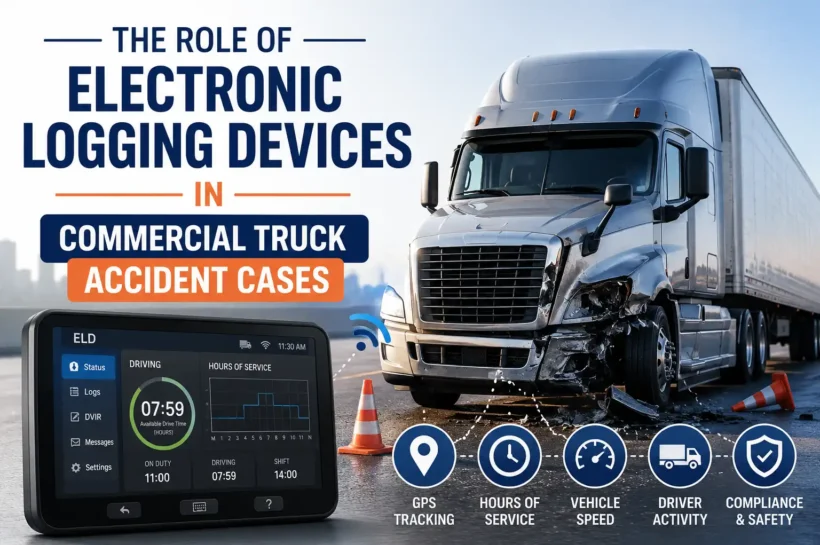
Electronic Logging Devices (ELDs) are no longer just compliance tools. They have become one of the most important sources of digital evidence in commercial truck accident investigations. Originally introduced to improve Hours of Service (HOS) compliance and reduce driver fatigue, today’s ELD platforms generate a continuous stream of operational data that trucking companies use to manage fleets, monitor productivity, and improve safety.
The same information that helps a fleet manager optimize operations can become critical evidence after a serious crash.
For technology companies, ELDs represent an enterprise software success story that combines telematics, cloud computing, GPS tracking, and regulatory compliance. For investigators, insurers, and attorneys, they provide an objective timeline that can confirm or contradict what happened before a collision.
As commercial trucking becomes more data-driven, Electronic Logging Devices now sit at the center of an ecosystem that includes telematics, AI-powered fleet analytics, GPS tracking, and predictive maintenance systems. Their role extends well beyond compliance into risk management, operational efficiency, and crash investigations.
Electronic Logging Devices Are More Than Digital Logbooks
When the Federal Motor Carrier Safety Administration (FMCSA) implemented the Electronic Logging Device Mandate in 2017, many viewed it as a replacement for paper logbooks.
Today’s systems do much more.
Modern ELD platforms integrate with fleet management software, GPS systems, engine control modules (ECMs), dispatch platforms, and maintenance programs. Instead of recording only driving hours, they create a digital operating history of both the vehicle and the driver.
An ELD continuously communicates with the truck’s engine and records operational events automatically.
| Information Recorded | Why It Matters |
| Driving hours | Identifies compliance with Hours of Service regulations |
| Engine status | Confirms when the vehicle was operating |
| GPS location | Tracks vehicle movement before and after a crash |
| Vehicle speed | Assists crash reconstruction |
| Duty status | Distinguishes driving, rest, and off-duty periods |
| Engine mileage | Verifies route and trip history |
| Diagnostic events | May reveal mechanical issues or malfunctions |
Unlike handwritten logbooks, much of this information is generated automatically, reducing opportunities for manual alterations while creating a detailed digital timeline.
Why ELD Data Has Become Critical Evidence
Every truck accident investigation begins with one question:
What happened before the collision?
ELD records help answer that question.
Rather than relying only on witness testimony or the driver’s recollection, investigators compare electronic records against the physical evidence collected at the scene.
An ELD may confirm:
- When the truck began its trip.
- How long the driver had been operating.
- Where the vehicle traveled.
- Whether unexpected stops occurred.
- Whether driving continued beyond scheduled duty periods.
- Whether the vehicle’s timeline matches dispatch records.
Because the information is generated automatically, it often provides a more objective timeline than witness statements alone.
In serious collisions, investigators rarely examine ELD records in isolation. Instead, they compare them with other forms of electronic and physical evidence to reconstruct the sequence of events.
📌 Don’t Miss These Articles: Are Drivers Always at Fault in Pedestrian Accidents?
ELD Data Alone Does Not Determine Liability
One common misconception is that ELD records automatically prove fault.
They do not.
An Electronic Logging Device answers questions about vehicle operation, but it cannot determine legal responsibility.
For example, an ELD may show that a truck was traveling at 62 miles per hour before impact.
It cannot determine:
- whether another driver changed lanes unexpectedly,
- whether the weather contributed to the collision,
- whether defective brakes prevented stopping,
- whether distracted driving occurred,
- or whether another party violated traffic laws first.
This distinction is important because truck accident litigation relies on multiple sources of evidence working together rather than one technology producing a definitive answer.
| ELD Can Help Show | ELD Cannot Prove |
| Driving timeline | Driver negligence by itself |
| Vehicle speed | Cause of the collision |
| Route history | Legal liability |
| Hours of operation | Driver distraction |
| Vehicle movement | Comparative fault |
For that reason, ELD data is typically combined with accident reconstruction, witness interviews, surveillance footage, and vehicle inspections.
Enterprise Fleet Technology Extends Beyond the ELD
Modern commercial fleets rely on an entire ecosystem of connected technologies.
Many enterprise fleet management systems integrate:
- GPS telematics
- Electronic Logging Devices
- AI-assisted route optimization
- Predictive maintenance software
- Driver safety monitoring
- Fuel management platforms
- Onboard camera systems
Together, these technologies create a continuous operational record that benefits both business operations and post-crash investigations.
Fleet operators use this information to reduce fuel consumption, improve driver productivity, schedule maintenance, and monitor regulatory compliance.
Following a collision, investigators may use the same datasets to understand how the vehicle was operating before impact.
This overlap between enterprise technology and litigation has transformed truck accident investigations into data-driven analyses rather than purely witness-based events.
📌 Don’t Miss These Articles: Could a Hidden Spring Mechanism Prevent Millions in Freight Damage?
How Multiple Digital Systems Work Together
ELD records represent only one component of the available digital evidence.
Investigators often compare them with several additional records.
| Evidence Source | Investigation Purpose |
| Dashcam footage | Reviews driver behavior and road conditions |
| Engine Control Module (ECM) | Confirms throttle, braking, and engine performance |
| GPS tracking | Verifies travel routes and locations |
| Dispatch communications | Reviews delivery schedules and instructions |
| Maintenance records | Identifies unresolved mechanical issues |
| Driver qualification files | Reviews training and compliance history |
| Cell phone records | Investigates possible distraction |
| Surveillance video | Confirms external vehicle movements |
Comparing multiple datasets allows investigators to validate the timeline rather than relying on a single source.
If one record conflicts with another, additional investigation may be necessary before conclusions can be reached.
How Trucking Companies Use ELD Data
Most discussions about ELD technology focus on enforcement.
Commercial carriers often view the systems differently.
Fleet managers use ELD platforms to:
Monitor driver utilization,
Improve dispatch efficiency,
Reduce idle time,
Manage fuel costs,
Identify unsafe driving behavior,
Support maintenance scheduling,
Prepare for compliance audits.
Many systems generate automated alerts when drivers approach Hours of Service limits or exhibit behaviors such as hard braking, rapid acceleration, or excessive speeding.
This information helps companies reduce operational risk while improving fleet performance.
However, the same operational records may later become relevant during litigation if questions arise regarding driver fatigue, company supervision, or regulatory compliance.
Preserving Electronic Evidence After a Crash
Electronic records do not remain available indefinitely.
Many commercial carriers follow retention schedules for operational data, while different federal regulations establish minimum retention requirements for specific records.
Because various electronic records may eventually be overwritten, preserving relevant evidence early often becomes an important part of a truck accident investigation.
This process may include requests to preserve:
Electronic Logging Device records,
Onboard camera footage,
GPS history,
Dispatch communications,
Maintenance records,
Inspection reports,
Driver qualification files,
Electronic engine data.
Attorneys handling commercial vehicle litigation frequently send preservation or spoliation notices shortly after a serious crash to request that potentially relevant electronic records be maintained while the investigation proceeds.
As a Commercial truck accident lawyer Houston, Sutliff & Stout handles commercial vehicle cases involving complex electronic evidence. The firm’s investigations often include reviewing ELD records alongside telematics data, maintenance histories, dispatch communications, and other digital records to evaluate how technology, regulatory compliance, and driver conduct may have contributed to the collision.
The Future of Connected Truck Technology
Electronic Logging Devices represent only one part of a much broader transformation occurring throughout the trucking industry.
Commercial vehicles increasingly operate as connected platforms that continuously generate operational data.
Emerging technologies include:
AI-assisted driver monitoring,
Predictive maintenance,
Vehicle-to-vehicle communication,
Advanced driver assistance systems (ADAS),
Remote diagnostics,
Automated safety reporting,
Cloud-based fleet analytics.
As these technologies become standard equipment, future truck accident investigations will rely on even larger volumes of digital evidence.
Rather than asking whether electronic data exists, investigators will increasingly focus on interpreting information generated simultaneously by multiple connected systems.
This shift will continue to change not only commercial transportation but also insurance investigations, regulatory enforcement, and personal injury litigation.
Key Takeaways
Electronic Logging Devices have evolved far beyond digital logbooks. Today, they function as enterprise technology platforms that support regulatory compliance, fleet management, operational analytics, and accident investigations.
While ELD records provide valuable information about vehicle operation, they represent only one part of the digital evidence available after a commercial truck crash. Investigators often combine ELD data with GPS records, engine control module data, dashcam footage, maintenance records, dispatch communications, and accident reconstruction findings to develop a complete understanding of how a collision occurred.
As connected vehicle technology continues to advance, truck accident investigations will depend less on isolated eyewitness accounts and more on integrated digital evidence collected across multiple enterprise systems.
Understanding how these technologies work and where their limitations lie will become increasingly important for trucking companies, regulators, insurers, and legal professionals alike.
🔍 Find answers before everyone else. Follow Tech Statar.