
Common Mobile App Development Mistakes and How to Avoid Them
In today’s digital age, businesses can’t afford to overlook the benefits of mobile apps in enhancing customer engagement and streamlining operations. But it’s not enough to have a good idea to build a successful app. If not properly planned, errors can impact user satisfaction and future growth. By recognising and comprehending these typical challenges, businesses can make well-informed decisions about their development.
Failing to Define Clear Business Goals
Many app projects start without a definite objective. Businesses tend to tailor and fit features rather than address customer problems. Expert mobile application developers help define measurable goals before development begins, ensuring that each feature helps the business grow, that users have a better experience using the app, and that it delivers measurable results once it’s launched.
Ignoring User Experience
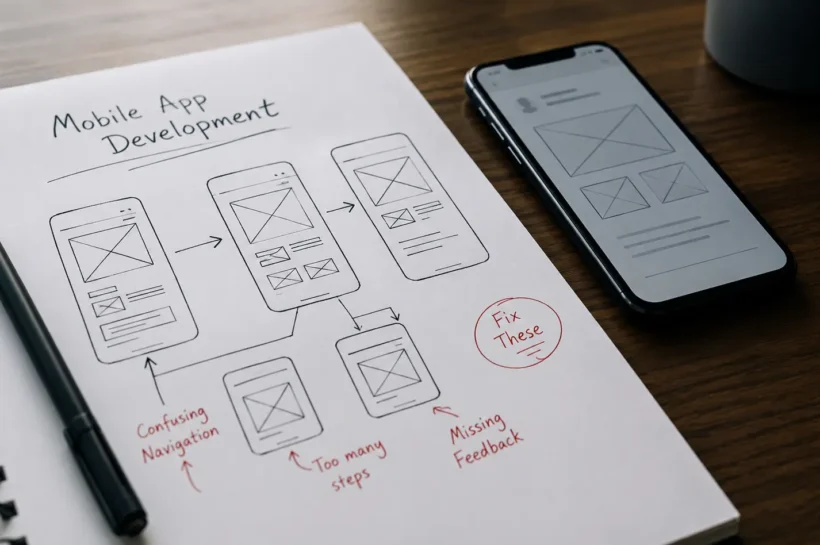
With the design, you can’t ensure that it will be successful. Users want simple, intuitive, and easy-to-navigate apps. Users get frustrated and are more likely to uninstall when the interface is complicated, the menu is confusing, or the interface is inconsistent. By focusing on user experience from the outset, engagement is likely to rise, customer satisfaction is likely to improve, and retention is likely to increase.
Common Mobile App Development Mistakes
If planned and executed carefully, many development problems can be avoided.
– Skipping detailed market and competitor research.
– Adding unnecessary features that complicate navigation.
– Ignoring user feedback during development.
– Failing to optimise application performance.
– Launching without thorough testing.
Correcting these errors during development helps lower development expenses and improve application quality.
Choosing the Wrong Technology
Choosing the right technology directly impacts application performance, security, and scalability. However, businesses are sometimes driven to platforms based on initial costs and not long-term requirements. Assessing business goals, anticipated user growth, and future integrations ensures that the application is reliable and will support future growth without significant redevelopment.
Overlooking Security Requirements
Security can’t be an afterthought. Mobile apps frequently keep private data, payment information, and trade secrets. Poor authentication and poor encryption, along with insecure APIs, pose unnecessary risks. Security is built into the development lifecycle to keep users safe and uphold trust and regulatory compliance.
Why Thorough Testing Matters
Testing detects technical problems before they can be felt or seen by the customer. Usability testing, compatibility testing, and performance testing help to make sure that the application performs well and is usable on various devices and operating systems. If an application is properly tested, it will contribute to reducing crashes, increasing the application’s reliability, and making the application a better experience for all users upon launch.
The Importance of Working with the Right Development Team
Developing a successful application requires technical expertise, strategic planning, and continuous collaboration. When selecting a mobile app development partner, businesses can count on a company that will guide them through the development process. Pros have the knowledge and expertise to balance functionality, usability, and scalability and to provide solutions aligned with long-term business goals.
It is important for a reliable development partner to be able to communicate with you, be able to give you realistic timelines for projects, and be able to give you technical support after deployment. Their experience lets them discover possible issues early, avoid delays, and perform the application correctly as business demands evolve.
Proven Practices for Successful Mobile App Development
Adhering to best practices helps ensure a successful mobile app development process.
– Conduct detailed user and market research.
– Create wireframes and interactive prototypes before development.
– Prioritise simple, user-friendly interfaces.
– Optimise performance for different devices.
– Plan regular updates based on user feedback.
They enhance the launch of applications that bring sustainable value to business.
The Value of Experienced Developers
Creating a great app is more than just coding. Professional mobile app developers are aware of user behaviour, platform rules, and fresh technologies. This experience gives businesses the ability to build secure, scalable, and efficient applications without common pitfalls that may add to project budgets and even delay the successful release of their products.
Developers with experience also suggest solutions based on industry best practices, not on a quick fix. They can incorporate modern technologies, enhance application performance, and ensure a clean development environment, which leads to a product that is always competitive as customers’ needs and technology evolve.
Conclusion
The first step to avoiding common mobile app development pitfalls is to plan carefully and design apps with users in mind, backed by technical expertise. Applying the right research, testing, and security practices results in business applications that function effectively and promote future expansion. Being a trusted mobile app development partner with Designpluz or working with the Expert mobile application developers from Microknot is the initial step towards a successful mobile application.
🖇This is what better content looks like. Follow Tech Statar for more.