


Introduction
Strong communication skills influence almost every part of life, from building relationships and succeeding in the workplace to improving leadership and increasing self-confidence. Research published by employers and professional organizations consistently shows that communication remains one of the most valuable soft skills across industries. Yet many beginners struggle with listening, expressing ideas, handling conflict, and connecting with others. The good news is that communication can be learned. The books in this guide combine psychology, behavioral science, negotiation strategies, and practical exercises to help readers become more effective communicators.
15 Best Books for Communication Skills Beginners Should Read (Detailed Reviews and Key Takeaways)
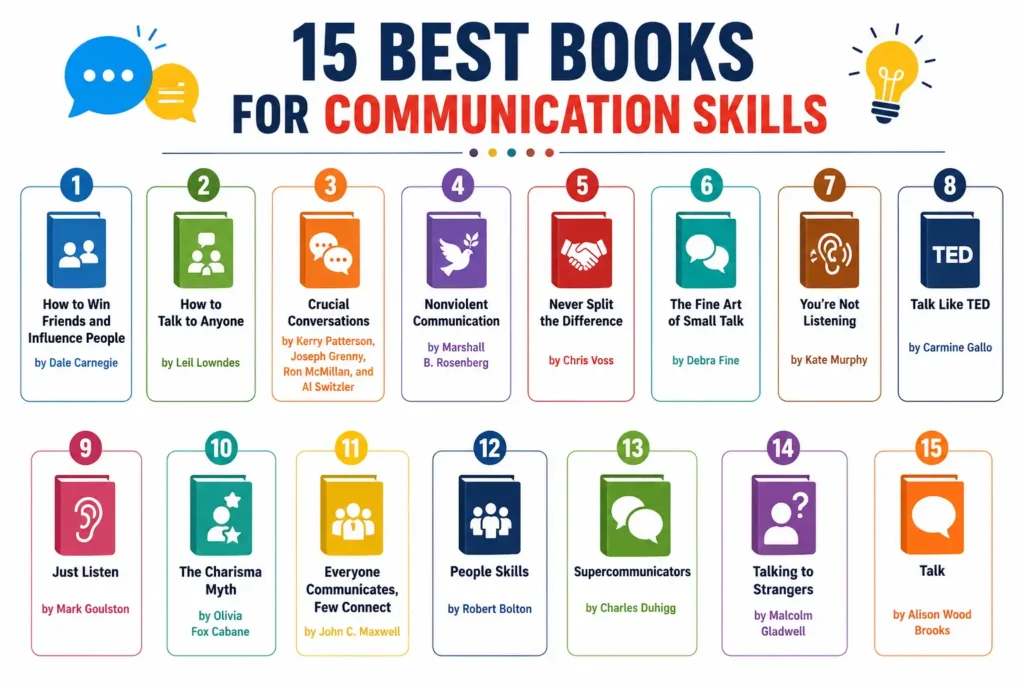
Confusion over the term “communication skills” is common because communication is not a single ability. It includes active listening, emotional intelligence, negotiation, persuasion, public speaking, conflict resolution, storytelling, and relationship building. The right book can strengthen one specific area while also improving your overall ability to express ideas clearly. This guide reviews 15 highly recommended books that consistently appear in professional development programs, business reading lists, and leadership recommendations. Each review highlights the book’s main lessons, practical value, and the type of beginner who will benefit most.
1. How to Win Friends and Influence People by Dale Carnegie
First published in 1936, this classic remains one of the best-selling self-improvement books ever written. Carnegie explains how appreciation, empathy, and genuine interest create stronger relationships. Beginners learn practical techniques for building trust, handling criticism, and influencing people without manipulation. Its timeless principles make it an excellent starting point for communication development.
2. How to Talk to Anyone by Leil Lowndes
Leil Lowndes transforms social communication into practical, easy-to-follow techniques. The book presents 92 strategies covering body language, conversation starters, eye contact, networking, and first impressions. Beginners who feel uncomfortable during social interactions will find this book especially helpful. Its actionable approach makes communication feel less intimidating and more manageable.
3. Crucial Conversations by Kerry Patterson, Joseph Grenny, Ron McMillan, and Al Switzler
Difficult conversations often determine the quality of relationships and workplace success. This book teaches readers how to remain calm during emotionally charged discussions while communicating honestly and respectfully. The authors introduce evidence-based strategies for conflict management, problem-solving, and productive dialogue. Beginners learn how to discuss sensitive topics without damaging relationships.
4. Nonviolent Communication by Marshall B. Rosenberg
Marshall Rosenberg developed a communication framework that emphasizes empathy, compassion, and emotional awareness. The book encourages readers to observe situations objectively, identify feelings, understand needs, and communicate requests clearly. Beginners discover how language affects relationships and learn techniques for reducing misunderstandings, criticism, defensiveness, and unnecessary conflict.
5. Never Split the Difference by Chris Voss
Written by a former FBI hostage negotiator, this book introduces negotiation strategies that apply to both professional and personal conversations. Chris Voss explains techniques such as tactical empathy, calibrated questions, and active listening. Beginners gain valuable persuasion skills while learning that successful communication depends more on understanding people than winning arguments.
6. The Fine Art of Small Talk by Debra Fine
Many people underestimate the importance of small talk, yet casual conversations often create meaningful personal and professional opportunities. Debra Fine provides practical advice for starting conversations, maintaining engagement, asking thoughtful questions, and overcoming social anxiety. Beginners who struggle with networking or meeting new people will appreciate the book’s straightforward guidance.
7. You’re Not Listening by Kate Murphy
Research in psychology consistently highlights listening as one of the most overlooked communication skills. Kate Murphy argues that modern distractions have weakened our ability to truly hear others. The book explains how better listening improves relationships, strengthens empathy, and increases understanding. Beginners learn why listening is often more powerful than speaking.
8. Talk Like TED by Carmine Gallo
Public speaking remains one of the most valuable communication skills in education, business, and leadership. Carmine Gallo analyzed hundreds of successful TED presentations to identify common communication patterns. The book teaches storytelling, audience engagement, presentation structure, and message delivery. Beginners interested in public speaking will find practical, research-based techniques throughout.
9. Just Listen by Mark Goulston
Mark Goulston combines psychology and communication to explain why people often fail to connect with one another. The book introduces strategies for building trust, understanding emotions, and becoming a more persuasive communicator. Beginners learn how to create meaningful conversations by focusing on empathy and emotional connection rather than simply exchanging information.
10. The Charisma Myth by Olivia Fox Cabane
Many people believe charisma is a natural talent, but Olivia Fox Cabane argues that it can be developed through practice. The book explains how presence, confidence, and emotional intelligence influence communication. Beginners learn practical exercises that improve interpersonal skills while helping them become more engaging, authentic, and influential communicators.
11. Everyone Communicates, Few Connect by John C. Maxwell
John Maxwell emphasizes an important distinction: communication and connection are not the same thing. The book explores the importance of understanding audiences, building trust, and delivering messages that resonate. Beginners learn how to move beyond simply sharing information and start creating meaningful, memorable interactions that strengthen personal and professional relationships.
12. People Skills by Robert Bolton
Robert Bolton focuses on three essential communication abilities: listening, assertiveness, and conflict resolution. The book combines behavioral psychology with practical communication exercises that readers can immediately apply. Beginners benefit from structured techniques that improve interpersonal relationships while developing stronger conversational habits. The book remains a respected communication resource decades after publication.
13. Supercommunicators by Charles Duhigg
Drawing from neuroscience, psychology, and real-world case studies, Charles Duhigg explains why some people consistently create deeper connections. The book introduces the concept of matching conversations to specific communication goals. Beginners learn how to recognize different conversation types, adapt their communication style, and improve relationship-building through intentional dialogue.
14. Talking to Strangers by Malcolm Gladwell
Malcolm Gladwell explores why people frequently misunderstand those they do not know. Through historical examples, psychological research, and compelling stories, he demonstrates how assumptions influence communication. Although this book differs from traditional communication guides, beginners gain valuable insights into trust, perception, judgment, and the hidden factors affecting human interaction.
15. Talk by Alison Wood Brooks
Alison Wood Brooks combines behavioral science with practical communication strategies to explain why conversations succeed or fail. The book examines topics such as humor, confidence, emotional regulation, and conversational flow. Beginners receive evidence-based advice that helps them communicate more effectively in social situations, professional environments, and everyday interactions.
🎯 More Helpful Guides: 12 Unique Business Ideas to Start in 2026
Quick Comparison Table: The 15 Best Communication Skills Books at a Glance
Choosing the right communication book can be difficult because every author focuses on a different skill. Some books teach persuasion, while others focus on active listening, emotional intelligence, networking, public speaking, or conflict resolution. Instead of reading all 15 books at once, beginners should identify their biggest communication challenge and start there. The comparison table below highlights the primary focus, ideal audience, and major lessons from each book. This quick overview will help you compare communication styles, learning approaches, and practical takeaways before selecting your next read.
| Book | Primary Focus | Best For | Key Lesson |
| How to Win Friends and Influence People | Relationship building | Beginners | People respond positively to appreciation and empathy. |
| How to Talk to Anyone | Social communication | Introverts and shy individuals | Small changes in body language improve conversations. |
| Crucial Conversations | Conflict management | Professionals | Difficult conversations require emotional control. |
| Nonviolent Communication | Empathy | Personal relationships | Understanding needs reduces conflict. |
| Never Split the Difference | Negotiation | Business professionals | Tactical empathy strengthens persuasion. |
| The Fine Art of Small Talk | Networking | Social beginners | Small talk creates opportunities. |
| You’re Not Listening | Active listening | Everyone | Listening is the foundation of communication. |
| Talk Like TED | Public speaking | Presenters | Stories make messages memorable. |
| Just Listen | Emotional connection | Relationship building | Understanding emotions creates trust. |
| The Charisma Myth | Personal influence | Leaders | Charisma can be learned through practice. |
| Everyone Communicates, Few Connect | Audience engagement | Leaders | Connection matters more than communication. |
| People Skills | Interpersonal communication | Beginners | Assertiveness and listening improve relationships. |
| Supercommunicators | Conversational intelligence | Modern communicators | Different conversations require different approaches. |
| Talking to Strangers | Human behavior | Critical thinkers | Assumptions often create misunderstandings. |
| Talk | Conversation science | Modern professionals | Better conversations depend on preparation and awareness. |
The Most Valuable Communication Lessons You Will Learn From These Books
Although each book approaches communication differently, several important themes appear repeatedly. First, effective communication starts with listening rather than speaking. Second, emotional intelligence influences how messages are delivered and interpreted. Third, empathy creates stronger relationships than persuasion alone. Fourth, confidence develops through consistent practice instead of natural talent. Finally, communication is not about talking more; it is about helping others feel understood. Research in psychology and organizational behavior continues to support these principles, making them essential for anyone who wants to improve personal and professional communication skills.
Which Communication Book Should You Read Based on Your Goals?
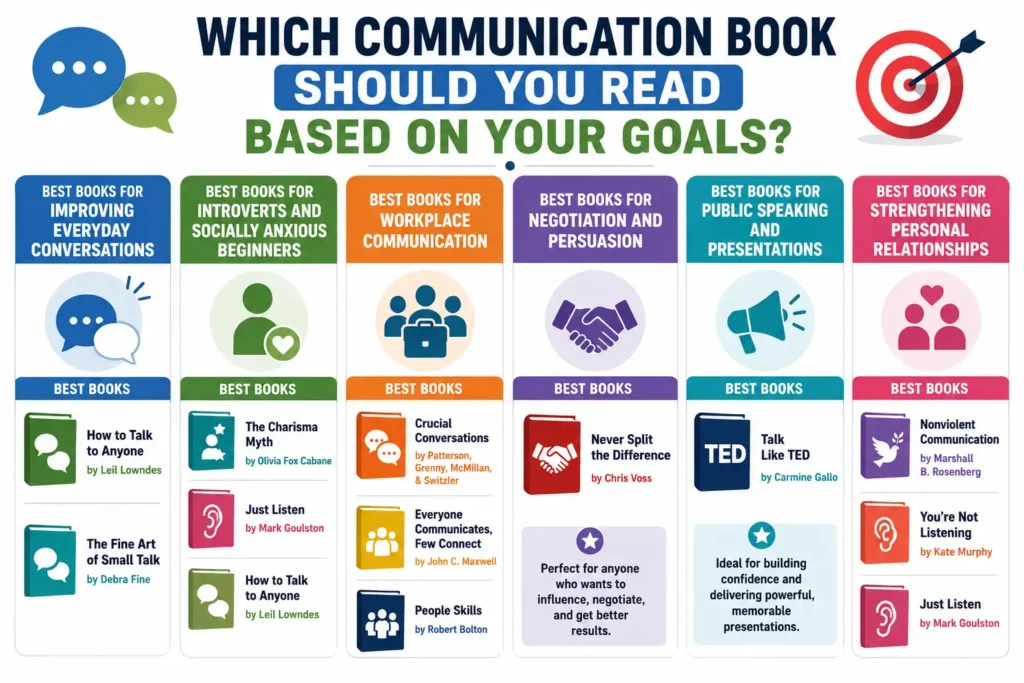
Your communication goals should determine which book you read first. Someone preparing for presentations needs different skills than someone struggling with social anxiety or workplace conflict. Selecting a book that directly addresses your biggest challenge will produce faster and more noticeable results. Instead of treating communication as a single skill, focus on improving one specific area at a time. The recommendations below will help you match your goals with the most appropriate books so you can create a more effective and personalized learning experience.
Best books for improving everyday conversations
If your goal is to become more comfortable during daily interactions, How to Talk to Anyone and The Fine Art of Small Talk are excellent starting points. These books teach practical conversation techniques, including asking better questions, maintaining engagement, improving body language, and creating stronger first impressions during everyday social situations.
Best books for introverts and socially anxious beginners
Introverts and socially anxious readers often struggle with confidence rather than communication itself. The Charisma Myth, Just Listen, and How to Talk to Anyone provide practical exercises that reduce social pressure while improving communication skills. These books emphasize authenticity, empathy, and gradual skill development instead of forcing personality changes.
Best books for workplace communication
Professional communication requires clarity, emotional intelligence, collaboration, and conflict management. Crucial Conversations, Everyone Communicates, Few Connect, and People Skills offer strategies for handling disagreements, leading discussions, building workplace relationships, and communicating more effectively with colleagues, managers, clients, and team members.
Best books for negotiation and persuasion
If your primary goal is influencing decisions, improving negotiation skills, or becoming more persuasive, Never Split the Difference should be your first choice. Chris Voss demonstrates how tactical empathy, strategic questioning, and active listening create better outcomes in both business negotiations and everyday conversations.
Best books for public speaking and presentations
Strong presentation skills can increase professional opportunities and strengthen personal confidence. Talk Like TED remains one of the most recommended books for beginners because it analyzes highly successful presentations and identifies techniques related to storytelling, audience engagement, confidence, and memorable message delivery.
Best books for strengthening personal relationships
Healthy relationships depend on empathy, trust, and emotional understanding. Nonviolent Communication, You’re Not Listening, and Just Listen focus on developing these essential abilities. Readers learn how to reduce misunderstandings, improve emotional awareness, strengthen connections, and communicate more effectively with family members, friends, and romantic partners.
How to Turn Reading Into Better Communication Skills
Reading communication books is only the first step. Real improvement happens when you apply what you learn in everyday situations. Instead of reading several books at the same time, focus on one communication skill and practice it consistently for a few weeks. Try using active listening during conversations, maintaining better eye contact, or asking more open-ended questions. Many behavioral studies suggest that repeated practice strengthens new habits more effectively than passive learning. Keep a communication journal, track your progress, and evaluate which techniques produce the best results in real-life conversations.
Common Communication Mistakes Beginners Make (And How These Books Help Fix Them)
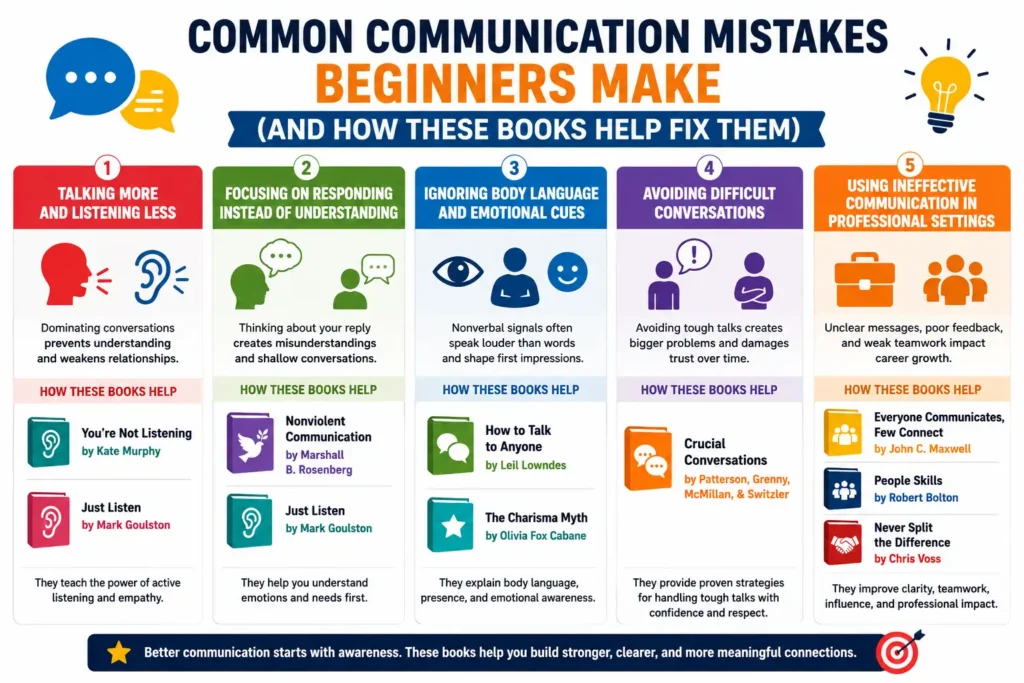
Talking more and listening less
One of the most common mistakes beginners make is dominating conversations instead of actively listening. Effective communication requires balance between speaking and understanding. You’re Not Listening and Just Listen explain why active listening builds trust, improves relationships, and creates stronger emotional connections. Listening often communicates more than words themselves.
Focusing on responding instead of understanding
Many people spend conversations preparing their next response instead of paying attention to the speaker. This habit creates misunderstandings and weakens relationships. Nonviolent Communication teaches readers to identify emotions and underlying needs before reacting. Understanding another person’s perspective leads to more meaningful and productive conversations.
Ignoring body language and emotional cues
Communication extends far beyond spoken language. Facial expressions, posture, tone of voice, and eye contact all influence how messages are interpreted. How to Talk to Anyone and The Charisma Myth explain how nonverbal communication shapes first impressions and affects relationship-building. Learning to recognize emotional signals improves conversational awareness.
Avoiding difficult conversations
Many beginners avoid uncomfortable discussions because they fear conflict or rejection. Unfortunately, avoiding important conversations often creates larger problems. Crucial Conversations provides practical strategies for discussing sensitive topics without becoming defensive or emotional. The book teaches readers how to communicate honestly while preserving relationships and mutual respect.
Using ineffective communication in professional settings
Workplace communication requires clarity, collaboration, emotional intelligence, and professionalism. Many beginners struggle with giving feedback, presenting ideas, or managing disagreements. Everyone Communicates, Few Connect, People Skills, and Never Split the Difference offer practical methods for improving communication in meetings, negotiations, leadership roles, and team environments.
Frequently Asked Questions
What is the best book for communication skills?
How to Win Friends and Influence People is widely considered the best communication book because of its timeless principles and practical advice. The book covers relationship-building, empathy, influence, and interpersonal communication. Despite being published decades ago, its lessons remain relevant in today’s personal and professional environments.
Which communication book is best for beginners?
How to Talk to Anyone is one of the best books for beginners because it provides simple, practical techniques that can be applied immediately. Readers learn conversation starters, networking strategies, body language techniques, and methods for building confidence during everyday interactions.
Can books really improve communication skills?
Yes. Books can improve communication skills when readers actively practice the techniques they learn. Research in behavioral psychology suggests that deliberate practice strengthens new habits over time. Reading alone is not enough. Consistent application produces measurable improvements in communication effectiveness.
How many communication books should beginners read?
Quality matters more than quantity. Beginners should focus on one or two books and practice the recommended techniques before moving to additional resources. Reading too many books simultaneously can create information overload and reduce the likelihood of applying new communication strategies.
Which communication books help with confidence and social anxiety?
The Charisma Myth, How to Talk to Anyone, and The Fine Art of Small Talk are excellent choices for improving confidence and reducing social anxiety. These books provide practical exercises that help readers become more comfortable during conversations without forcing dramatic personality changes.
Are communication skills more important than public speaking skills?
Public speaking is actually a specialized form of communication. Strong communication skills influence relationships, teamwork, leadership, negotiation, and everyday conversations. Public speaking remains important, but communication skills have a much broader impact on personal development and professional success.
🎯 More Helpful Guides: 10 Best Teacher Tools To Improve Learning in 2026
Conclusion
Whether you want to build stronger relationships, improve workplace performance, become a better listener, or gain confidence during conversations, the right book can accelerate your progress. The 15 books included in this guide offer different perspectives on communication, but they all emphasize the same principle: effective communication is a skill that anyone can develop. Start with the book that matches your goals, apply the lessons consistently, and practice them daily. Small improvements in communication often lead to significant improvements in both personal and professional success.
✨ Hungry for more? Tap follow and stay updated with Tech Statar.








































4 thoughts on “15 Best Books for Communication Skills Beginners Should Read”