
What Happens to Your Documents Inside a Safe During a House Fire?
A house fire is one of the most devastating events a family can experience. Within minutes, decades of memories, irreplaceable documents, and cherished possessions can be reduced to ash. Most people assume that simply owning a safe means everything inside is fully protected. But is that actually true? What really happens to your documents when flames surround that metal box sitting in your bedroom or home office?
The answer is more nuanced than most people realise, and understanding it could be the difference between saving everything and losing it all.
Fire Moves Faster Than You Think
Before diving into what happens inside a safe, it helps to understand how quickly fire escalates. A typical house fire can reach temperatures of 1,000°F (538°C) within just three to four minutes of ignition. Flashover, the point where an entire room erupts in flames simultaneously, can occur in as little as five minutes under the right conditions.
Paper begins to char at around 387°F (197°C) and ignites at approximately 451°F (233°C). Digital media like USB drives, hard drives, and DVDs are even more vulnerable, degrading at temperatures as low as 125°F (52°C). That context matters enormously when evaluating whether your safe can actually protect what’s inside.
What’s Actually Happening Inside the Safe
Here’s what most people don’t consider: a safe doesn’t simply block heat, it can’t. Metal conducts heat, meaning the exterior of the safe absorbs surrounding temperatures and begins transferring them inward over time.
What separates a quality fire-resistant safe from a standard metal box is the insulation material packed between its walls. Most fire-resistant safes use a gypsum-based composite or other heat-absorbing compounds that work by releasing moisture as temperatures rise. That moisture essentially steams, keeping the interior temperature significantly lower than the exterior for a defined period of time.
During a fire, here’s what’s unfolding inside a well-rated safe:
Exterior temperature rises rapidly as flames engulf the safe
Insulation activates, absorbing heat and releasing moisture internally
Interior temperature climbs slowly, staying below the critical threshold for paper and valuables
Time becomes the defining factor; the longer the fire burns, the more the insulation is exhausted
This is precisely why fire ratings exist and why they matter far more than most buyers realise at the point of purchase.
🖇 You might also like: CMMC Solutions
Understanding Fire Ratings (The Numbers That Matter)
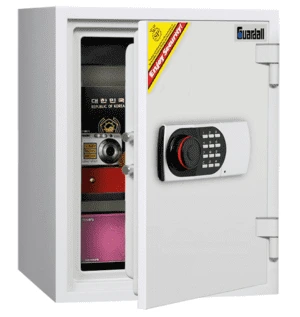
Not all safes are created equal. Safe Australia stocks trusted brands including Secuguard, CMI, Guardall, Burg Wachter, Platinum, Diplomat, Fileguard, and Chubb, each offering different fire resistance levels designed to suit different needs, from home use through to commercial and government applications.
When you see a safe labelled with a fire rating, it tells you two critical things: the duration of protection and the maximum external temperature it was tested against. A common rating is UL 72 Class 350, meaning the safe was tested at extremely high external temperatures while keeping the interior below 350°F (177°C), the threshold below which paper documents survive without igniting for the rated period, whether that’s 30 minutes, one hour, or two hours.
For digital media, the standard is considerably stricter. You’ll need a safe rated to keep interiors below 125°F (52°C), which is why Safes Australia specifically carries Data Safes and Data Inserts as a dedicated category, purpose-built for protecting USB drives, hard drives, and other sensitive digital storage from fire damage.
The key takeaway: not all fire-rated safes protect the same things equally. A safe that’s perfect for paper documents may still destroy a USB drive or external hard drive containing years of irreplaceable family photos or business records.
What Typically Survives and What Doesn’t
In real-world house fires, outcomes vary widely depending on the safe’s rating, the fire’s intensity, and emergency response times. Generally speaking:
Likely to survive in a properly rated document safe:
Passports, birth certificates, wills, and property titles
Insurance policies and financial records
Cash and physical photographs
At greater risk without a media-specific safe:
USB drives and flash storage devices
External hard drives
CDs, DVDs, and Blu-ray discs
Almost certainly lost without the right safe type:
Unprotected digital files on standard storage media
Old film negatives are stored loosely inside a general-purpose safe
The Role of Water and Impact Damage
Here’s a detail that often surprises homeowners: your documents may survive the fire itself only to be destroyed by the water used to extinguish it. Firefighters deploy significant volumes of water, and if your safe isn’t also water-resistant, moisture intrusion after the event can ruin documents that the flames never touched.
Quality safes also need to withstand structural collapse, floors give way, walls fall, and safes can drop several storeys during a serious fire. Safes Australia offers a lowest price guarantee and delivers and installs safes anywhere in Australia, making it straightforward to access the right level of multi-threat protection, whether that’s fire, water, or impact resistance, without the guesswork.
Choosing the Right Safe for What You’re Protecting
Safes Australia carries a comprehensive range, including Home Safes, Fire Resistant Safes, Document Safes, Data Safes, Wall and Floor Safes, and High Security Safes, meaning there’s a purpose-matched solution for virtually every protection need, from personal document storage through to commercial and government-grade security.
For home use, prioritise:
A fire rating of at least 60 minutes at UL Class 350 for paper documents
A media-rated safe or data insert to protect digital storage
Water resistance rating for post-fire protection
Proper anchoring to prevent displacement during a structural collapse
The Bottom Line
A fire-resistant safe doesn’t make your documents invincible; it buys them critical time. The right safe, matched to the right contents and backed by a proper fire rating, dramatically improves the odds that what matters most will survive one of life’s most destructive events.
Understanding what happens inside that safe during a fire isn’t just interesting; it’s the knowledge that helps you choose better, store smarter, and protect what truly cannot be replaced.
Because when a fire starts, it’s already too late to make a better decision.
💝 This is your sign to upgrade your feed. Follow Tech Statar.