
How to Create AI Videos Using Multimodal References
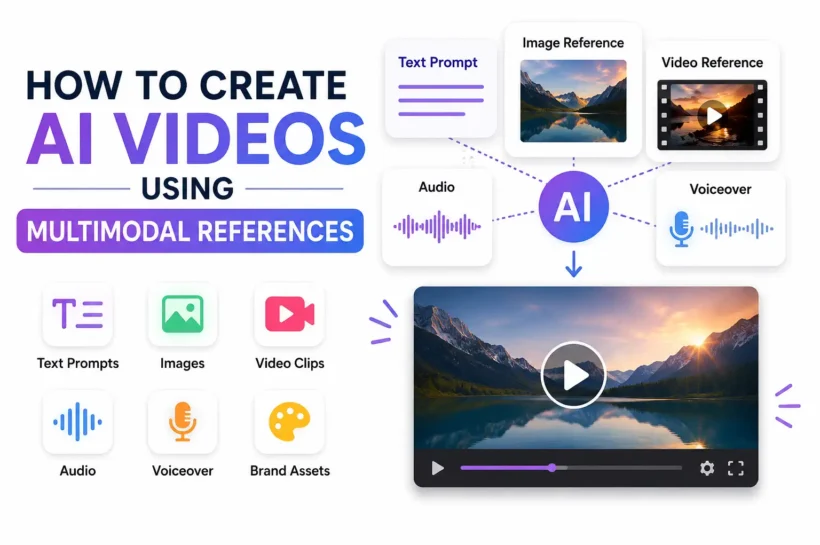
AI has revolutionized the field of video production and made it possible for everybody to produce quality videos without requiring any knowledge of editing or costly equipment. Although initial AI video generation tools used only text prompts as input, recent solutions are much more powerful since they accept various types of input. This method, called multimodal referencing, helps AI use text, images, video pieces, audio files, and other creative materials at once.
With multimodal referencing, instead of giving short descriptions in the form of a text prompt, creators can use visual references, voice samples, brand materials, and video examples. Videos generated with the help of multimodal referencing tend to be of high quality and consistent.
This feature makes it possible to generate better stories and visuals that will be closer to the creator’s intentions.
What Are Multimodal References?
Various multimodal references can be used for producing video content through AI technology. The AI technology does not just use text as references but uses a range of different information resources that help the AI get a sense of what is expected.
Common multimodal references include:
Text prompts
Images and photographs
Existing video clips
Audio recordings
Voiceovers
Background music
Brand logos and color palettes
Each reference contributes unique information that helps the AI make more accurate creative decisions throughout the video generation process.
🎯 More Helpful Guides: Best AI Tools for Writing Marketing Copy (2026 Guide)
Why Multimodal Inputs Produce Better AI Videos
Using multiple references reduces ambiguity. A text prompt may describe a scene, but an accompanying image provides details about colors, lighting, composition, and character appearance that words alone may not capture. Similarly, audio references help establish pacing, emotional tone, and timing. Video references demonstrate camera movement and animation styles that AI can emulate.
Some key advantages include:
Better Visual Consistency: Characters, products, and environments remain more consistent across scenes when supported by image references.
Improved Creative Accuracy: AI can better understand the intended style instead of making assumptions from text alone.
Faster Editing: Providing clear references reduces the need for repeated prompt adjustments and multiple generations.
Stronger Brand Identity: Businesses can maintain consistent colors, fonts, logos, and messaging throughout every video.
Types of Multimodal References Explained
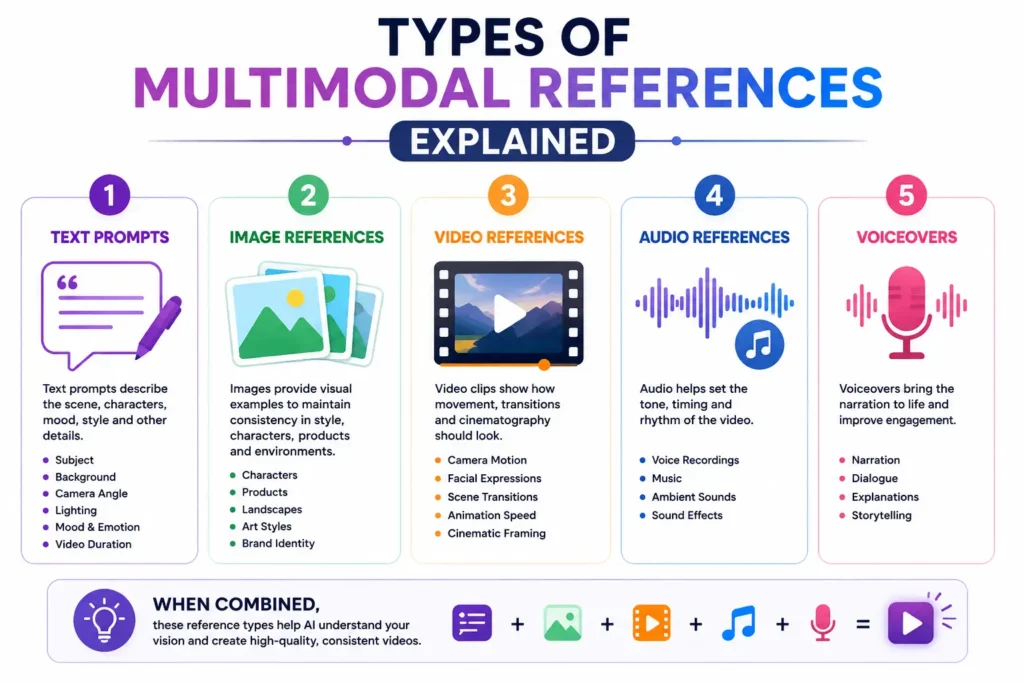
1. Text Prompts
Text remains the foundation of AI video generation. It explains what should happen in the video, who appears in it, and the desired mood.
A detailed prompt usually includes:
- Subject
- Background
- Camera angle
- Lighting
- Animation style
- Desired emotion
- Video duration
For example:
A modern coffee shop during sunrise with warm lighting, customers chatting, cinematic camera movement, and a realistic style.
This gives the AI a clear starting point.
2. Image References
Images help AI maintain visual consistency by providing examples of:
- Characters
- Products
- Buildings
- Landscapes
- Art styles
- Clothing
- Brand identity
Rather than repeatedly detailing each aspect, producers have the option of posting an image for the AI to refer to when generating the video content. This is particularly helpful for brands, as product images are essential in maintaining consistency in packaging, colors, and other visual elements.
3. Video References
Video clips teach AI how movement should look.
These references can communicate:
- Camera motion
- Facial expressions
- Object movement
- Scene transitions
- Animation speed
- Cinematic framing
Rather than recreating the exact video, AI learns patterns that help generate new content with a similar feel.
4. Audio References
Audio is often overlooked but plays a major role in creating engaging videos.
Useful audio references include:
- Voice recordings
- Narration
- Music
- Ambient sounds
- Sound effects
AI can synchronize visuals with speech, adjust scene timing, and create smoother transitions based on the rhythm of the audio.
🎯 More Helpful Guides: Top 10 AI Agent Development Companies in USA (2026)
Combining Different References for Better Results
The real strength of multimodal AI appears when several reference types work together. Imagine creating a product advertisement.
Instead of writing a long prompt describing every detail, you could provide:
A product image
A short marketing script
Background music
Brand colors
A sample commercial for inspiration
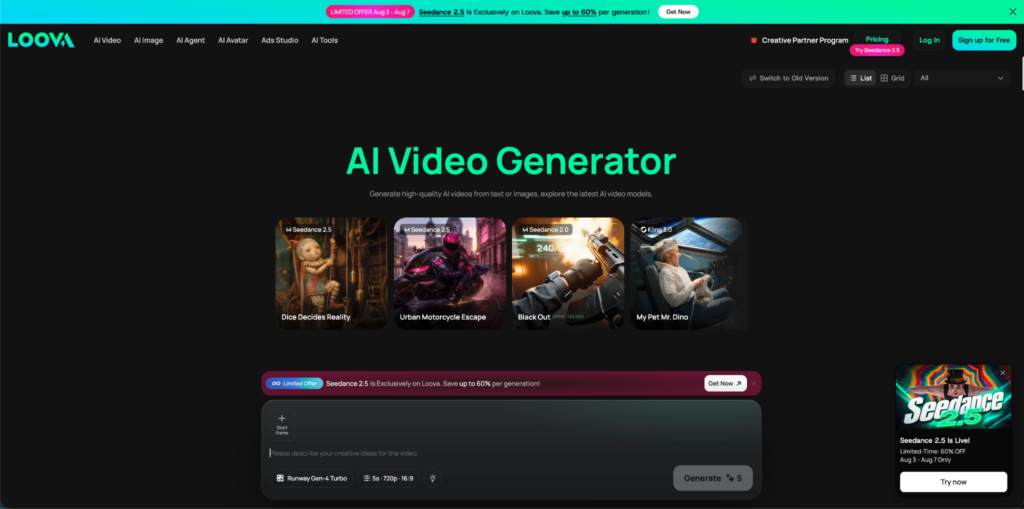
This combination of inputs is achieved in a single video by the AI without any inconsistencies. For people who want to create AI videos online for free on the internet, there are some tools they can use, such as Loova AI. These kinds of tools help integrate different types of media in the video creation process by combining text inputs, images, audio, and other sources of creativity.
Best Practices for Using Multimodal References
Use High-Quality Images
Blurry or low-resolution images often produce weaker visual results.
Choose clear reference photos that accurately represent the subject.
Keep References Consistent
If one image shows a blue product while another shows a green version, AI may struggle to determine which is correct.
Use references that match each other.
Write Detailed Prompts
Images provide visuals, but text still explains context.
Include information about:
Actions
Emotions
Environment
Camera movement
Lighting
Video style
Provide Clean Audio
Clear voice recordings improve synchronization and narration quality.
Avoid background noise whenever possible.
Limit Conflicting Instructions
Too many contradictory references can confuse the AI.
Ensure every input supports the same creative direction.
Practical Applications of Multimodal AI Video Generation
Marketing Videos
Marketing teams frequently produce promotional content across multiple platforms.
Multimodal references help maintain consistent branding by using:
Company logos
Brand colors
Product photos
Marketing scripts
Background music
This consistency strengthens brand recognition across campaigns.
Product Advertisements
E-commerce businesses can create product videos without traditional video shoots.
They simply provide:
Product images
Feature descriptions
Voiceovers
Lifestyle reference photos
The AI generates polished promotional videos suitable for websites, online stores, and advertising platforms.
Social Media Content
Social platforms require a constant stream of engaging videos.
Creators can quickly generate:
Instagram Reels
TikTok videos
YouTube Shorts
Facebook videos
Pinterest video pins
Using the same references ensures every post matches their personal or business brand.
Educational Content
Teachers and online educators use multimodal references to explain complex concepts visually.
By combining:
Lesson scripts
Diagrams
Images
Narration
They create engaging educational videos that improve student understanding.
Storytelling
Writers and filmmakers use AI to visualize stories before production.
They can upload:
Character artwork
Story outlines
Voice acting
Music
Environment references
The AI transforms these materials into animated story sequences that communicate mood and narrative more effectively.
🎯 More Helpful Guides: Transforming Business Agility with AI Decision Intelligence
Maintaining Consistency Across Long Videos
One challenge in AI video generation is keeping characters and scenes consistent throughout longer projects.
Multimodal references significantly reduce this problem.
Image references preserve character appearance.
Audio maintains pacing.
Text explains scene progression.
Video references keep movement styles uniform.
Together, these elements create a smoother viewing experience with fewer noticeable inconsistencies.
Common Mistakes to Avoid
Many beginners expect AI to produce perfect results from a single sentence. In reality, better inputs lead to better outputs.
Avoid these common mistakes:
Using vague prompts
Uploading poor-quality images
Mixing different visual styles
Ignoring audio quality
Providing conflicting instructions
Forgetting brand consistency
Carefully preparing your references before generation usually produces far better results than repeatedly editing finished videos.
Choosing an AI Video Generator That Supports Multimodal Workflows
Not every artificial intelligence video creator is equal in providing support for a variety of input formats. The most advanced AI video model, Seedance 2.5 gives you the ability to blend various forms of creative assets into one single process.
Useful capabilities include:
Support for text, images, audio, and video references
Character and style consistency across scenes
Custom branding options
Voiceover synchronization
Flexible editing after generation
Multiple output formats for different platforms
Platforms such as Loova AI are based on this multimodal approach, allowing users to integrate several types of references when creating videos, instead of dealing with one element at a time. It might be an easier way to produce videos for marketers, businesses, teachers, and content creators.
🎯 More Helpful Guides: Top 4 AI Tools to Use for Marketing
The Future of Multimodal AI Video Creation
AI video generation technology is moving very quickly. Upcoming technologies will allow future models to recognize an even greater array of references and thus generate high-quality videos without any post-processing.
Improvements in character coherence, movement, lip-syncing, and scene recognition should result in even more realistic videos and increased flexibility in their use for various creative purposes.
The development of these technologies will inevitably lead to multimodal approaches becoming a norm for content creators who seek higher levels of quality, creativity, and consistency without wasting much time on production.
Conclusion
The use of multimodal references has revolutionized the creation of videos by AI through the use of various forms of media, including text, image, video, and audio. The use of multimodal references ensures consistency and makes it easier for the creator to control the creation process.
For the production of videos, whether for marketing videos, product videos, learning videos, or any type of video that you want to produce, it is important to have references of different kinds so that the idea of producing the video can be understood by AI.
FAQs
What are multimodal references in AI video generation?
Multimodal references involve text, images, videos, and audio.
Why are multimodal references necessary?
This gives more context to AI, making the videos better in terms of visual coherence, accuracy of motion, narrative elements, and overall quality.
What can be made by using multimodal AI video generation?
One can make marketing videos, advertising clips, social media content, educational videos, and other creative stories.
Can beginners use multimodal AI video generators?
Sure, most modern AI video generators have intuitive interfaces, so everyone can easily make videos without any editing skills.
Which AI is suitable for multimodal video generation?
Loova AI and other platforms allow multimodal generation of videos and provide users with the opportunity to add text, images, audio, and videos in one project.
✨ Save time, learn faster, follow Tech Statar.