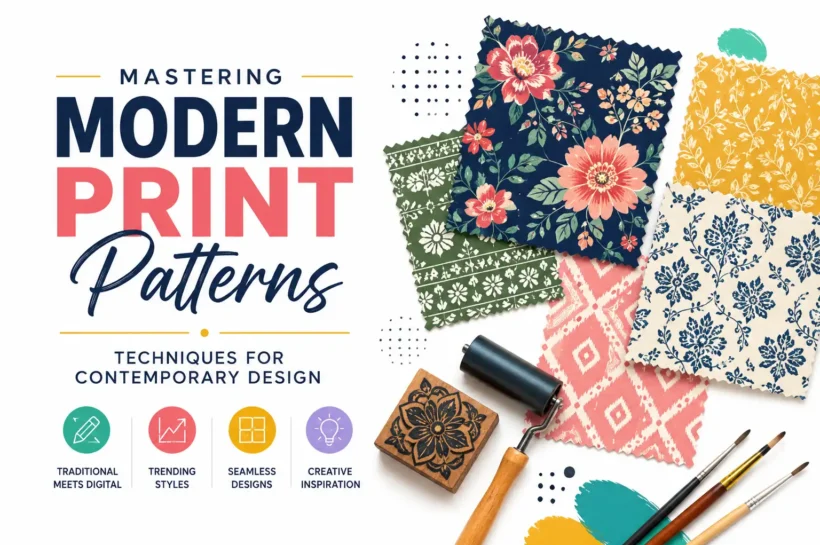

Mastering Modern Print Patterns: Techniques for Contemporary Design
Creating captivating print patterns is more important than ever for standing out in today’s creative landscape. Designers are constantly challenged to innovate, blending timeless methods with new technologies to achieve unique results. One powerful way to elevate your workflow is to incorporate intelligent digital tools, such as an AI pattern generator, to develop fresh patterns that resonate with modern audiences.
Understanding not just techniques but also the history and evolving trends in print pattern design ensures your work remains current and engaging. By mixing traditional handicraft with digital applications, designers can create compelling patterns adaptable to a variety of uses and tastes. Keeping up with this blend of history, innovation, and market movements sets the foundation for design success in the print pattern industry.
Evolution of Print Patterns
Print patterns have a rich heritage spanning centuries, from ancient block printing on textiles to intricate techniques such as screen printing, lithography, and digital printing. Up until the 20th century, most patterns were produced by hand, reflecting the culture, available materials, and artistic preferences of the time. With the advent of digital technology, designers gained access to a broader array of tools, expanding creative boundaries and allowing for greater experimentation.
Understanding this progression is fundamental for contemporary designers. Studying historical motifs can provide inspiration, while adopting new tools ensures your patterns meet today’s audiences’ needs. This dual approach results in work that feels both timeless and on-trend.
Combining Traditional and Digital Techniques
The intersection of analog and digital methods offers unparalleled possibilities in print pattern design. Designers now often start by hand-sketching motifs using traditional media before digitizing their artwork for further development. Popular techniques such as screen printing, block carving, and hand-painting can be seamlessly integrated with vector editing and digital rendering.
Prominent designers exemplify this approach by blending hand-drawn elements with precise editing enabled by software such as Adobe Illustrator or Procreate. This hybrid method maintains the human touch and spontaneity of traditional processes while leveraging the efficiency, scalability, and detail enabled by digital tools.
💡 Explore More Insights: How To Make Print-Ready Posters Quickly Without Design Training in 2026
Current Trends in Print Patterns
Staying on top of trend cycles is key in the fast-moving world of print design. For 2026, bold oversized florals are making a striking comeback, infusing spaces with vibrant energy and nostalgia. Vintage-inspired patterns continue to surge in popularity, appealing to those who value a sophisticated or eclectic look. Additionally, block prints are making a comeback in both fashion and decor, marrying timeless repetition with tactile charm.
Digital effects such as gradients, glitch motifs, and maximalist layering are also influencing contemporary print patterns. By embracing these elements, designers keep their collections visually relevant and universally appealing.
Best Practices for Seamless Patterns
One hallmark of professional print design is the ability to create seamless, tileable patterns. A seamless repeat ensures a motif can be scaled or repeated across any surface, wallpaper, textiles, or packaging, without visible breaks or awkward edges. Essential practices to maintain seamlessness include:
- Ensuring that design elements align perfectly across edges.
- Maintaining a consistent color palette for cohesion across repeats.
- Testing your patterns at different scales to verify visual flow.
By paying attention to these principles, designers develop versatile motifs ready for diverse applications.
Common Mistakes to Avoid
Even seasoned pattern designers can fall into common traps. Overcomplicating a design often results in visual overload, making the print hard to use or off-putting. Neglecting negative space can lead to cramped or cluttered patterns, and skipping thorough testing on multiple surfaces (from apparel to paper goods) can result in disappointing end products. Sensible pattern design prioritizes usability alongside aesthetics, resulting in patterns that both catch the eye and function well in their intended context.
Resources for Pattern Designers
Continual development is vital for success in print pattern design. Top resources like Creative Bloq’s expert pattern design tips offer actionable advice for both beginners and experienced designers. Comprehensive guides, such as Pattern Observer’s article on mixing analog and digital printing techniques, offer both inspiration and technical guidance.
Mastering modern print pattern creation requires a balanced understanding of historical analysis, creative versatility, and technical execution. By harnessing the rich history of print patterns, blending classic and digital techniques, staying alert to current trends, and seeking out credible resources, designers can produce imaginative, professional, and desirable patterns for any context.
💡 Explore More Insights: Collapsible Rigid Boxes: The Perfect Blend of Premium Design and Convenience
Conclusion
Successful print pattern design combines artistic creativity with technical precision. By understanding the evolution of printmaking, embracing both traditional and digital techniques, following current design trends, and applying best practices for seamless patterns, designers can create work that is both visually engaging and highly functional. Continuous learning, experimentation, and thoughtful refinement will help ensure your patterns remain versatile, relevant, and impactful across a wide range of creative applications.
✨ Don’t miss tomorrow’s insight, follow Tech Statar today.