
The campaign you paused last month might have been your best one – here’s how you know
Pausing a campaign is a routine act. The conversion data looked weak, the cost per acquisition was climbing, and the return on ad spend was not where it needed to be. The decision felt justified by the numbers. What the numbers did not show was whether any of that campaign’s traffic had gone on to call.
For businesses where phone calls are a primary conversion channel, this is a more common scenario than most marketing teams realise. A campaign gets paused on the basis of incomplete data, the call volume it was quietly generating disappears, and the gap only becomes obvious when inbound enquiries fall without an obvious cause. The data that would have saved the campaign was always there. It just was not being captured.
Learning to close the attribution gap is one of the most consequential things a marketing team can do for the accuracy of its campaign decisions.
How the attribution gap creates false underperformers
Marketing analytics platforms are built around measurable online events. Session data, goal completions, form fills, and purchases. When a campaign drives a prospect to convert online, that conversion is logged, attributed, and factored into performance reporting. The channel receives credit. The cost per conversion is calculated. The decision about whether to continue, scale, or pause is informed by real data.
When a campaign drives a prospect to call instead, none of that happens automatically. The session may be recorded. The call is not. In Google Analytics 4 (GA4) terms, the campaign produced a session that ended without a goal completion. In Pay-Per-Click (PPC) terms, it produced a click that did not convert. The cost accumulates. The conversion credit does not. The campaign begins to look like a drain on the budget rather than a source of revenue.
This is not a performance problem. It is a measurement problem. The campaign was converting. The attribution model simply could not see where.
What incomplete attribution models miss
Attribution modelling is designed to assign credit to the marketing touchpoints that contribute to a conversion. Whether you are working with last-click, time-decay, linear, or data-driven attribution, the model depends entirely on having complete conversion data to learn from.
When inbound phone calls are excluded from that dataset, the model produces a distorted view of channel performance. Last-click models over-credit whatever digital interaction preceded a drop-off. Multi-touch models distribute credit across a recorded journey that ends before the actual conversion event. Data-driven attribution, however sophisticated the underlying methodology, is learning from an incomplete picture and producing proportionally incomplete conclusions.
Channels and campaigns that drive calls end up systematically undervalued. Those that generate cheaper clicks but fewer actual outcomes retain the spend they have not earned. Budget allocation follows the model, and the model is wrong.
💚 You might also like: Staff Augmentation vs Outsourcing: Which is Right for Your Business?
The specific campaigns most at risk of being paused unfairly
Not every campaign type is equally affected by the attribution gap. The ones most at risk of being paused on the basis of misleading data share a common characteristic: they tend to attract prospects who are further along the decision-making process and more likely to convert by calling rather than completing a digital form.
Upper-funnel content campaigns that build awareness and intent often fall into this category. So do brand campaigns targeting high-consideration purchase audiences. Keyword strategies built around service-specific or comparison terms, where searchers are actively evaluating options, frequently drive more phone calls than online conversions. These campaigns can look like they are underdelivering on cost per conversion while actually generating some of the most commercially valuable inbound enquiries in the entire marketing mix.
Without call attribution in place, the only honest answer to “was that campaign working?” is that you do not have enough information to say.
How call tracking fills the gap
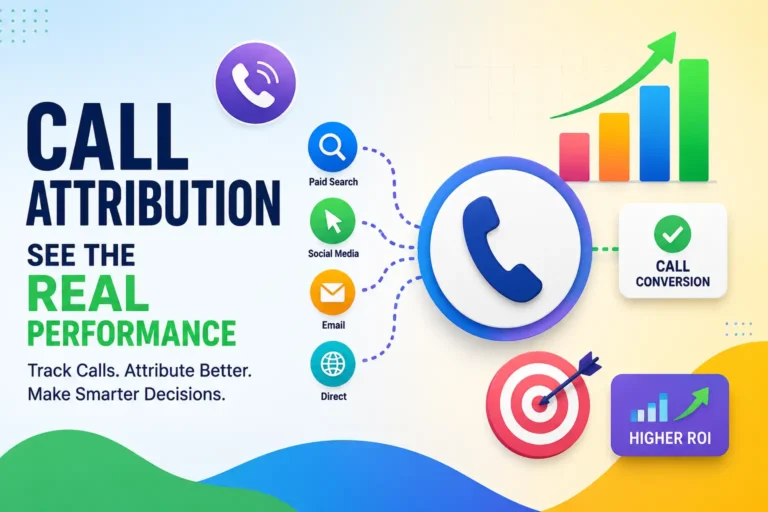
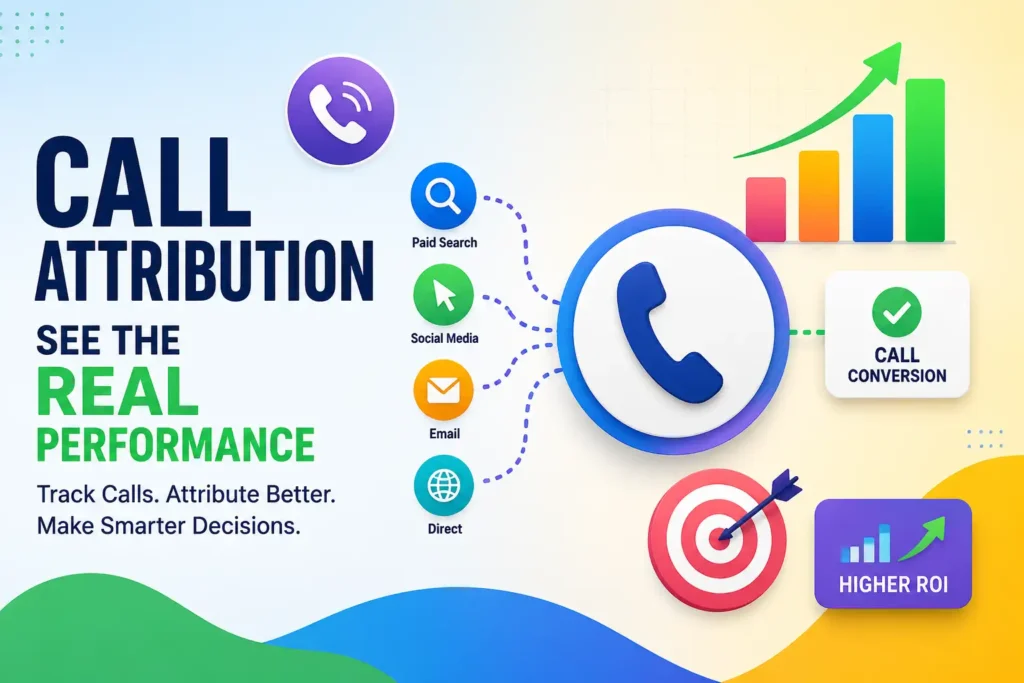
Call tracking connects every inbound call to the marketing activity that preceded it. Each visitor to your website is tracked across their journey, and when they call, that call is attributed to the source, campaign, keyword, and touchpoints that brought them there. The call becomes a conversion event in your analytics stack, sitting alongside online goals and treated with the same weight in your reporting.
Urchin Tracking Module (UTM) parameters carry campaign data through to the call record. Multi-channel campaign tagging preserves the full customer journey across paid search, organic, social, email, and direct. The conversion that would previously have registered as a dropped session now appears where it belongs: as a revenue-generating outcome attributed to the campaign that earned it.
The effect on campaign performance data is immediate. Cost per acquisition figures recalibrate when call conversions are included. Return on ad spend calculations reflect the actual commercial contribution of each channel. The campaigns that looked like underperformers reveal themselves as some of the strongest in the mix.
💚 You might also like: Common Mistakes Businesses Make When Choosing Accounting Tools
Making better pause decisions going forward
The practical value of closing the attribution gap is not just retrospective. It changes how pause decisions are made from this point forward.
With call attribution in place, the data you are working from when reviewing campaign performance is complete. A campaign that is generating clicks without apparent online conversions can be evaluated properly: Is it driving calls? Are those calls converting? What is the true cost per acquisition when phone call conversions are included in the calculation?
That is a different conversation from the one that gets had when attribution data is incomplete. It is a conversation based on evidence rather than partial signals, and it leads to better outcomes: campaigns that perform well, campaigns that genuinely underperform are identified accurately, and budget is allocated toward the activity that is actually driving revenue.
Before you pause, check whether the call data tells a different story
The campaign you paused last month may or may not have been your best one. The honest answer is that without call attribution, you were not in a position to know. Before the next review, it is worth asking what the phone data shows, because for many businesses, that is where the real performance picture lives.
FAQs
Why can a marketing campaign seem ineffective even when it is generating leads?
A campaign may appear ineffective when reporting tools only measure online actions such as form submissions or purchases. If potential customers prefer calling a business directly, those conversions may never appear in standard analytics reports, causing the campaign’s true value to be underestimated.
What causes an attribution gap in digital marketing?
An attribution gap occurs when certain customer actions are not connected to the marketing efforts that influenced them. Phone calls are one of the most common examples. When they are not tracked correctly, businesses lose visibility into how customers actually found and contacted them.
How does call tracking improve marketing measurement?
Call tracking helps businesses connect phone enquiries with the campaigns, channels, keywords, and customer interactions that led to the call. This provides a more complete picture of marketing performance and ensures that valuable offline conversions are included in reporting.
Which marketing campaigns are most likely to benefit from phone call attribution?
Campaigns aimed at users who are actively researching services or preparing to make a purchase often benefit the most. These audiences frequently prefer speaking with a representative before making a final decision, making phone call tracking especially valuable.
Why is accurate call attribution important for budget planning?
When businesses can see which campaigns generate both online and phone-based conversions, they can allocate budgets with greater confidence. This reduces the risk of cutting funding from campaigns that are contributing meaningful revenue but are not receiving proper attribution.
Conclusion
Successful marketing depends on having a complete understanding of how customers convert. When phone calls are missing from performance reports, businesses are left evaluating campaigns with only part of the story. This can result in strong campaigns being paused, budgets being redirected incorrectly, and valuable opportunities being overlooked.
By integrating call tracking and attribution into the marketing analytics process, organisations can capture both online and offline conversions within a single reporting framework. This creates a more accurate view of campaign effectiveness, supports smarter optimisation decisions, and ensures that marketing investments are based on real business outcomes rather than incomplete data. Before making any decision to reduce spend or pause a campaign, it is worth confirming whether phone call activity reveals a level of performance that standard analytics alone cannot show.
✨ Got value? Let’s keep the momentum, follow Tech Statar.