
Cooling Tower Problems: 4 Risks & How to Fix Them
Cooling towers serve as the unsung heroes of industrial operations, quietly managing heat rejection for countless facilities worldwide. These towering structures enable smooth manufacturing processes, maintain optimal HVAC performance, and ensure energy-efficient operations across diverse industries.
However, beneath their robust exterior lies a complex system vulnerable to various threats that can compromise performance, drain budgets, and create serious safety hazards. When cooling tower problems go unaddressed, they escalate quickly, transforming minor maintenance issues into catastrophic system failures that halt production and endanger personnel.
This comprehensive guide examines the four most dangerous cooling tower problems that demand immediate attention. You’ll discover how to identify early warning signs, understand the true costs of neglect, and learn strategic prevention methods, including timely cooling tower repairs, that protect your investment and ensure safe operations.
The “Big Four” Threats to Your Cooling Tower’s Health
Mineral Buildup
Mineral deposits, primarily calcium carbonate, magnesium silicate, and phosphate scales, form when dissolved solids precipitate from circulating water onto internal surfaces. These deposits create insulating barriers that dramatically reduce heat transfer efficiency and restrict water flow through critical components.
The operational consequences are severe:
- Heat transfer efficiency drops by 15-30% with moderate scaling
- Energy consumption increases proportionally to maintain cooling capacity
- Pump performance degrades as flow restrictions develop
- Equipment wear accelerates due to increased system stress
- Maintenance costs skyrocket as cleaning frequency intensifies
Early detection saves thousands in repair costs. Monitor for these warning signs:
- Gradual decline in cooling capacity despite normal operation
- White, chalky deposits on visible surfaces and components
- Unexpected spikes in utility bills without increased production
- Reduced water flow rates through spray nozzles
Structural Decay
Metal corrosion within cooling towers represents one of the most insidious threats to system reliability and safety. This electrochemical process systematically weakens structural components, leading to catastrophic failures that endanger personnel and equipment.
Corrosion accelerates when water chemistry falls outside optimal parameters. Low pH levels create acidic conditions that attack metal surfaces aggressively.
The progression follows a predictable pattern:
- Surface oxidation begins at vulnerable points like welds and joints
- Pitting develops as corrosion penetrates deeper into the metal thickness
- Structural integrity compromises as the load-bearing capacity decreases
Organic Growth
Microorganisms thrive in cooling tower environments, transforming these systems into breeding grounds for dangerous pathogens while simultaneously destroying operational efficiency.
Warm, nutrient-rich water conditions commonly found in cooling towers create an ideal environment for the growth of algae, bacteria, and fungi. Biofilms develop as these organisms colonize surfaces, creating protective matrices that shield them from treatment chemicals.
Legionella pneumophila, the pathogen responsible for Legionnaires’ disease, particularly thrives in these environments.
Optimal conditions for microbial proliferation include:
- Water temperatures between 77-113°F (25-45°C)
- Stagnant areas with poor circulation
- Organic matter from airborne debris and system deposits
- Insufficient biocide treatment or inadequate application frequency
- pH levels outside the optimal 6.5-8.5 range
Health risks cannot be overstated:
- Legionella exposure through aerosol transmission
- Respiratory complications from inhaling contaminated mist
- Skin and eye irritation from direct contact
- Potential litigation and regulatory penalties
- Facility reputation damage from health incidents
Detection requires multiple sensory observations:
- Slimy, slippery surfaces on tower components
- Green or brown algae growth is visible in the water
- Foul, musty odors emanating from the system
- Reduced water flow through distribution systems
- Cloudy or discolored water appearance
Mechanical Breakdowns
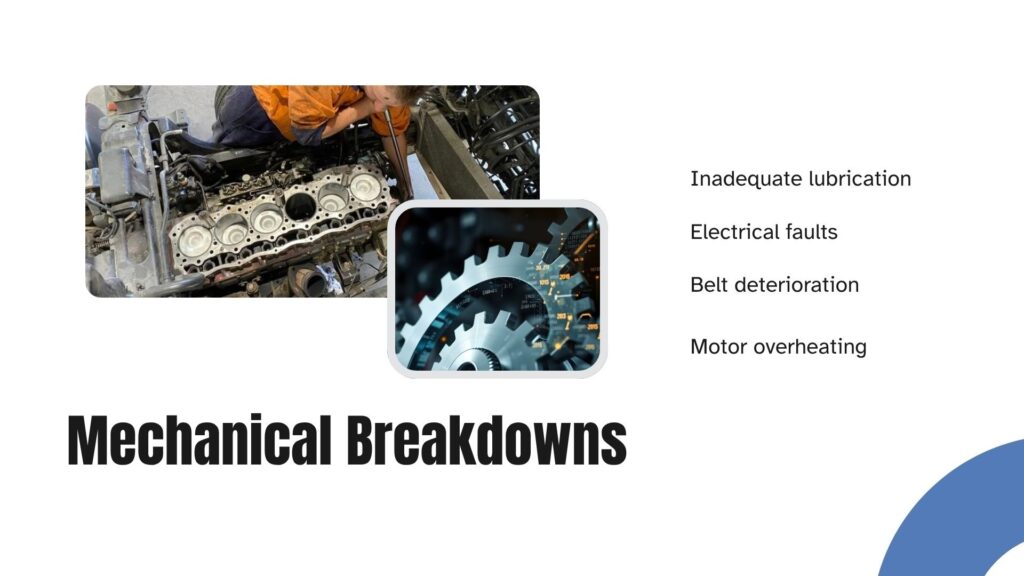
Mechanical component failures represent the most immediately disruptive cooling tower problems, capable of shutting down entire operations within minutes. These failures often occur without warning, making prevention through proper maintenance absolutely critical.
Critical mechanical components face constant stress from environmental conditions and operational demands. Fans operate continuously in corrosive, humid environments. Motors bear heavy loads while exposed to temperature fluctuations.
Common failure mechanisms include:
- Inadequate lubrication leading to bearing seizure
- Misalignment causes excessive vibration and wear
- Electrical faults from moisture infiltration
- Belt deterioration from age and environmental stress
- Motor overheating due to restricted airflow or overloading
Operational catastrophes escalate quickly:
- Complete loss of cooling capacity halts production immediately
- Expedited parts procurement increases material costs significantly
- Extended downtime losses often exceed direct repair expenses
Early warning systems provide crucial intervention opportunities:
- Unusual grinding, squealing, or rattling sounds indicate bearing problems
- Excessive vibration suggests misalignment or imbalance issues
- Motor overheating points to electrical or airflow restrictions
The True Price of Negligence
The financial impact of cooling tower neglect extends far beyond immediate repair costs, creating a cascade of expenses that can cripple operational budgets and threaten business continuity.
- Energy costs spiral out of control when efficiency degrades. A 20% reduction in heat transfer efficiency translates directly to 20% higher energy consumption for the same cooling output. For large industrial facilities, this efficiency loss can add $50,000-$200,000 annually to utility bills. The cumulative effect over just a few years of neglect often exceeds the cost of complete system replacement.
- Emergency repairs carry premium pricing. When cooling towers fail unexpectedly, repair services command emergency rates, typically 200-400% higher than scheduled maintenance costs. Parts procurement becomes desperate, eliminating negotiating power and forcing acceptance of inflated prices.
- Production downtime creates the most devastating financial impact. Manufacturing facilities may lose $100,000-$500,000 per day when cooling systems fail. Data centers face even higher stakes, with downtime costs reaching $1 million per hour. These losses compound when considering:
1. Customer contract penalties for missed deliveries
2. Raw material waste when processes shut down mid-cycle
3. Quality issues affecting entire product batches
4. Overtime costs to recover lost production time
- Operational instability undermines business reliability. Unreliable cooling systems force reactive maintenance approaches that strain resources and personnel. Maintenance teams become firefighters, constantly responding to crises rather than implementing preventive strategies. This reactive cycle increases stress, reduces efficiency, and drives up turnover in critical technical positions.
- Safety and legal exposure multiply with neglect. Legionella outbreaks linked to poorly maintained cooling towers have resulted in multi-million dollar settlements and criminal charges for facility managers. OSHA violations carry substantial fines and ongoing regulatory scrutiny. Insurance premiums increase when cooling tower incidents occur, while coverage may be denied for future claims involving negligent maintenance.
Strategic Prevention: Safeguarding Your Investment
Implementing a Robust Maintenance Regimen
Proactive maintenance represents the most cost-effective approach to cooling tower management, preventing small issues from escalating into major failures. A comprehensive maintenance program addresses all system components through scheduled inspections, preventive treatments, and performance monitoring.
- Visual inspections should occur weekly during peak operating seasons. Trained personnel must examine structural components for corrosion signs, check water clarity and odor, monitor mechanical equipment operation, and document any unusual conditions.
- Monthly deep cleaning and disinfection prevent biological contamination. Professional-grade biocides must be applied according to manufacturer specifications, with contact time and concentration carefully controlled. Fill media requires periodic removal and cleaning to eliminate organic buildup.
- Water treatment protocols demand continuous attention. Chemical feed systems require daily monitoring to ensure proper pH control, corrosion inhibitor levels, and biocide concentrations. Water quality testing should include bacterial counts, mineral content analysis, and corrosion rate measurements.
- Mechanical equipment maintenance follows manufacturer schedules. Motors require regular inspection, cleaning, and lubrication. Bearings need proper greasing according to operating hour intervals. Belts require tension adjustment and replacement based on wear indicators.
Conclusion
Ignoring cooling tower problems is a huge risk; no facility can afford it. As discussed, common issues like mineral buildup, structural decay, biological contamination, and unexpected mechanical failures can severely disrupt operations and increase costs. These challenges highlight the importance of understanding both system design and the role of reliable manufacturers. For insights into choosing the right partners, explore this guide on global vs local cooling tower manufacturers…
The real cost of neglecting these issues is immense, ranging from rising energy consumption and expensive downtime to serious safety and health risks. Implementing a proactive cooling tower maintenance plan and collaborating with experienced industry experts isn’t optional; it’s essential for long-term efficiency, reliability, and performance.
Frequently Asked Questions
What are the most common cooling tower problems?
The most frequent cooling tower problems include mineral scaling, metal corrosion, and biological growth like Legionella. Additionally, mechanical issues such as fan motor failure or clogged spray nozzles frequently disrupt heat transfer efficiency and increase the overall cost of industrial operations.
Which water chemistry issues cause cooling tower problems?
Imbalanced water chemistry is a leading driver of cooling tower problems. Low pH levels trigger aggressive metal corrosion, while high mineral concentrations lead to scaling. Without precise chemical treatment, these imbalances destroy internal components and significantly reduce the system’s cooling capacity.
How does biological fouling create cooling tower problems?
Biological fouling creates severe cooling tower problems by allowing algae, fungi, and bacteria to form thick biofilms. These slimes insulate heat exchange surfaces, restrict water flow, and harbor dangerous pathogens like Legionella, posing significant health risks and operational inefficiencies.
What mechanical failures lead to cooling tower problems?
Mechanical cooling tower problems often stem from worn drive belts, misaligned fan blades, or bearing failures within the motor. Left unaddressed, these mechanical stresses cause excessive vibration, increased energy consumption, and eventual system-wide shutdowns that require expensive and time-consuming repairs.
Why is scaling considered one of the worst cooling tower problems?
Scaling is a critical cooling tower problem because it forms a hard mineral barrier on heat exchanger tubes. This layer acts as an insulator, forcing the system to work harder, skyrocketing energy bills, and causing permanent damage to expensive equipment.
✨ If you love progress, you’ll love Tech Statar. Hit follow.