

Introduction
Remote work has shifted from a trend to a long-term business model. According to a 2023 report by McKinsey, over 58% of employees have the option to work remotely at least part-time. This shift has forced companies to rethink how teams are managed. Managing remote teams is not just about communication tools or flexibility. It requires a completely different leadership approach focused on clarity, trust, and outcomes. In this guide, you’ll learn practical remote team management tips that help improve productivity, strengthen collaboration, and build a scalable system for long-term success.
What is Remote Team Management?
Remote team management refers to the process of leading, organizing, and optimizing a team that works from different locations. Unlike traditional office environments, remote teams rely heavily on digital tools and asynchronous communication. Managers must focus more on outcomes rather than physical presence. This approach requires clear processes, strong communication habits, and performance tracking systems. With remote work expected to keep growing globally, understanding how to manage distributed teams effectively has become a core leadership skill for modern businesses.
Benefits of Effective Remote Team Management
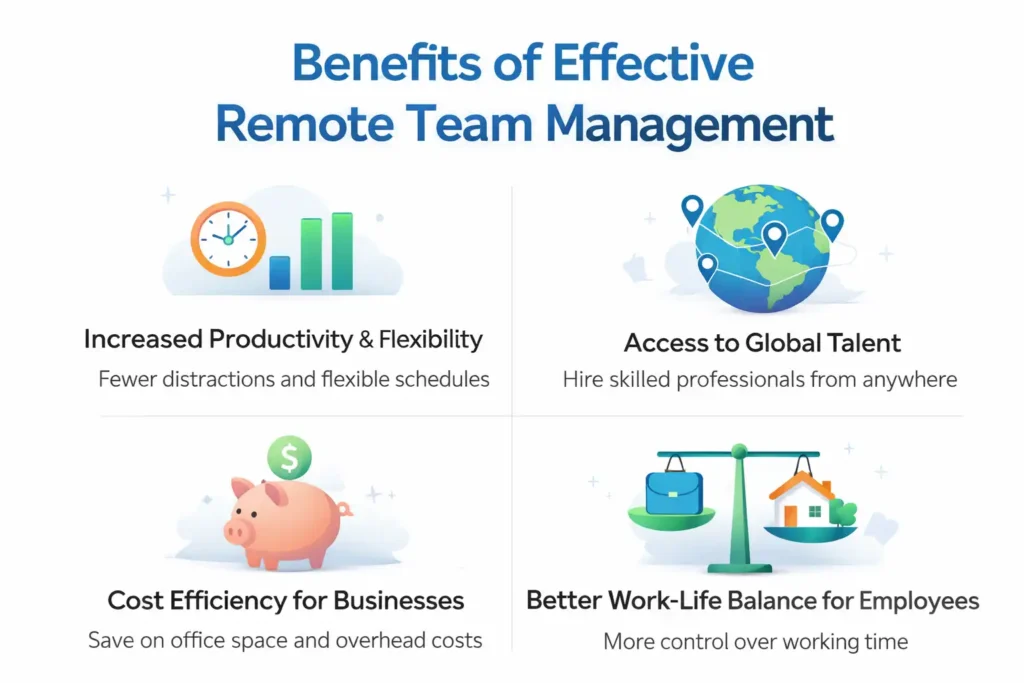
When done right, remote team management offers significant advantages for both businesses and employees. Studies from Stanford University show that remote workers can be up to 13% more productive due to fewer distractions and flexible work environments. Companies can reduce operational costs while accessing a global talent pool. At the same time, employees benefit from improved work-life balance. However, these benefits only come when management systems are strong. Without proper leadership, remote teams can quickly lose alignment, making effective management a key factor in long-term success.
Increased Productivity and Flexibility
Remote work allows employees to work during their most productive hours. Without daily commutes and office distractions, many workers complete tasks faster. Research from Harvard Business Review shows that flexible schedules improve focus and efficiency. When managed properly, remote teams can outperform traditional office setups in both output and quality of work.
Access to Global Talent
Remote management removes geographic limitations, allowing companies to hire skilled professionals from anywhere. This expands the talent pool significantly and helps businesses find specialized expertise faster. It also enables diverse teams, which often leads to better creativity, innovation, and problem-solving across projects.
Cost Efficiency for Businesses
Companies can save significantly on office space, utilities, and infrastructure. According to Global Workplace Analytics, businesses can save up to $11,000 per employee annually by allowing remote work. These savings can be reinvested into growth, tools, or employee benefits, making remote management a financially smart decision.
Better Work-Life Balance for Employees
Remote work gives workers more control over their working times. This leads to reduced stress and higher job satisfaction. When employees maintain a healthy balance, they are more engaged and less likely to leave. Strong remote management ensures this balance is maintained without compromising productivity.
💚 You might also like: Is Angular Still Popular for Web Apps in 2026?
Top Challenges in Managing Remote Teams
Despite its benefits, remote team management comes with unique challenges that require careful handling. Communication breakdowns, lack of accountability, and time zone differences can slow progress if not managed properly. According to Buffer’s State of Remote Work report, 20% of remote workers struggle most with collaboration and communication. Managers must also address employee isolation and ensure consistent performance tracking. Understanding these challenges is the first step toward building systems that prevent inefficiencies and keep teams aligned, productive, and motivated across different locations.
Communication Gaps
Without face-to-face interaction, messages can be misunderstood or delayed. Important updates may get lost, leading to confusion. Clear communication systems, including structured meetings and documentation, are essential to avoid misalignment and ensure everyone stays informed.
Lack of Accountability
Remote environments can sometimes reduce visibility into employee work. Without clear expectations and tracking systems, accountability can suffer. Managers must define roles, responsibilities, and measurable goals to ensure everyone remains responsible for their outcomes.
Time Zone Differences
Distributed teams often work across multiple time zones, making real-time communication difficult. Delays in responses can slow down projects. Managers need to create overlapping work hours and rely on asynchronous communication to maintain workflow efficiency.
Employee Isolation and Burnout
Remote workers may feel disconnected from the team, leading to lower engagement. At the same time, blurred boundaries between work and personal life can cause burnout. Regular check-ins and team engagement activities help maintain morale and connection.
Performance Tracking Issues
Tracking productivity remotely can be challenging without proper tools. Managers cannot rely on physical observation, so they must use performance metrics, dashboards, and regular reviews to monitor progress effectively.
Essential Remote Team Management Tips
Managing remote teams successfully requires a combination of strategy, tools, and leadership skills. It is not about controlling employees but creating systems that allow them to perform at their best. From setting clear goals to building trust and improving communication, every step plays a role in team success. Research shows that companies with strong remote management practices experience higher employee engagement and productivity. The following remote team management tips will help you build a structured, scalable, and high-performing remote team.
Set Clear Goals and Expectations
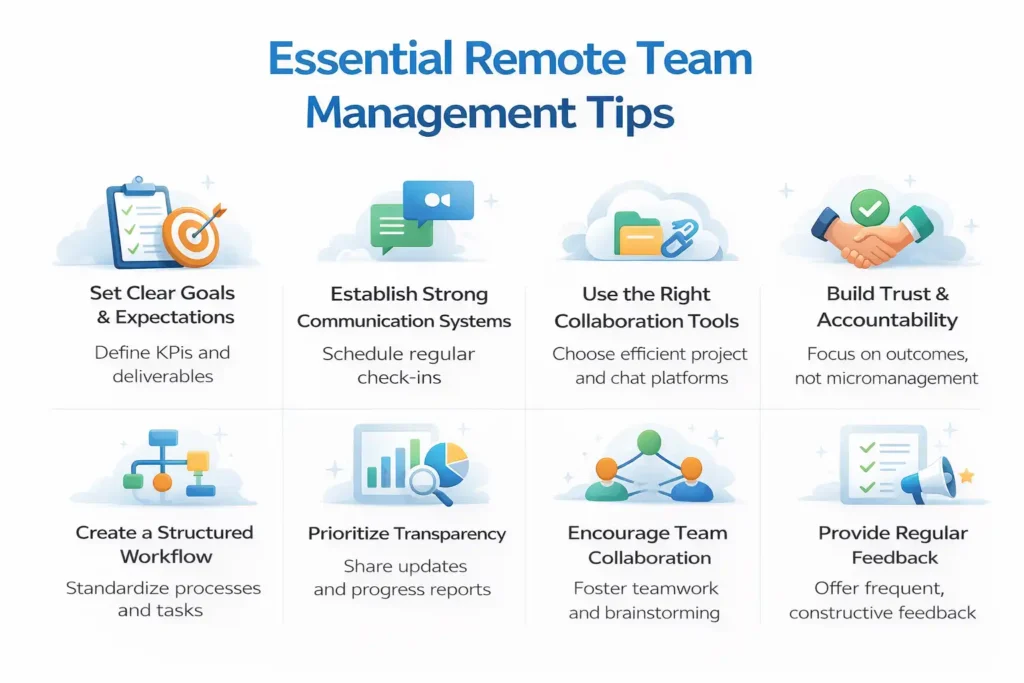
Clear goals are the foundation of remote team success. Managers should define KPIs, deliverables, and deadlines for every task. Using frameworks like OKRs or SMART goals helps align team efforts with business objectives. When expectations are clear, employees can work independently without constant supervision, improving both efficiency and accountability.
Establish Strong Communication Systems
Effective communication is critical in remote teams. Managers should create structured systems for daily or weekly check-ins. Combining real-time and asynchronous communication ensures flexibility without losing clarity. Clear communication channels reduce confusion, improve collaboration, and keep everyone aligned on priorities.
Use the Right Collaboration Tools
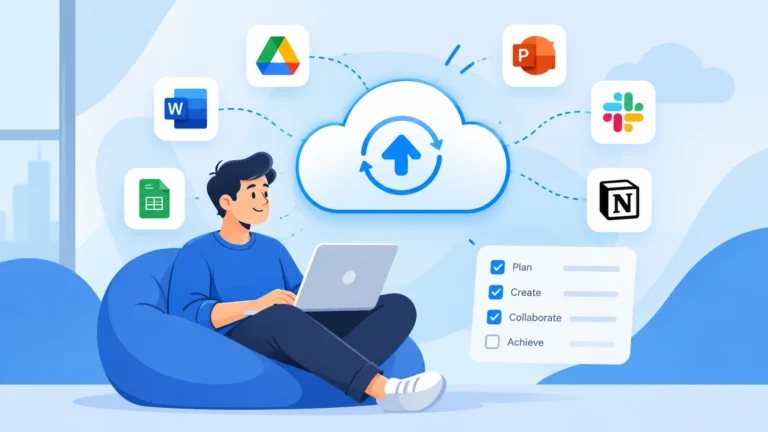
The right tools make remote work seamless. Project management platforms help track tasks, while communication tools keep conversations organized. File-sharing systems ensure easy access to documents. Choosing the right tech stack improves efficiency and reduces friction in daily workflows.
Build Trust and Accountability
Trust is essential in remote teams. Managers should shift away from micromanagement and prioritize outcomes instead. When employees are given trust and autonomy, they’re more likely to take responsibility and fully own their work. Accountability improves naturally when expectations are clear and performance is measured based on outcomes rather than activity.
Create a Structured Workflow
A well-defined workflow keeps teams organized and efficient. Standard operating procedures (SOPs) help maintain consistency, while task tracking systems ensure progress is visible. Structured workflows reduce confusion and allow teams to scale without losing efficiency.
Prioritize Transparency
Transparency builds alignment across the team. Sharing updates, progress reports, and dashboards ensures everyone understands the bigger picture. Open communication reduces misunderstandings and helps teams stay connected to company goals.
Encourage Team Collaboration
Collaboration should be intentional in remote teams. Virtual brainstorming sessions and cross-team projects help maintain creativity and innovation. Encouraging collaboration strengthens relationships and improves overall team performance.
Manage Time Zones Effectively
Time zone differences can be managed with proper planning. Creating overlapping work hours allows for real-time discussions when needed. Flexible schedules and asynchronous workflows ensure productivity continues without delays.
Provide Regular Feedback
Frequent feedback helps employees improve and stay motivated. One-on-one meetings and performance reviews allow managers to address challenges early. Consistent feedback ensures continuous growth and alignment with team goals.
Focus on Results, Not Hours
Remote work is about outcomes, not time spent online. Managers should measure success based on results rather than hours worked. This approach increases productivity and gives employees the flexibility to perform at their best without unnecessary pressure.
Best Tools for Remote Team Management
Using the right tools is essential for managing remote teams efficiently. Without proper systems, communication breaks down, tasks get delayed, and productivity drops. According to Gartner, 74% of companies plan to permanently shift some employees to remote work, making digital tools a long-term investment. The goal is not to use more tools, but to use the right ones that simplify workflows and improve collaboration. From communication to performance tracking, a well-structured tech stack helps teams stay aligned, organized, and productive regardless of their location.
Communication Tools
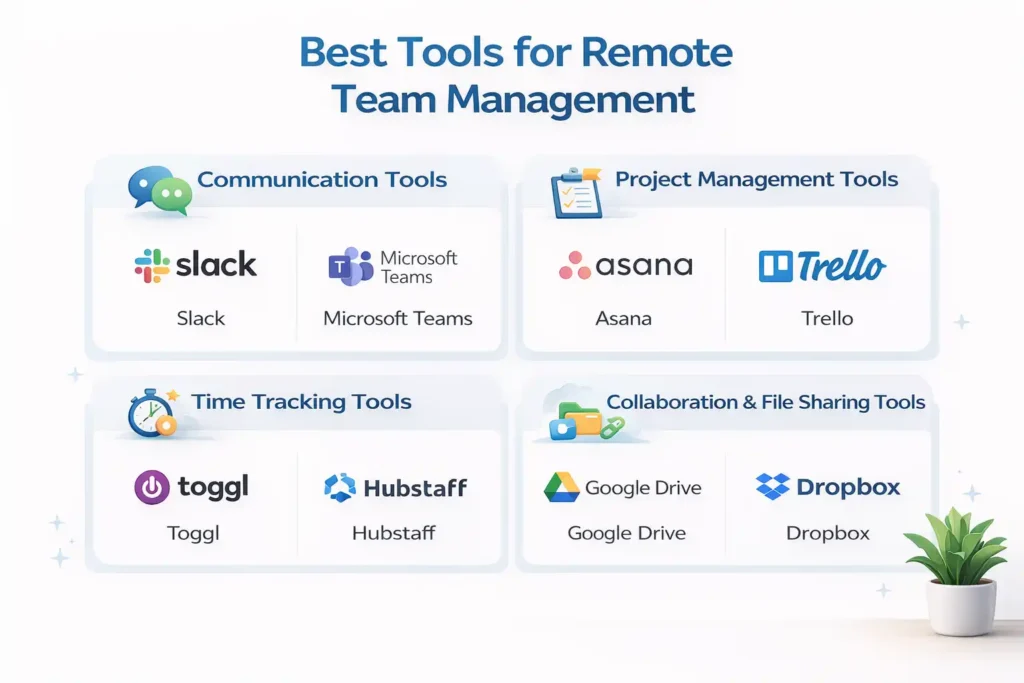
Communication tools are the main tools of remote teams. Platforms like Slack or Microsoft Teams allow real-time messaging, while tools like Zoom support video meetings. These tools help remote teams stay in touch. Clear communication channels reduce confusion and improve collaboration. Choosing the right mix of synchronous and asynchronous communication tools ensures flexibility without sacrificing clarity.
Project Management Tools
Project management tools help teams organize tasks, track progress, and meet deadlines. Tools like Asana, Trello, and ClickUp provide visibility into ongoing projects. They allow managers to assign tasks, set priorities, and monitor performance. A structured project management system ensures accountability and keeps everyone aligned with business goals.
Time Tracking Tools
Time tracking tools help monitor productivity without micromanaging employees. Tools like Toggl and Hubstaff provide insights into how time is spent on tasks. This data helps managers identify inefficiencies and optimize workflows. When used correctly, time tracking improves accountability while maintaining trust within the team.
Collaboration & File Sharing Tools
Remote teams rely on file-sharing tools to collaborate effectively. Platforms like Google Drive and Dropbox allow easy access to documents and real-time editing. These tools reduce delays and ensure everyone works with the latest information. Strong collaboration systems improve efficiency and prevent miscommunication.
Employee Engagement Tools
Employee engagement tools help maintain morale and connection in remote teams. Platforms like Bonusly or Officevibe allow feedback, recognition, and surveys. These tools help managers understand team sentiment and improve engagement. A connected team is more productive, motivated, and aligned with company goals.
💚 You might also like: The Future of Creator-Led Brand Building
How to Build a Strong Remote Team Culture
Building a strong remote culture is one of the biggest challenges for distributed teams. Without daily in-person interaction, employees can feel disconnected. According to Gallup, highly engaged teams show 21% higher profitability, making culture a critical factor in business success. Remote culture is not built by chance. It requires intentional effort, consistent communication, and leadership support. By creating a sense of belonging and shared purpose, companies can build a culture that keeps remote employees engaged, motivated, and committed to long-term success.
Foster Open Communication
Open communication creates trust and transparency within remote teams. Managers should encourage employees to share ideas, feedback, and concerns without hesitation. Regular meetings and clear communication channels help maintain alignment. When employees feel heard, they are more engaged and motivated to contribute.
Recognize and Reward Employees
Recognition plays a key role in employee motivation. Remote employees often miss out on in-person appreciation, so managers must make recognition intentional. Celebrating achievements, offering rewards, and giving positive feedback boost morale. Consistent recognition helps build a culture of appreciation and improves retention.
Organize Virtual Team Activities
Virtual activities help strengthen relationships within remote teams. Online games, team meetings, or informal chats create opportunities for bonding. These activities reduce isolation and improve team connection. A socially connected team collaborates better and maintains higher engagement levels.
Encourage Work-Life Balance
Remote work often makes it difficult to separate personal life from professional responsibilities, causing the lines between the two to become less clear. Managers should encourage employees to maintain clear working hours and take breaks. Promoting balance reduces burnout and improves productivity. Maintaining a strong work-life balance helps employees feel more satisfied, motivated, and actively engaged in their work.
Promote Inclusivity Across Locations
Remote teams often consist of people from different cultures and backgrounds. Managers should create an inclusive environment where everyone feels valued. Respecting time zones, cultural differences, and communication styles improves collaboration. Inclusivity strengthens team unity and drives better results.
💚 You might also like: The Technologies Transforming Online Influence
Remote Leadership Skills You Must Develop
Managing remote teams requires a different set of leadership skills compared to traditional environments. Leaders must rely more on communication, trust, and decision-making rather than direct supervision. According to Harvard Business Review, remote leadership effectiveness depends heavily on emotional intelligence and adaptability. Strong leaders create clarity, build trust, and guide teams through uncertainty. Developing the right skills ensures that remote teams remain productive, engaged, and aligned with business goals, even without physical presence or constant oversight.
Emotional Intelligence
Emotional intelligence helps leaders understand and manage team dynamics effectively. Remote environments make it harder to read emotions, so leaders must be more attentive. Empathy, active listening, and understanding employee concerns improve relationships. Leaders with high emotional intelligence build stronger, more connected teams.
Communication Skills
Clear communication is essential for remote leadership. Leaders must convey expectations, provide feedback, and ensure alignment without confusion. Strong communication reduces misunderstandings and improves efficiency. Being clear, concise, and consistent helps teams stay on track and perform better.
Decision-Making Ability
Remote leaders must make quick and informed decisions without constant input. Delays can slow down progress, especially in distributed teams. Strong decision-making ensures that projects move forward efficiently. Leaders should rely on data, experience, and team input to make effective choices.
Adaptability and Flexibility
Remote environments are constantly changing. Leaders must adapt to new tools, workflows, and challenges. Flexibility allows teams to handle uncertainty and stay productive. Leaders who embrace change create a resilient and forward-thinking team culture.
Conflict Resolution
Conflicts can arise in any team, and remote environments can make them harder to resolve. Leaders must address issues quickly and fairly. Open communication and active listening help resolve conflicts effectively. Strong conflict resolution skills maintain team harmony and productivity.
How to Track Remote Team Performance
Tracking remote team performance requires a results-driven and structured approach. Unlike traditional offices, managers cannot rely on physical observation, so they must focus on measurable outcomes. According to Deloitte, companies using performance analytics make decisions faster and improve efficiency. The key is to track meaningful metrics instead of monitoring activity. By combining KPIs, tracking tools, and regular communication, managers can ensure accountability without micromanaging. A well-designed performance system not only improves productivity but also builds trust, as employees clearly understand expectations and how their work contributes to overall business success.
Define Measurable KPIs
Measurable KPIs provide clarity on what success looks like for each role. Managers should focus on output-based metrics such as task completion, quality, and deadlines. Clear KPIs help employees stay focused and aligned with business goals. When expectations are defined, teams can work independently and deliver consistent results without constant supervision.
Use Performance Tracking Tools
Performance tracking tools help managers monitor progress without creating pressure. Tools like dashboards and analytics platforms provide real-time insights into work performance. These systems highlight bottlenecks and inefficiencies. When used correctly, tracking tools improve transparency and allow managers to make informed decisions based on actual data rather than assumptions.
Conduct Regular Check-ins
Regular check-ins keep teams aligned and prevent small issues from becoming bigger problems. One-on-one meetings allow managers to understand progress, challenges, and employee concerns. Consistent communication builds trust and improves performance. Check-ins also ensure that employees feel supported and connected to the team.
Analyze Productivity Metrics
Analyzing productivity metrics helps managers identify trends and improve workflows. Metrics like completion rates, turnaround time, and quality scores provide valuable insights. Data-driven analysis allows teams to optimize performance and eliminate inefficiencies. Continuous improvement based on real data leads to better results over time.
Common Mistakes to Avoid in Remote Team Management
Managing remote teams comes with unique challenges, and even small mistakes can impact productivity and morale. According to Buffer’s remote work report, poor communication and lack of structure are among the top issues faced by distributed teams. Avoiding these mistakes is essential for building a high-performing team. Managers must focus on clarity, trust, and balance rather than control. By recognizing common pitfalls early, leaders can create systems that support efficiency, improve collaboration, and ensure long-term success in a remote work environment.
Conclusion
Remote team management is no longer a temporary solution. It has become a permanent part of modern business operations. To succeed, managers must focus on clear communication, strong systems, and trust-based leadership. The key is to manage outcomes, not activity. By using the right tools, building a strong culture, and avoiding common mistakes, businesses can create high-performing remote teams. As remote work continues to evolve, leaders who adapt quickly will gain a significant advantage. Start implementing these remote team management tips today to improve productivity and build a more efficient team.
FAQs on Remote Team Management
What is the best way to manage a remote team?
The best way to manage a remote team is by setting clear goals, maintaining strong communication, and focusing on results. Managers should use structured workflows and performance tracking systems. Building trust and providing regular feedback also play a key role in managing remote teams effectively.
How do you keep remote employees productive?
Productivity improves when employees have clear expectations and the right tools. Regular check-ins, performance tracking, and flexible schedules help maintain focus. Encouraging work-life balance also ensures long-term productivity and prevents burnout among remote employees.
What tools are essential for remote teams?
Remote teams need communication tools, project management systems, and file-sharing platforms. These tools help teams collaborate, track progress, and stay organized. Choosing the right tools simplifies workflows and improves efficiency across the team.
How do you build trust in a remote team?
Trust is built through transparency, clear communication, and accountability. Managers should avoid micromanaging and focus on outcomes. Regular feedback and open discussions help strengthen relationships and create a positive team environment.
What are the biggest challenges of remote work?
The biggest challenges include communication gaps, time zone differences, and employee isolation. Without proper systems, productivity can drop. Addressing these challenges with structured workflows and strong leadership ensures remote teams remain effective and engaged.
✨ Don’t miss tomorrow’s insight, follow Tech Statar today.

































2 thoughts on “Remote Team Management Tips for Growing Teams in 2026”