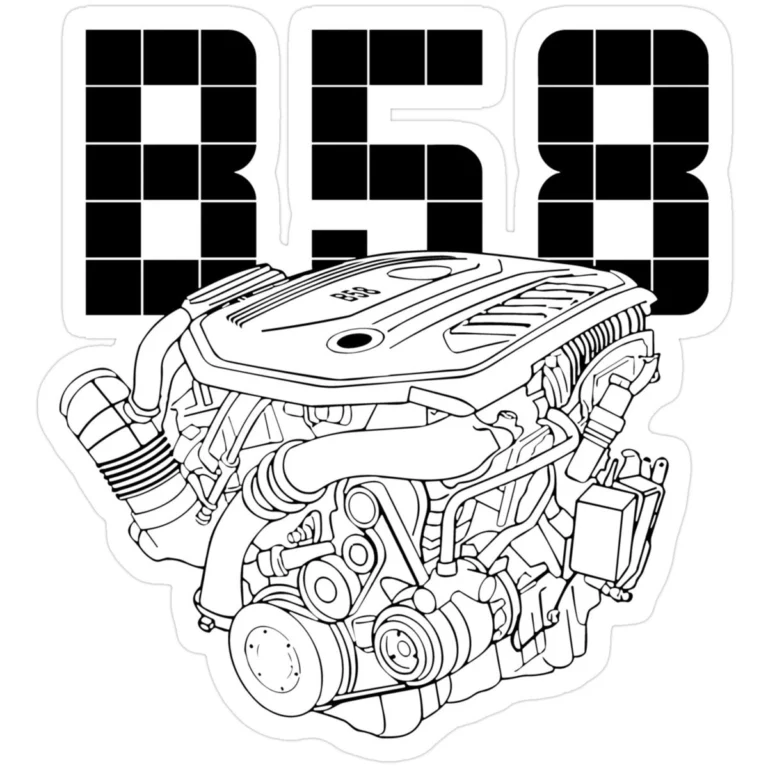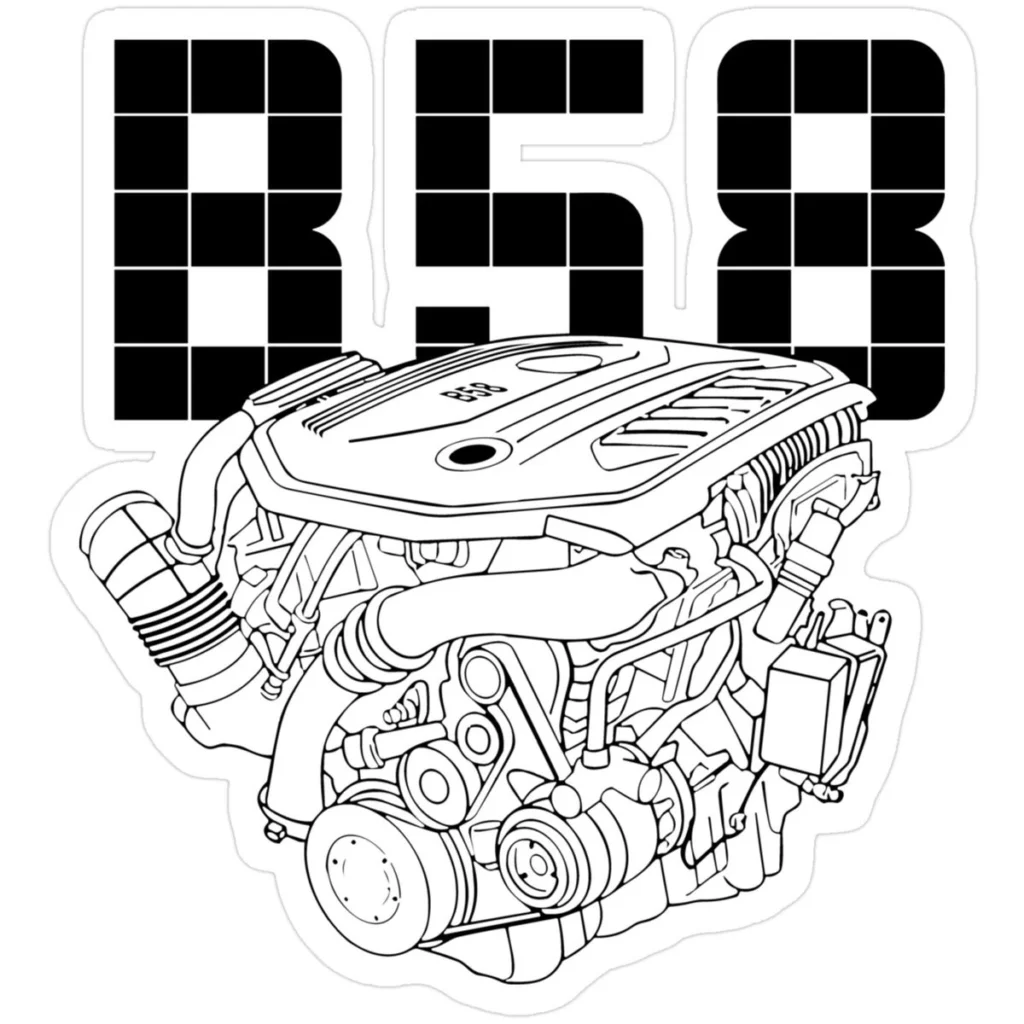
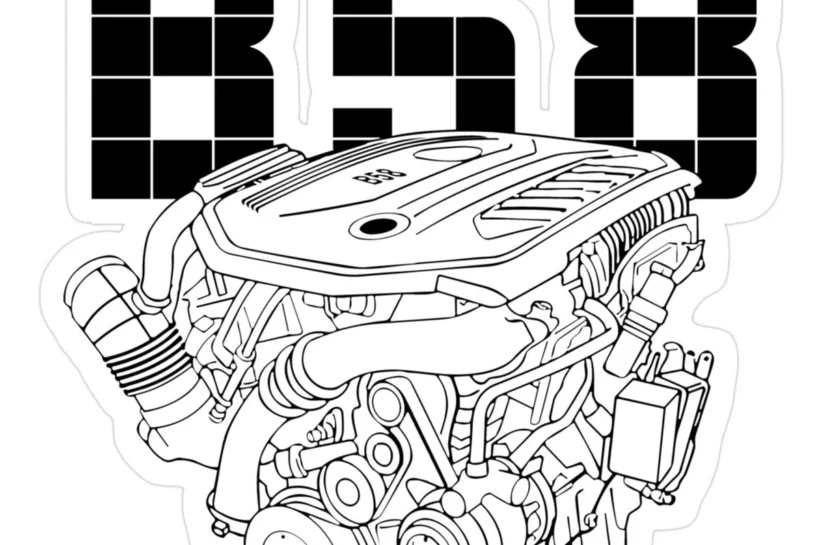

The BMW B58 is a 3.0-liter turbocharged inline-six that replaced the N55 in BMW’s six-cylinder performance lineup. It first appeared in the F30-generation 340i and has since spread across BMW sedans, coupes, SUVs, and the Z4, as well as non-BMW vehicles such as the Toyota GR Supra. BMW introduced the original B58 with 320 hp in the U.S.-spec 340i, and the engine has continued to evolve through later technical updates and 48V mild-hybrid applications.
One point matters before comparing specifications: there is not one universal B58 specification. BMW has revised the engine several times, and output, compression ratio, fuel-system design, and hybrid assistance can differ between applications.
What Is the BMW B58 Engine?
B58 Engine Basics
The B58 is BMW’s 2,998 cc inline-six gasoline engine with a single twin-scroll turbocharger, direct fuel injection, Valvetronic variable valve lift, and Double-VANOS variable camshaft timing. The original engine uses an aluminum block and was designed as part of BMW’s modular engine family, sharing its basic per-cylinder architecture with smaller three- and four-cylinder B-series engines.
One of the B58’s important design features is its closed-deck block. In simple terms, the cylinder walls are supported more extensively by the upper block structure than in an open-deck design. That provides a strong foundation for a turbocharged engine and helps explain why the B58 has become popular with performance enthusiasts.
The B58 also uses water-to-air charge-air cooling. Instead of sending compressed intake air through a conventional remote air-to-air intercooler, the charge cooler is integrated into the engine’s intake system. This allows BMW to keep the intake path compact while managing charge temperatures close to the engine.
When Did BMW Introduce the B58?
BMW introduced the B58 with the F30 340i. BMW’s original technical material identifies the B58B30M0 as the successor to the N55B30M0, with 2,998 cc displacement, 320 hp, and 330 lb-ft in the original 340i specification.
BMW’s launch announcement described the 340i as the first model in its lineup to use the new B58. The engine replaced the N55-powered 335i and used BMW’s TwinPower Turbo technology, high-precision injection, Double-VANOS and Valvetronic.
The B58 therefore sits between two eras of BMW’s turbocharged inline-six development: it inherited the performance role of the N55 while introducing a substantially revised engine architecture that BMW could continue developing for changing emissions, efficiency and performance requirements.
BMW B58 Engine Specs
B58 Core Specifications
The following figures describe the B58’s basic architecture. Where a figure changes between variants, it is shown as application-dependent rather than presented as a universal B58 number.
| Specification | BMW B58 |
| Configuration | Inline-six, gasoline |
| Displacement | 2,998 cc |
| Bore | 82.0 mm |
| Stroke | 94.6 mm |
| Turbocharger | Single twin-scroll |
| Fuel system | Direct injection; later applications vary |
| Valvetrain | DOHC, Valvetronic, Double-VANOS |
| Block | Aluminum closed-deck |
| Charge-air cooling | Water-to-air |
| Compression ratio | Variant-dependent |
| Factory output | Varies substantially by application |
BMW’s original B58B30M0 specification lists an 82.0 mm bore, 94.6 mm stroke, 11.0:1 compression ratio, 320 hp and 330 lb-ft.
A later B58B30M2 application shows why quoting one number for every B58 can be misleading. In the 2025 M340i, BMW lists a 10.2:1 compression ratio and a 375 hp engine combined with an 11-hp 48V electric assist system for a 386 hp total system output.
Why B58 Specs Vary by Model and Year
Different B58 cars can have different published horsepower, torque, and compression figures because BMW has used several versions of the engine and calibrated them differently for each vehicle.
The same basic 3.0-liter architecture can therefore appear in a 3 Series, 5 Series, X5, Z4 or another application with a different factory output. Newer models can also combine the combustion engine with a 48V mild-hybrid system, which creates another distinction between engine output and system output.
That is why a statement such as “the B58 makes 382 hp” is incomplete. It may describe one specific application, but it does not describe the entire B58 family.
Expand Your Knowledge: Robotics and Automation: Changing the Workforce and Everyday Life
B58 Generations and Technical Updates
Original B58
The original B58B30M0 established the basic formula: a 2,998 cc turbocharged inline-six with a closed-deck aluminum block, water-to-air charge cooling, and BMW’s latest variable-valve and fuel-injection technology for the period.
Its role was not limited to making more power than the outgoing N55. BMW designed the engine as part of a modular architecture that could be adapted for different vehicles and future requirements.
B58TU
BMW’s B58 Technical Update introduced several meaningful hardware changes rather than being a minor software revision.
BMW’s technical documentation lists 350-bar fuel injection, a cylinder head with an integrated exhaust manifold, an adapted steel turbocharger, split cooling, a revised heat-management system, and a single-part chain drive among the major changes.
The split-cooling system is particularly important because it allows the cylinder head and crankcase cooling circuits to be managed separately under certain operating conditions. BMW designed this to improve warm-up and thermal management rather than simply adding another cooling component.
The B58TU therefore matters to buyers and tuners because two cars both described simply as “B58” can have noticeably different hardware.
B58TU2 and Later Applications
Later B58B30M2 applications brought another round of changes aimed at efficiency, emissions, combustion, and power delivery.
BMW’s current-generation documentation identifies changes including the Miller combustion cycle, revised intake ports and combustion-chamber geometry, updated injection and ignition systems, revised exhaust-gas routing, camshaft-control changes, and other hardware revisions. BMW uses the B58B30M2 in applications such as the X3 M50 xDrive.
Some later B58B30M2 applications also use dual fuel injection strategies, combining direct injection with port injection. The exact configuration should therefore be tied to the specific engine code and vehicle rather than automatically applied to every B58.
How to Identify Your B58 Variant
The word “B58” alone is not enough when ordering parts, comparing engines, or evaluating a used BMW.
Use the vehicle’s VIN and build information, production date, exact model, and engine code. Engine codes such as B58B30M0, B58B30M1 and B58B30M2 are much more useful for identifying the hardware than simply calling a car “a B58.”
This distinction is especially important when comparing fuel-system components, charge-air hardware, calibration options, or replacement parts.
Which BMW Models Have the B58 Engine?
B58-Powered BMW Cars
The B58 has appeared across a large portion of BMW’s six-cylinder lineup. Depending on generation and market, notable applications include the 340i and M340i, 440i and M440i, M240i, 540i, 740i, 840i, and Z4 M40i.
The exact engine version can change even when the model name remains similar, so a model list should always be read alongside its production year and engine code.
For example, BMW uses the B58B30M2 in the current M340i, while earlier M340i versions used earlier B58 variants. The name “M340i” therefore identifies the vehicle line, not a single unchanged engine specification.
B58-Powered BMW SUVs
BMW also uses the B58 in several SUVs, including applications such as the X3 M40i/M50, X4 M40i, X5 xDrive40i, X6 xDrive40i and X7 xDrive40i.
Again, the same badge does not guarantee the same engine revision. Production year and market determine the exact powertrain, and newer vehicles can include 48V mild-hybrid technology alongside the B58.
Other Vehicles That Use the B58
The B58 became notable outside BMW because of the Toyota GR Supra.
Toyota’s fifth-generation Supra was developed through a collaboration with BMW, and the 3.0-liter Supra uses the B58. Toyota’s documentation identifies the engine as the B58B30O1 and lists the same 82.0 mm bore and 94.6 mm stroke used by the BMW engine family.
The B58 has also been used in vehicles outside the BMW/Toyota partnership, including the INEOS Grenadier and Morgan Plus Six. Its use across such different vehicles is one reason the engine has become more than a BMW-only powertrain story.
How to Check Whether a BMW Has a B58
Do not identify the engine from the badge alone.
A reliable check starts with the exact model and production year and should then be confirmed using the VIN or vehicle build information. The engine code is the most useful reference when you need to know which B58 version is actually installed.
This matters because BMW has used several B58 variants across different model years, and some similarly badged BMWs use four-cylinder, V8, or hybrid powertrains instead.
Expand Your Knowledge: V2X Sabotage
How Much Power Does the B58 Make?
Factory B58 Power
The original U.S.-spec B58 in the 340i produced 320 hp and 330 lb-ft.
Later applications moved well beyond that. BMW’s 2025 M340i, for example, uses a B58B30M2 that produces 375 hp from the combustion engine, while the 48V system can add 11 hp for a 386 hp system output.
Toyota provides another useful example. In the upgraded GR Supra 3.0, Toyota lists the B58B30O1 at 387 PS, while the limited A90 Final Edition uses the same basic engine type with a substantially higher 435 PS output in the specifications published for those models.
These examples show why “B58 horsepower” is not one fixed number.
Why B58 Horsepower Figures Differ
Factory output changes with engine version, vehicle packaging, calibration, emissions requirements, market, and model year.
BMW can also use the same combustion engine with different levels of electrical assistance. When a manufacturer quotes system output, that figure may include the contribution of a 48V starter-generator or other hybrid hardware.
For that reason, when comparing B58 cars, always ask which B58, in which vehicle, from which model year and market?
B58 Engine Output vs System Output
This distinction becomes particularly important on newer BMWs.
The 2025 M340i is a clear example: BMW lists 375 hp for the B58B30M2 engine and 386 hp for the complete system, with the 48V electric drive providing up to 11 hp of additional assistance.
A published vehicle horsepower figure therefore does not always represent combustion-engine output alone.
Why Is the B58 So Popular With Enthusiasts?
Engine Design
The B58 combines several characteristics that make it attractive as a performance engine: a strong closed-deck block, turbocharging, sophisticated thermal management, compact water-to-air charge cooling, and a factory engine-management system designed for a wide range of operating conditions.
Its strength is not one magic component. The appeal comes from the combination of a strong engine core and the ability to produce substantial factory performance while remaining suitable for ordinary road cars.
Why the B58 Has Strong Tuning Potential
The B58 also started with a useful performance margin because BMW needed one engine family to work across cars with very different goals.
That has created a large tuning ecosystem around the engine. ECU calibration can increase boost and alter ignition and fueling strategies, while hardware changes can support substantially higher output.
However, the right question is not simply “How many horsepower can a B58 make?” It is how much power a particular B58 can make while meeting the driver’s requirements for reliability, response, heat control, and drivability.
Is the BMW B58 Engine Reliable?
Why the B58 Has a Strong Reliability Reputation
The B58 has earned a strong reputation because its basic architecture is robust and BMW has continued refining it rather than abandoning the design after its initial release.
BMW’s subsequent revisions focused on cooling, fuel delivery, combustion, emissions, and thermal management while retaining the core inline-six concept. That development history is one reason newer B58 applications can differ meaningfully from early versions while still belonging to the same engine family.
But “reliable” should not be confused with “maintenance-free.” A strong engine block can still have cooling components, seals, ventilation components, and other parts that wear or fail with age.
Common B58 Problems
The most useful way to think about B58 problems is to separate the engine core from its supporting systems.
Specialist repair coverage commonly points to issues such as oil-filter-housing leaks, PCV or valve-cover problems, and cooling-system leaks. These issues can vary with engine version, age, and vehicle application, so they should be treated as inspection points rather than proof that every B58 will suffer the same failure.
Cooling deserves particular attention because the B58 uses a complex thermal-management system. A coolant leak may begin as a small service issue but can become expensive if ignored and the engine overheats.
The oil-filter housing is another area worth checking on applicable cars. Specialist repair sources report that the composite housing and its sealing surfaces can develop leaks after repeated heat cycles.
PCV problems can also show recognizable symptoms, including unusual whistling, rough running, or increased oil consumption. Because the crankcase ventilation hardware is integrated into the valve-cover assembly on many B58 applications, diagnosis and repair can involve more than simply replacing a small external valve.
None of these points mean that the B58 is an unreliable engine. They mean that buying a used BMW should involve inspecting the whole powertrain, not just relying on the B58 name.
B58 Maintenance
The most important maintenance decision is simple: buy and maintain the individual car, not the engine’s reputation.
Check the service history, inspect for oil and coolant leaks, verify that the cooling system is operating correctly, and look for evidence of previous tuning or poorly installed modifications.
The exact service requirements also depend on the model and market, so use the manufacturer’s maintenance schedule and the correct fluid specifications for the vehicle rather than copying a generic interval from another B58 application.
Does the B58 Have a Mileage Limit?
There is no credible single mileage number that guarantees how long every B58 will last.
A well-maintained, lightly modified engine used under normal conditions has a different risk profile from a heavily tuned example that has spent years under high thermal and cylinder-pressure loads.
The sensible way to judge a higher-mileage B58 is to look at its maintenance history, symptoms, oil and coolant condition, diagnostic results, and modification history. Mileage is one variable, not a verdict on the engine.
How Much Can You Tune a B58?
Why the B58 Responds Well to Tuning
The B58’s combination of turbocharging, strong core architecture, and sophisticated electronic control makes it responsive to calibration changes.
An ECU tune can alter boost, ignition, and fueling strategies, but the actual gain depends heavily on the engine version, fuel, calibration, and starting output. A tune developed for one B58 should not automatically be treated as equivalent on another.
What Limits Higher Power?
As output rises, the turbocharger, fueling, charge-air cooling, engine-management strategy, and supporting hardware become increasingly important.
This is where many simplified B58 tuning claims become misleading. The fact that the engine block can support substantial power does not mean every stock component around it will support the same output.
HPA’s tuning coverage illustrates the huge range of B58 builds, from software-only modifications to highly modified engines using upgraded turbochargers, fueling, and internal components. Those extreme builds are useful evidence of the platform’s tuning range, but they should not be confused with a normal street-car recommendation.
Is There a Safe B58 Horsepower Limit?
There is no single horsepower number that can be called universally safe for every B58.
A sensible limit depends on the specific engine variant, fuel quality, calibration, turbocharger, cooling system, supporting modifications, drivetrain, and intended use.
For a daily-driven car, maintaining predictable temperatures and drivability may be more important than chasing the highest dyno number. For a dedicated performance build, the owner may accept much greater component stress in exchange for higher output.
B58 vs N55: What Changed?
The B58 replaced the N55 in BMW’s six-cylinder lineup, but the change was more substantial than a simple increase in horsepower.
| Area | B58 | N55 |
| Displacement | 2,998 cc | 2,979 cc |
| Layout | Inline-six | Inline-six |
| Turbocharging | Single twin-scroll | Single twin-scroll |
| Block design | Closed-deck aluminum | Open-deck aluminum |
| Charge cooling | Water-to-air | Air-to-air |
| Variable valve systems | Valvetronic + Double-VANOS | Valvetronic + Double-VANOS |
| Main role | Successor to N55 | Predecessor to B58 |
BMW’s own technical documentation directly compares the original B58B30M0 with the N55B30M0 and identifies the B58 as the N55’s successor. The B58 also increased displacement slightly and delivered higher factory output in the original 340i application.
The differences matter because the B58’s packaging and thermal-management approach created a newer foundation for BMW’s later performance and emissions requirements.
What About the S58?
The S58 should not be treated as simply a B58 with different turbochargers.
It is a separate high-performance BMW M engine developed for higher-output applications, with its own hardware and calibration strategy. The B58 and S58 share the broader modern BMW inline-six lineage, but they serve different roles. HPA also treats the S58 as a distinct, more specialist engine rather than simply another B58 variant.
Expand Your Knowledge: Modernizing Older Cars
What Should You Check Before Buying a Used B58 BMW?
Confirm the Exact B58 Variant
Start with the VIN, production date, model, and engine code.
Do not assume that two BMWs with similar badges contain identical B58 hardware. The difference can affect parts compatibility, tuning options, factory output, and maintenance considerations.
Check Service History
A documented service history is more useful than a low odometer reading on its own.
Look for evidence of regular maintenance and investigate any gaps, warning lights, repeated cooling issues, or unexplained repairs.
Look for Cooling and Oil-Leak Issues
Inspect the engine bay for signs of coolant or oil leakage and pay attention to coolant-level warnings, overheating history, burning-oil smells, or fresh residue around known sealing points.
A small leak is still worth diagnosing before purchase because the repair cost can vary significantly depending on where the leak originates.
Check for Tuning or Major Modifications
Ask whether the vehicle has ever been tuned and whether the current hardware matches the calibration.
An extensively modified B58 is not automatically a bad purchase, but it needs a different inspection standard from an untouched daily driver. Poorly installed hardware, repeated overheating, fueling problems, or an aggressive calibration can tell you more about the vehicle’s history than the engine badge does.
Get the Car Diagnosed Before Buying a Used B58 BMW
A pre-purchase inspection should include a diagnostic scan, inspection for oil and coolant leaks, and a review of the vehicle’s maintenance and modification history.
For a higher-value purchase, having a BMW specialist inspect the car can be worthwhile because the goal is not simply to confirm that the engine starts. It is to identify problems that could become expensive after the sale.
Conclusion
The BMW B58 is best understood as an engine family, not a single fixed specification.
It started with the F30 340i as the successor to the N55, using a 2,998 cc turbocharged inline-six architecture. BMW later revised the engine’s fuel system, cooling strategy, cylinder head, turbocharger, and combustion systems, while current B58B30M2 applications add another layer of efficiency and hybrid-system integration.
That evolution explains why different B58 cars can have different horsepower, torque, and compression figures while still sharing the B58 name.
For buyers, the key is to identify the exact engine variant and inspect the individual car’s maintenance and modification history. For enthusiasts, the B58’s strong architecture and tuning ecosystem make it an unusually flexible performance platform, but there is no universal horsepower or reliability limit that applies to every version.
More than a decade after its introduction, the B58 remains an important part of BMW’s performance lineup and has become equally recognizable through the Toyota GR Supra and other non-BMW applications.
BMW B58 Engine FAQs
What is the BMW B58 engine?
The B58 is BMW’s 2,998 cc turbocharged inline-six gasoline engine. It uses a single twin-scroll turbocharger, direct injection, Valvetronic, Double-VANOS, and a closed-deck aluminum block.
When did BMW start using the B58?
BMW introduced the B58 with the F30 340i. The original U.S.-spec engine produced 320 hp and 330 lb-ft and replaced the N55-powered 335i.
Is the B58 a reliable engine?
The B58 has a strong reliability reputation, but it is not maintenance-free. Cooling-system components, oil-filter housing leaks, PCV/valve-cover problems, and other age-related issues can occur depending on the vehicle and engine version.
Which BMWs use the B58?
B58 applications include models such as the 340i/M340i, 440i/M440i, M240i, 540i, 740i, 840i, Z4 M40i and several X3, X4, X5, X6 and X7 variants. Exact applications depend on model year and market.
Does the Toyota Supra have a B58?
Yes. The 3.0-liter fifth-generation GR Supra uses a BMW B58 engine. Toyota’s official specifications identify the engine as B58B30O1.
How much horsepower can a B58 make?
Factory output varies by engine version and vehicle. Modified B58s can produce substantially more power than stock, but there is no universal safe horsepower limit. The appropriate limit depends on the exact engine, fuel, calibration, turbocharger, cooling, and supporting hardware.
Is the B58 better than the N55?
They are different generations of BMW’s turbocharged inline-six development. The B58 introduced a newer closed-deck architecture and water-to-air charge cooling and replaced the N55 in BMW’s lineup. Which engine makes more sense depends on the vehicle, age, budget, and intended use rather than a single universal ranking.
How can I tell whether my BMW has a B58?
Check the exact model and production year, then confirm the engine through the VIN/build information or engine code. Do not rely solely on a “40i” badge because BMW used different engines and revisions across its lineup.
🔔 Follow Tech Statar for more insights like this!