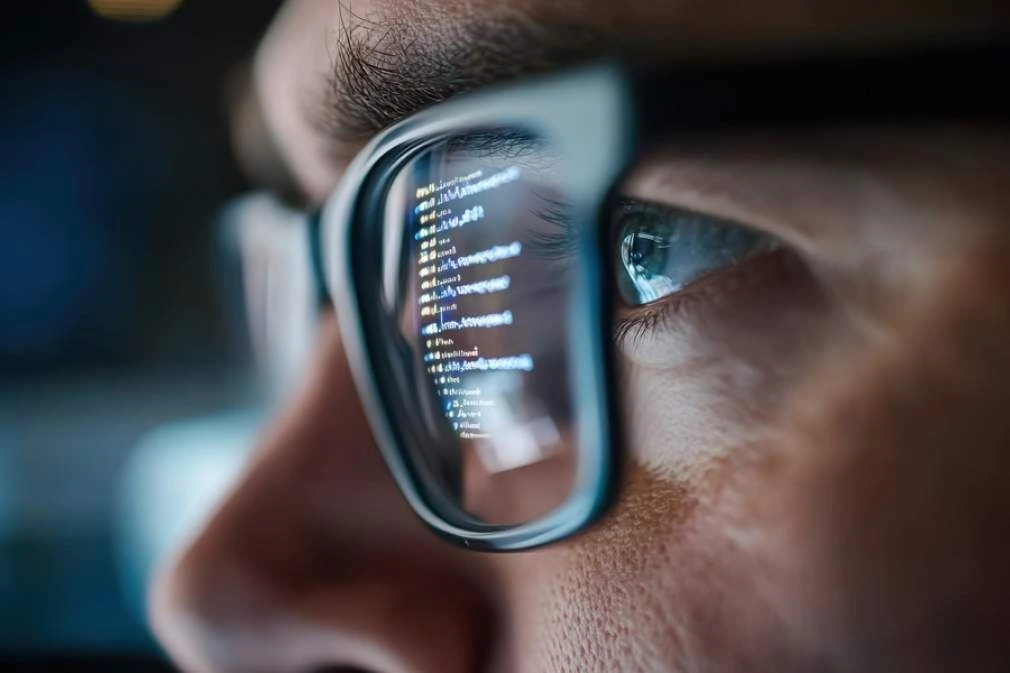

AI Glasses, Screen Time, and Eye Health: The Modern Professional’s Reality
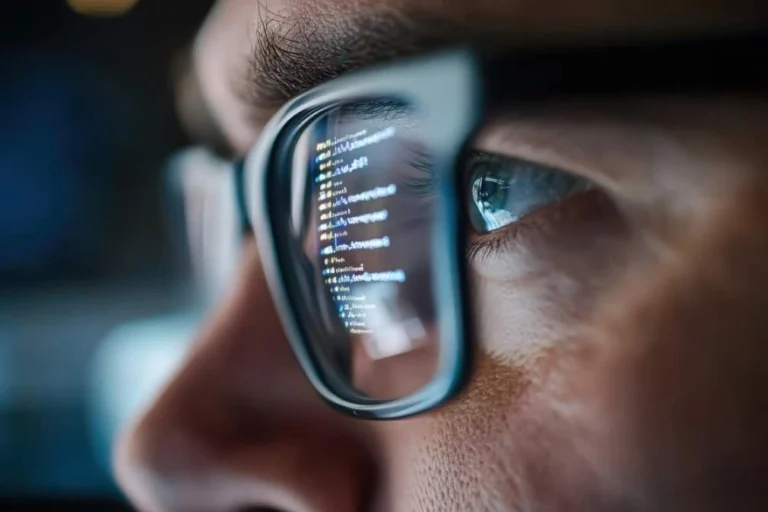
Digital eye strain is the defining occupational hazard of the modern knowledge worker. The numbers do not lie. Currently, roughly 65% of Americans report digital eye strain, a condition directly correlated to unyielding, unprotected screen exposure. You sit under aggressive fluorescent lights. You stare at high-refresh-rate monitors for ten hours straight. Then you wonder why your vision completely blurs by 4:00 PM. The solution is not a temporary five-minute break. It requires a systemic, aggressive overhaul of how you interact with digital interfaces. From adopting advanced AI glasses to implementing strict ambient lighting protocols, your setup dictates your health. Human anatomy has not evolved to handle the digital demand we blindly place on the optic nerve.
Your eyes are paying the heavy toll for constant connectivity. Silicon Valley optimized the software beautifully. They completely ignored the hardware: your corneas. Every notification, every endless scrolling feed, and every poorly lit video call degrades your visual stamina. The physical consequences compound daily.
What Is Digital Eye Strain Actually Doing to Us?
We treat eye fatigue like a mild inconvenience. This is a mistake. It is an active ergonomic failure occurring in real time. Staring at a fixed focal point for hours on end causes the ciliary muscles inside your eyes to lock into a state of persistent spasm.
Blink Rate Collapse: Humans naturally blink 15 to 20 times per minute. Staring at an LED screen drops that rate by a staggering 60%. Tears evaporate immediately. The cornea dries out. Friction between the eyelid and the eye increases exponentially.
Blue Light Toxicity: High-energy visible light scatters more easily than other visible light on the spectrum. This scatter severely reduces optical contrast. Your eyes must work significantly harder to resolve the image on the display.
Postural Collapse: Vision always dictates posture. When text is too small, you lean forward. Your neck extends out of alignment. Shoulder tension skyrockets, leading to brutal cervicogenic headaches that constantly masquerade as pure eye strain.
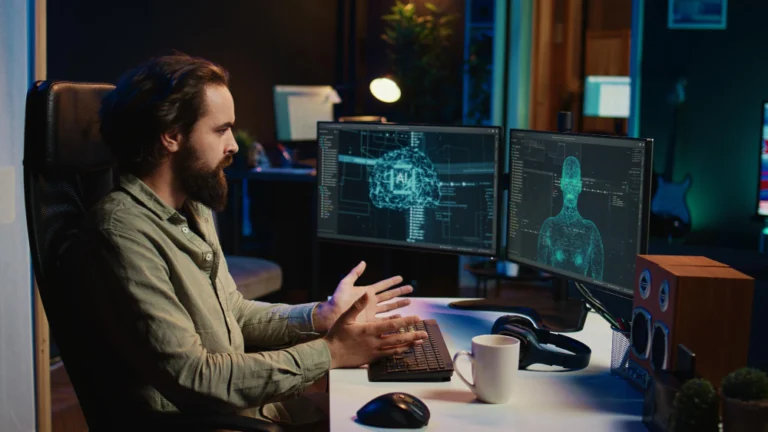
The remote work era accelerated this biological degradation. It forced the virtualization of all communication, leading to a 40 percent surge in cases of computer vision syndrome over the last six years alone. When you spend six hours optimizing video conferencing for better online meetings, you are aggressively taxing your binocular vision. You stare into a harsh ring light. You read tiny chat boxes. You monitor multiple faces on a flat, bright grid. Your eyes are constantly refocusing between different depths and contrasts on a two-dimensional plane.
Workplace productivity losses exceed $2 billion annually due directly to this specific visual fatigue.
Why Are Wearable Tech and AI Glasses Taking Over?
Eyewear is undergoing a massive computational shift. We are aggressively moving past passive plastic lenses. The current iteration of AI glasses integrates heads-up displays, directional bone-conduction audio, and localized machine learning processing directly into the frames.
These devices overlay digital information onto the physical world. You do not need to look down at a smartphone. You do not need to break your field of view. The data comes directly to you. When integrating free AI assistants for personal use into these specific frames, the utility scales exponentially. You ask a question out loud. The AI processes the request instantly. The text projects onto the inside of the lens waveguide.
But this introduces a completely new optical challenge. Focal disparity.
Vergence-Accommodation Conflict: Your eyes are physically converging on a virtual object that appears to be three meters away, but they are technically accommodating to a tiny screen just millimeters from the pupil.
Peripheral Distraction: Flashing notifications in the corner of your eye trigger rapid, involuntary saccadic eye movements. This heavily fatigues the extraocular muscles.
Weight Distribution: Tech companies cram batteries, sensors, and chips into the arms of the glasses. The heavy frames press tightly on the trigeminal nerve behind the ears, causing intense tension headaches independent of screen use.
To process these constant, heavy data streams, these frames rely almost entirely on offloading computation. Understanding the technology behind the cloud explains exactly how these lightweight frames can deliver real-time translations without overheating and burning your face. The intense processing happens in a server farm hundreds of miles away.
Hardware manufacturers are currently fighting the rigid laws of physics to make optical waveguides thinner.
What Really Causes That Chronic Bloodshot Look?
Red eyes are the universal, unavoidable indicator of an overworked professional. Desperate marketing campaigns insist you just need a specific type of hydrating drop. The reality is far more mechanical.
Blood vessels on the surface of the sclera expand rapidly when irritated. This is vasodilation. It is a harsh inflammatory response to environmental stressors. Staring at dense code all night is a major trigger. Office air conditioning blowing directly into your face is a trigger. Heavy alcohol consumption disrupting normal sleep architecture is a massive trigger.
People immediately jump to the worst possible conclusions when they look in the mirror. They assume severe infection. They assume permanent ocular damage. Getting past the panic requires understanding the misconceptions about bloodshot eyes. Most redness stems from simple surface desiccation, not a sight-threatening pathology. The tear film is a complex three-layer structure consisting of mucin, aqueous, and lipid components. When you stop blinking during deep, focused work, the outer lipid layer degrades rapidly. The underlying aqueous layer then evaporates instantly into the dry office air.
Preservative-heavy eye drops often make the redness noticeably worse over time. They cause a phenomenon called rebound hyperemia. The blood vessels shrink temporarily, then expand much larger than before once the chemical inevitably wears off.
Epithelial cell sloughing occurs rapidly when the eye becomes too dry.
Do You Still Need Traditional Eye Protection Outdoors?
Tech workers obsess over blue light from monitors while completely ignoring the actual radiation source waiting outside. The sun emits relentless ultraviolet radiation that systematically degrades delicate ocular tissue.
No amount of indoor screen-time optimization protects you from UV rays. Wearing proper, rated eyewear outdoors is a non-negotiable biological requirement. The CDC explicitly warns that sunglasses must block both UVA and UVB rays to offer functional protection. Cheap convenience store sunglasses often feature very dark tints without actual UV filters. This is actively dangerous. The dark tint forces your pupil to dilate widely. The total lack of a filter allows massive, unfiltered amounts of UV radiation to pour directly into the dilated eye.
Style and absolute utility have to merge. A heavy tech professional aesthetic does not require you to wear ugly tactical goggles on the weekend. Choosing classic round frames provides excellent physical coverage for the orbital socket while maintaining a highly refined aesthetic profile. The specific frame shape matters immensely. Round designs often wrap slightly closer to the cheekbone, effectively cutting off lower-angle light reflections bouncing off water, snow, or wet pavement.
Long-term exposure without physical filtration leads directly to growths on the eye such as pterygium. These are highly visible, fleshy masses that grow aggressively over the cornea. They require invasive surgical removal. They are entirely preventable with consistent, daily UV blocking.
Ultraviolet index levels peak sharply between 10:00 AM and 4:00 PM.
Optimizing Your Optical Environment
How far should a monitor be from my face? Exactly an arm’s length away. Position the top bezel of the display at or slightly below eye level. Looking slightly downward actively reduces the exposed surface area of the eye, drastically minimizing rapid tear evaporation.
Are blue light blocking lenses actually effective? For sleep hygiene, yes. For reducing digital eye strain, absolutely not. Strain comes from severely reduced blinking and focusing fatigue, not the specific wavelength of the light itself. Turning down the raw brightness of your monitor yields a significantly higher ROI than buying zero-magnification yellow-tinted glasses.
Should I wear AI glasses all day? Only if your workflow absolutely demands constant ambient data. Extended use forces your eyes to constantly shift focus back and forth between the physical environment and the digital optical overlay. The cognitive load alone will exhaust you long before the physical eye strain does. Use them exclusively for specific, tightly time-boxed tasks.
What is the 20-20-20 rule and does it actually work? Every 20 minutes, look at an object 20 feet away for exactly 20 seconds. It forces the spasming ciliary muscle to relax. It works perfectly if you actually do it. Most people ignore the timer.
What display technology is best for eye health? OLED screens perform better than traditional IPS LCDs in dark environments. They offer infinite contrast ratios because individual pixels turn off completely. This sharply reduces the overall light blasting into your retina while keeping text highly legible.
A poorly calibrated monitor ruins your vision faster than age.
In the end
Protecting your vision in a heavily digitized environment requires aggressive defensive strategies. Passive measures fail. You must consciously engineer your workspace and your daily habits to forcibly support ocular health.
Control the Ambient Lighting: Eliminate harsh overhead fluorescent lights entirely. Use soft bias lighting directly behind your monitors to drastically reduce screen glare and contrast fatigue.
Regulate Screen Distance and Height: Buy a heavy-duty monitor arm. Factory desk stands always sit too low. If you have to tilt your chin down to see the bottom of the screen, the ergonomics are broken.
Manage Outdoor Exposure: Treat outdoor UV radiation with the exact same seriousness you treat incoming cybersecurity threats. Unfiltered sun exposure creates cumulative, irreversible cellular damage.
Audit Your Wearable Tech: Ruthlessly evaluate whether your AI glasses are providing actual, measurable utility or just artificially increasing your baseline cognitive load.
Ergonomic failure is always a choice. You either adapt your hardware setup to physically fit human biology, or your human biology will break down trying to adapt to the hardware. Adjust the monitor height today.