
Why Are Backlinks Important? Full Guide to Better SEO Performance
If you’ve spent even a few minutes learning about SEO, you’ve probably heard the phrase “backlinks are one of Google’s top ranking factors.” While that’s true, many website owners still don’t understand why backlinks matter or how they influence search rankings.
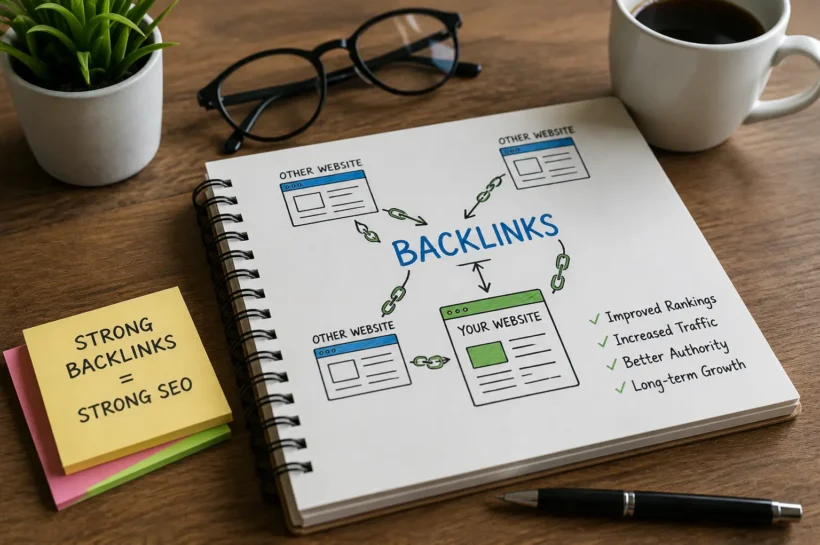
Think of a backlink as a vote of confidence. When another website links to one of your pages, it signals that your content is useful, trustworthy, or worth referencing. Search engines use these signals to evaluate the credibility and authority of your website. The stronger and more relevant those signals are, the better your chances of earning higher visibility in search results.
However, SEO has evolved significantly over the years. Search engines no longer reward websites simply because they have the highest number of backlinks. Today, they focus on the quality, relevance, and context of those links. A single backlink from a respected website in your industry can carry far more value than dozens of links from unrelated or low-quality sources.
Backlinks do more than improve rankings. They help search engines discover new pages, strengthen your website’s authority, attract qualified visitors, and establish your brand as a reliable source within your niche. Whether you’re running a personal blog, an online store, or a business website, understanding the role of backlinks is essential if you want to build long-term organic growth.
In this guide, you’ll learn what backlinks are, why they remain important in modern SEO, and how they contribute to better rankings and stronger online visibility.
What Are Backlinks?
A backlink is a hyperlink from one website that points to another website. In SEO, these links are also known as inbound links because they bring visitors and authority from an external website to yours.
For example, imagine a marketing blog publishes an article about content strategy and links to your guide because it provides additional insights. That hyperlink becomes a backlink for your website.
Every backlink creates a connection between two websites, but not every backlink carries the same weight. Search engines evaluate several factors before deciding how much value a particular link passes, including the authority of the referring website, the relevance between both pages, and the natural placement of the link within the content.
The concept is simple: if reputable websites consistently reference your content, search engines are more likely to view your website as a credible resource worth recommending to users.
Inbound Links vs. Outbound Links
People often confuse backlinks with outbound links, but they serve different purposes.
An inbound link is a backlink pointing from another website to yours. These are the links that help build your website’s authority and influence your search rankings.
An outbound link, on the other hand, is a link from your website to another website. While outbound links don’t directly increase your authority, linking to trustworthy sources can improve the overall quality and credibility of your content by providing readers with additional context.
Understanding this distinction is important because when SEO professionals discuss backlinks, they are referring specifically to inbound links.
How Search Engines View Backlinks
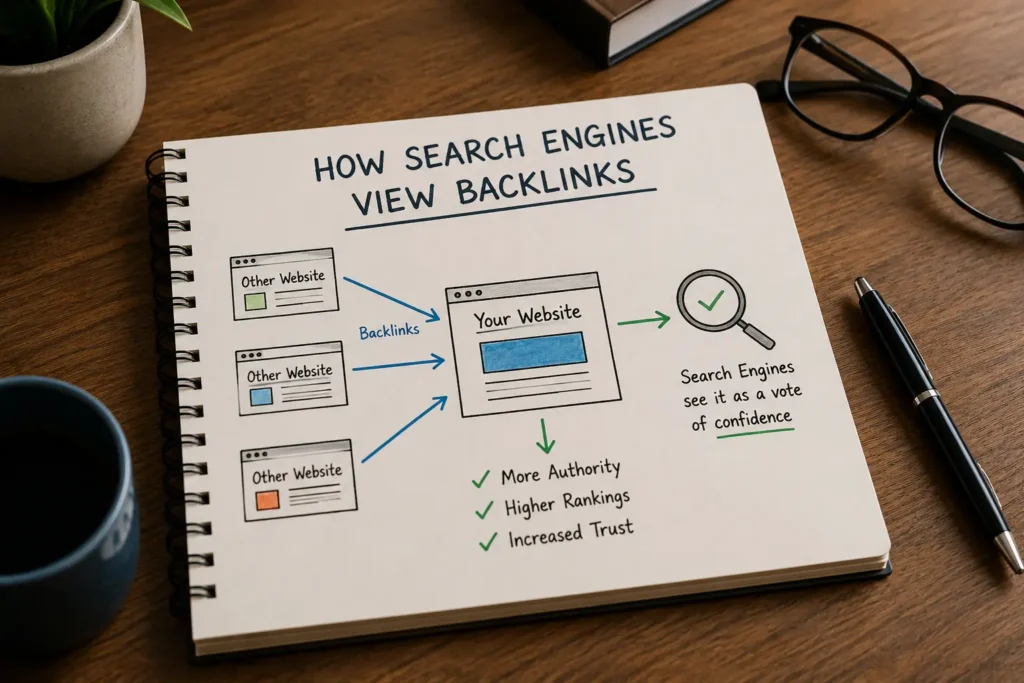
Search engines aim to provide users with the most helpful and reliable results for every search query. To accomplish this, they analyze hundreds of ranking signals, and backlinks continue to be one of the strongest indicators of a page’s credibility.
You can think of backlinks as professional recommendations. If respected websites in your industry repeatedly reference the same page, it suggests that the information is valuable enough to cite. Search engines interpret these references as signals that the content deserves greater visibility.
This idea has been part of Google’s ranking systems since its early days. Google’s original PageRank algorithm evaluated the importance of webpages based largely on the links pointing to them. Although today’s ranking systems are much more advanced and consider many additional factors, backlinks still play a significant role in determining authority and trust.
Modern search engines don’t simply count links. They analyze the quality behind each one. A backlink from a well-established, relevant website generally carries more value than several links from websites with little authority or unrelated content. They also examine whether a link appears naturally within meaningful content rather than being artificially placed to manipulate rankings.
Context matters as well. If an established cybersecurity website links to an article about online security, that backlink sends a much stronger relevance signal than a link coming from an unrelated website discussing completely different topics.
Search engines also evaluate patterns over time. Websites that consistently earn genuine backlinks because they publish useful content tend to build stronger authority than websites relying on manipulative link-building tactics. This is one reason why sustainable SEO focuses on creating valuable resources that naturally attract references from other publishers.
Rather than viewing backlinks as a shortcut to higher rankings, it’s more accurate to think of them as evidence of reputation. The more trustworthy websites that genuinely recommend your content, the easier it becomes for search engines to recognize your expertise and confidence in your website.
This foundation explains why backlinks continue to play such an important role in SEO today. They help search engines understand not only what your content is about, but also whether it’s worthy of appearing prominently in search results.
Why Are Backlinks Important for SEO?
Backlinks have remained a core part of SEO for decades, even as search engines have become significantly more sophisticated. While Google’s algorithms now evaluate hundreds of ranking signals, backlinks continue to help search engines understand which pages deserve greater visibility.
The reason is straightforward. Search engines don’t just assess what you publish, they also consider how the rest of the web responds to your content. When authoritative websites choose to reference your pages, it reinforces the idea that your information is valuable, accurate, and worth recommending to others.
That said, backlinks don’t work in isolation. They complement other important SEO factors such as content quality, search intent, user experience, page speed, and technical optimization. When these elements work together, backlinks become even more effective at strengthening your website’s overall performance.
Let’s explore the biggest reasons backlinks continue to matter in modern SEO.
Improve Search Engine Rankings
One of the primary reasons backlinks are important is their ability to improve search engine rankings. When multiple trustworthy websites link to a page, search engines receive stronger signals that the content provides value beyond the website where it was originally published.
Imagine two articles covering the same topic with similar quality. When one article receives backlinks from reputable industry websites, and another doesn’t, the linked article is typically more likely to rank higher because those links signal trust and credibility.
This doesn’t mean every backlink automatically boosts rankings. Search engines analyze where the link comes from, how relevant the referring page is, and whether the recommendation appears natural within the content. A relevant backlink from an established website often carries far more ranking value than dozens of links from unrelated or low-quality domains.
Over time, consistently earning high-quality backlinks can help more pages across your website rank higher in search results, especially for keywords with moderate or high competition.
Build Website Authority and Trust
Backlinks also play a significant role in establishing your website’s authority.
Every reputable website that references your content strengthens your online reputation. These references signal that your content is trusted by others within your industry, making it easier for search engines to recognize your website as a reliable source of information.
Authority isn’t built overnight. It develops gradually as your website continues publishing helpful content and earns backlinks from relevant, trustworthy sources. This growing reputation often makes it easier for future content to perform well because search engines already recognize your website as a credible publisher.
Trust extends beyond search engines. Visitors are also more likely to view your brand as reliable when they discover your content through respected publications, industry blogs, educational resources, or established news websites. Those third-party endorsements create confidence before users even land on your website.
In competitive industries, this accumulated trust can become one of your strongest long-term SEO advantages.
Drive High-Quality Referral Traffic
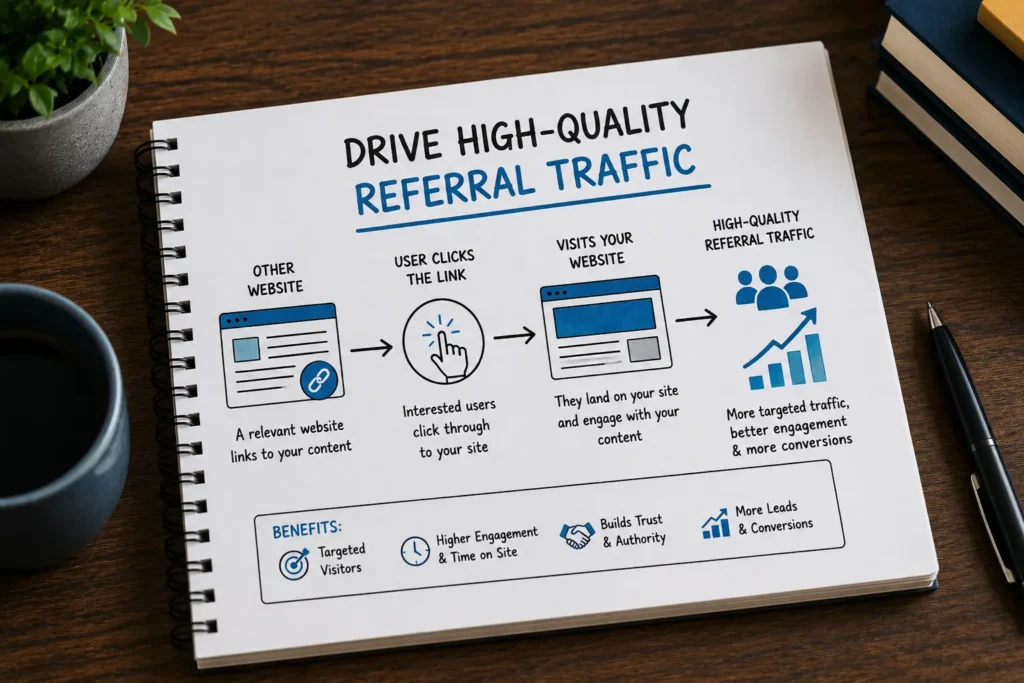
Backlinks don’t only influence rankings, they also introduce your website to entirely new audiences.
When someone reads an article on another website and clicks a relevant link pointing to your content, that visitor becomes referral traffic. Unlike random visitors, referral users often arrive with genuine interest because the linking page has already introduced the topic and established context.
For example, if an AI software blog links to your detailed guide about machine learning tools, readers clicking that link are already interested in AI. As a result, they’re more likely to engage with your content, explore additional pages, or even become customers if your website offers relevant products or services.
Referral traffic can also produce long-term benefits beyond immediate visits. New readers may subscribe to your newsletter, share your content on social media, reference your articles in future publications, or link back to your website from their own content. In this way, one high-quality backlink can create opportunities that extend far beyond SEO alone.
Help Search Engines Discover and Index Content
Search engines constantly crawl billions of webpages to discover new content and keep their indexes up to date. Backlinks help make this discovery process more efficient.
When search engine crawlers visit an established website and encounter a link pointing to one of your pages, they can follow that path to discover your content. This is especially helpful for newly published pages that haven’t yet built strong visibility.
Although submitting XML sitemaps and maintaining good internal linking remain essential for indexing, backlinks provide additional pathways that make it easier for search engines to locate important content.
For growing websites, earning backlinks consistently can improve how quickly new pages are discovered, crawled, and evaluated. Faster discovery doesn’t guarantee higher rankings, but it ensures your content has the opportunity to compete in search results sooner.
This becomes particularly valuable for businesses that regularly publish new resources, research, or industry updates.
Increase Brand Awareness and Industry Recognition
Backlinks also contribute to something difficult to measure but incredibly valuable: brand visibility.
Every time another reputable website mentions your business, your brand reaches an audience that may never have discovered it through search alone. Even if readers don’t immediately click the link, repeated exposure helps build familiarity over time.
As your website begins appearing across respected blogs, industry publications, podcasts, case studies, and resource pages, people naturally associate your brand with expertise in your field. This broader recognition often leads to more branded searches, direct website visits, and additional organic mentions from other publishers.
Brand awareness also creates a positive cycle for SEO. The more recognizable your business becomes, the more likely journalists, bloggers, researchers, and content creators are to reference your work in future articles. Those natural mentions frequently result in additional high-quality backlinks, strengthening your website’s authority even further.
In today’s search landscape, where credibility plays a larger role than ever, backlinks help build both digital authority and real-world reputation. Rather than viewing them solely as ranking signals, it’s more accurate to see them as endorsements that reinforce your expertise, expand your reach, and support sustainable organic growth over the long term.
What Makes a High-Quality Backlink?
Not all backlinks contribute equally to your SEO performance. Search engines have become increasingly effective at evaluating the quality behind each link rather than simply counting how many links point to a page.
Relevance is one of the most important factors. A backlink from a website that covers similar topics sends a much stronger signal than one from an unrelated niche. For example, if you run a cybersecurity blog, a link from another technology or security website is generally more valuable than a link from a fashion or travel blog.
The authority of the referring website also matters. Established websites with a strong reputation have built trust over time, making their recommendations more meaningful. While newer websites can still provide valuable backlinks, links from respected publications, educational institutions, or well-known industry resources often carry greater weight.
Context is another factor that search engines evaluate carefully. A backlink placed naturally within helpful content tends to provide more value than one hidden in a footer, sidebar, or unrelated directory. Editorial links that are included because they genuinely support the topic are generally viewed as stronger signals of quality.
Anchor text also plays a role. The clickable text should accurately describe the linked page without appearing forced or overly optimized. Natural anchor text helps both readers and search engines understand what the destination page is about.
Finally, high-quality backlinks are earned rather than manipulated. When people link to your content because it answers a question, supports an argument, or provides original insights, those links carry significantly more long-term value than links created solely to influence rankings.
Do All Backlinks Have the Same Value?
The simple answer is no.
Years ago, many SEO strategies focused on acquiring as many backlinks as possible. Today, that approach is no longer effective. Modern search engines prioritize quality, relevance, and authenticity over sheer quantity.
A single backlink from a trusted, industry-leading website can contribute more value than dozens of links from low-quality or unrelated websites. That’s because search engines assess the credibility of the source before determining how much trust should be passed to the linked page.
Low-quality backlinks often come from spammy directories, private link networks, automatically generated websites, or pages created only for selling links. These links rarely provide meaningful value and, in some cases, may even harm a website if they reflect manipulative link-building practices.
By contrast, high-quality backlinks are usually earned through useful content, expert insights, original research, case studies, or resources that others naturally want to reference.
The takeaway is simple: building a smaller number of relevant, authoritative backlinks is almost always more beneficial than chasing a large volume of weak links.
How to Get High-Quality Backlinks
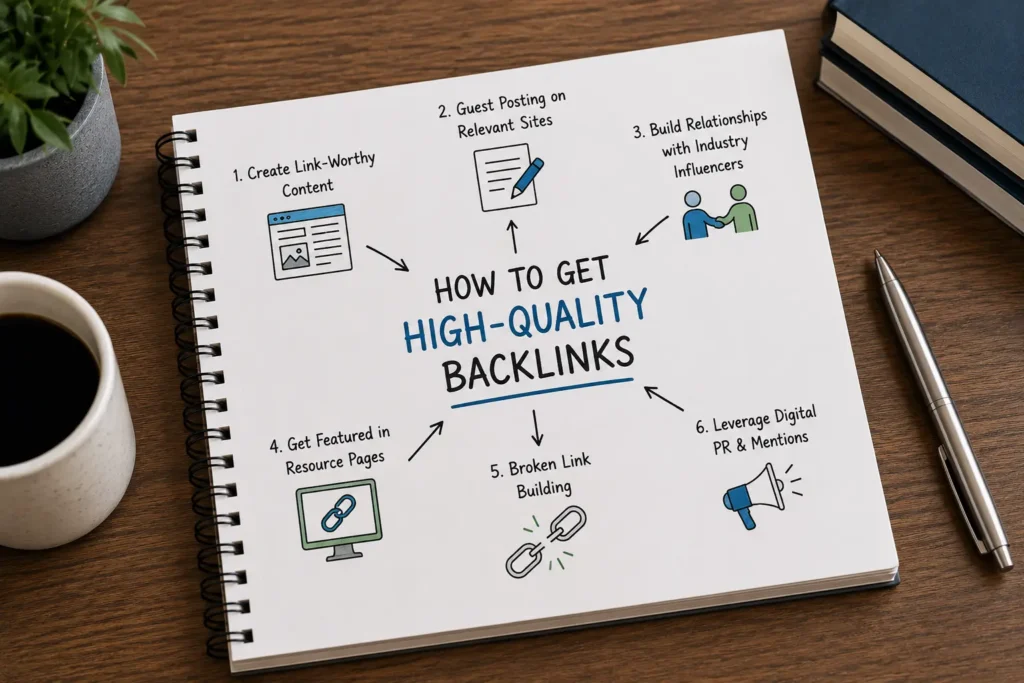
Earning quality backlinks requires patience and a long-term mindset. Instead of looking for shortcuts, focus on creating value that other websites genuinely want to reference.
Publishing original, well-researched content is one of the most reliable ways to attract backlinks naturally. Comprehensive guides, industry research, statistics, case studies, and practical tutorials often become valuable resources that others cite in their own articles.
Guest posting also remains an effective strategy when done correctly. Writing helpful content for reputable websites in your industry allows you to share your expertise while earning relevant editorial backlinks. The emphasis should always be on providing value to the publication’s audience rather than simply acquiring a link.
Building relationships within your industry can create additional opportunities. Journalists, bloggers, podcast hosts, and business owners frequently reference experts they know and trust. Participating in industry discussions, sharing insights, and networking with other professionals can naturally lead to future backlink opportunities.
Another effective approach is digital PR. Publishing original research, surveys, reports, or unique perspectives can attract attention from news outlets and industry publications looking for credible sources to reference.
No matter which strategy you choose, the goal should remain the same: earn backlinks because your content deserves recognition, not because you’re trying to manipulate search rankings.
Common Backlink Mistakes to Avoid
Many websites struggle with SEO not because they lack backlinks, but because they pursue the wrong kind.
One common mistake is buying backlinks from low-quality websites. While paid links may seem like a quick solution, they often violate search engine guidelines and rarely produce sustainable results.
Another mistake is focusing only on the number of backlinks instead of their quality. Hundreds of irrelevant links cannot replace a handful of trustworthy, industry-relevant references.
Some website owners also overuse exact-match anchor text in an attempt to improve rankings. Although descriptive anchor text is helpful, excessive optimization can appear unnatural and reduce the overall quality of a backlink profile.
Ignoring relevance is another frequent issue. Backlinks from websites that have no topical connection to your business typically provide less value than links from websites operating within your industry.
Finally, relying on outdated link-building tactics such as automated submissions, link exchanges at scale, or private link networks can create unnecessary risks. Sustainable SEO is built on earning trust, not exploiting loopholes.
Conclusion
Backlinks remain one of the strongest signals search engines use to evaluate the credibility and authority of a website. They help improve rankings, strengthen trust, drive referral traffic, support content discovery, and increase brand visibility across the web.
However, modern SEO is no longer about collecting as many backlinks as possible. Success comes from earning links that are relevant, editorially placed, and supported by valuable content. A single high-quality backlink from a respected website can often deliver greater long-term value than dozens of low-quality links.
The most effective backlink strategy starts with creating content people genuinely want to reference. When your articles solve real problems, answer important questions, or provide unique insights, backlinks become a natural outcome rather than the primary goal.
Instead of chasing shortcuts, focus on building authority consistently. Over time, those efforts can lead to stronger rankings, greater visibility, and sustainable organic growth that continues to benefit your website for years to come.
FAQs
Why are backlinks important for SEO?
Backlinks are important because they help search engines evaluate the credibility, authority, and relevance of your website. Quality backlinks can improve search rankings, increase organic visibility, and drive referral traffic from other trusted websites.
Are backlinks still a Google ranking factor?
Yes. While Google considers many ranking signals, backlinks remain an important factor because they help determine how trustworthy and authoritative a webpage appears compared to competing pages.
How many backlinks does a website need?
There is no fixed number. The quality, relevance, and authority of backlinks matter far more than the total count. A few strong backlinks from reputable websites can outperform hundreds of low-quality links.
Can a website rank without backlinks?
Yes, especially for low-competition keywords. However, earning high-quality backlinks generally makes it easier to compete for more competitive search terms and build long-term authority.
What is the difference between a good backlink and a bad backlink?
A good backlink comes from a relevant, trustworthy website and is placed naturally within valuable content. A bad backlink typically comes from spammy, irrelevant, or manipulative sources that provide little value and may negatively affect your site’s credibility.
🤝 Follow Tech Statar if growth is your goal.