
The Hidden Gaps in Your Health & Safety Management System That Only Smart Software Can Fix
All organizations believe they have a well-defined health and safety system. The problem is that merely possessing a health and safety management system is not enough; it has to be effective. And there is a huge gap between what organizations display proudly on the office wall and how people behave on site.
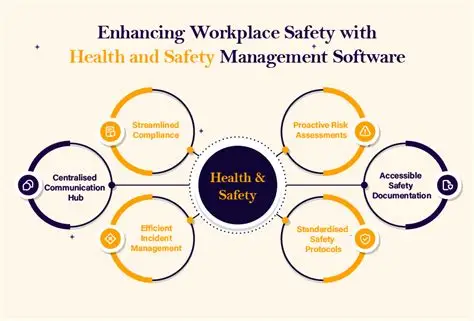
The following article analyses the vulnerabilities of the traditional approach to safety, the reasons for which they continue to prevail and how an intelligent health and safety management solution can change this approach from a reactive one to a proactive one. The comprehension of this issue is crucial. The knowledge of how the health and safety management solution addresses these problems differentiates companies that pass their safety audit from those that ensure safety.
The Illusion of Compliance
Compliance is not a health and safety management system. Probably the most crucial distinction between the two that safety professionals are well aware of is that compliance does not equate to safety. Passing the inspection process indicates that you have adhered to a certain standard at a specific time. It has nothing to say regarding what happens at the production floor during early morning hours on Tuesday, or whether a tired technician complied with LO/TO procedures unobserved.
These traditional systems use audit programs, inspection programs, and manual data input, and all of these things have one thing in common. They look back at what happened before. Once a hole is found through an audit done every quarter, there have been several weeks, even months, since the problem occurred. It was a real risk; the paperwork simply lagged behind.
1. Invisible Near-Miss Data
Near-misses provide the best safety information that an organization can have; they are also the information that goes largely to waste. Study after study has demonstrated that there are about 100 near misses for every major work-related injury, as per Heinrich’s Triangle. These accidents act as warnings, and failing to take notice is similar to disabling your fire alarm due to its constant ringing.
The issue has more to do with culture than structure. People do not make reports on near misses because they find the process too difficult or because they fear being blamed for it, or even worse, sometimes, they believe that nothing will ever change. Forms on paper tend not to be filled out right away. People forget, and by the time the report reaches the manager, all relevant information is lost. A smart system eliminates any obstacles. Reporting through smart technology can be done within two minutes, right from the site, using photos and geographical coordinates. The more people start reporting incidents, the greater the chances of preventing one.
2. Disconnected Data Silos
Most organizations that are medium or large-sized contain safety information in several different sources, like HR systems, incident reports, maintenance schedules, training certificates, contractors’ information, and regulatory compliance information. There is no connectivity between any of these. The maintenance log indicating that there is a problem causing a slip hazard exists in one database; the report of last month’s incident exists in another; the certificate indicating the need for refreshing the training of the concerned technician exists in yet another.
The danger of this inefficiency is more than a simple problem of inefficiency; it can actually be hazardous. The correlations between data points that indicate an emerging pattern of risk are unseen in data that exists in silos. Intelligent software aggregates all of this data into one comprehensive package. Whenever a machine becomes tagged to receive maintenance, the system is capable of cross-referencing it with any open risks, applicable training, and past incidents, all in one place.
3. Static Risk Assessments
Any safety program needs risk assessments, but in most companies, such documents are dangerously static. A risk assessment made eighteen months ago represents the reality of eighteen months ago, including employees, machines, and procedures used at the company at the moment of assessment. When you have new workers, older machinery, higher volumes of production, or some additional hazards, then the risk assessment is no longer relevant.
Most companies consider their risk assessments once per year as a bare minimum. What’s more, the whole procedure is typically nothing more than checking boxes in the hope that everything will be done correctly. The software makes this process much smarter and more efficient since it generates reminders to review certain risk assessments due to events taking place in real life. When an accident occurs, all relevant assessments will be updated immediately, while adding new chemicals to the production chain will require automatic updating of COSHH assessments.
4. Training Compliance
Training completion monitoring does not equate with competence. There can be perfect training completion compliance from an organization. All employees have undergone the mandatory manual handling training. This organization may still be dealing with employees who are not competent in their work because they do not use proper techniques in their day-to-day activities. Old methods only monitor the training completion of employees; these methods cannot evaluate whether the employees comprehend the training. More importantly, these methods cannot track the employees’ application of what they learn.
The intelligent health and safety management software goes beyond monitoring training completion through the introduction of competence matrices and skills gap analysis. Assessments integrated into the system focus on evaluating the knowledge of the trainees instead of merely documenting attendance. Through the dashboard, managers will see at once the team members who need refresher courses, the skills that are most vulnerable to risk, and the greatest competence gaps in relation to the organization’s most dangerous practices.
5. Reactive Incident Management
The conventional approach when an event happens is predictable: contain the site, compile the report of the accident, alert the appropriate parties if required, and then conduct an investigation into the cause of the accident. All of these are necessary steps; however, they happen after the damage has been done and serve primarily to document what went wrong.
With intelligent safety systems, this paradigm changes. Advanced predictive analytics look at past incidents, close calls, inspection results, weather conditions, and other data and identify the high-risk areas, operations, and times. Artificial intelligence algorithms find patterns within this data that no safety officer could spot on their own. Companies that use this technology do not just have an easier time managing incidents, but they also avoid a large percentage of them altogether.
The Price of Inaction
Each of the gaps identified in this article comes at a price, whether in terms of human pain, fines, insurance, lost productivity, or reputation. While each cost may be associated with safety management system failures, the relationship is often not clear. An injury that should have been prevented becomes another incident reported under workers’ compensation claims. A failure to meet a training requirement results in a fine from regulators. Repeated near-misses that could have foretold an incident do not receive any recognition in relation to what happened after.
Conclusion
A Health and Safety Management System can only be as effective as its most vulnerable component. Outdated manual procedures, disconnected information storage, static documentation, and reactive culture are not just inconveniences that need fixing; they represent actual risks to your workforce and company operations. Organizations that excel in terms of safety management in 2026 are those that have stopped focusing their efforts on filling out even more forms and conducting additional inspections. Instead, they are those who are using innovative approaches, leveraging technology, and turning safety into a true business advantage.
✨ Don’t stop here, follow Tech Statar for daily upgrades.