
Are Your Data Silos Silently Engineering Your Next Regulatory Breach?
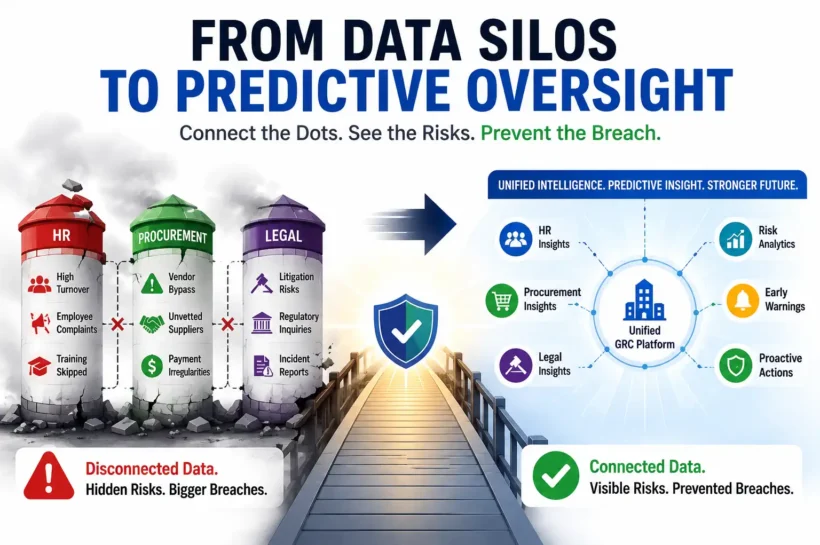
In the current corporate landscape, the amount of information generated by a mid-to-large-sized enterprise is staggering. Every single day, thousands of data points are created across HR portals, legal filing systems, third-party vendor databases, and internal audit logs. On the surface, this ocean of information should be the greatest asset a company possesses. It represents the collective knowledge of the organization, a map that could theoretically lead leadership to every potential risk or vulnerability. Yet, for most massive institutions, this information remains trapped in fragmented, disconnected silos that prevent the very insights they were built to generate.
The Architecture of Disconnected Knowledge
The problem is rarely a lack of data; it is a structural architecture of isolation. In a typical global firm, the HR department is solely responsible for tracking employee turnover, training completion, and performance reviews. The procurement team manages vendor contracts, supplier vetting, and payment terms. The legal department holds the keys to litigation data, regulatory inquiries, and internal incident reports. These departments often use specialized software suites that are designed exclusively for their own functional needs.
Because these systems are not built to talk to each other, the organization effectively becomes a collection of independent islands. When a department experiences an operational anomaly, it is viewed purely through the lens of that department’s specific responsibilities. If the internal audit team notices that an office in a specific region is rushing through its training, they see it as an audit challenge. If the HR team notes high turnover in that same office, they see it as a recruitment challenge. The two departments rarely, if ever, put those two data points together to recognize the shared pattern of systemic dysfunction.
The Danger of the Fragmented Perspective
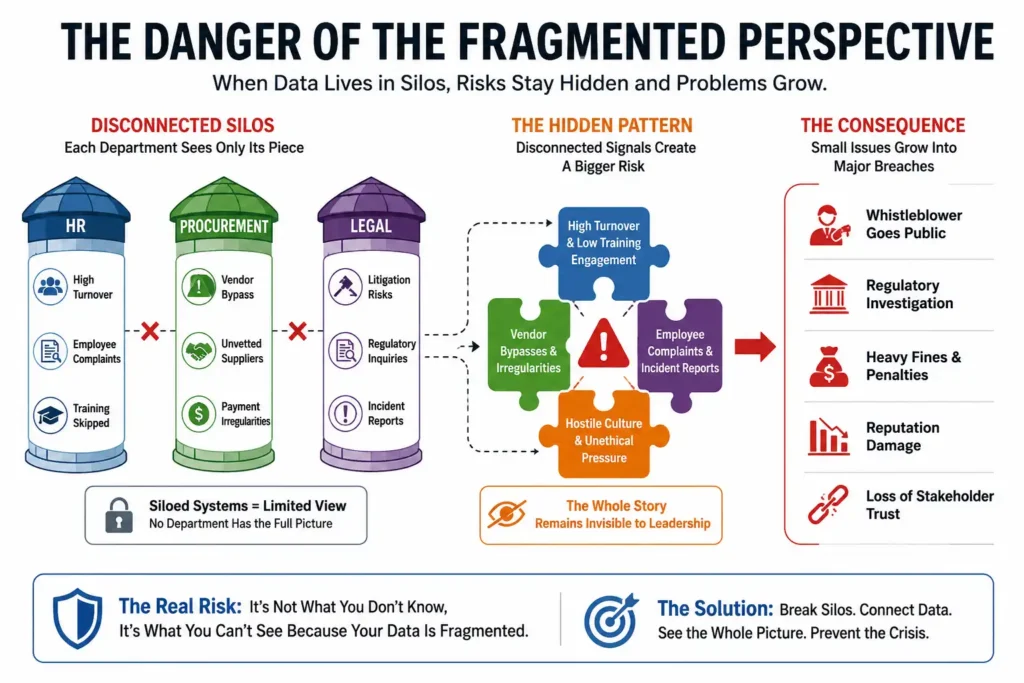
This fragmentation is the primary reason why systemic regulatory breaches remain hidden in plain sight. Consider the classic trajectory of an ethics scandal. It rarely begins with a single, massive violation of the law. It usually begins with a series of small, localized cultural shifts. A mid-level manager starts putting immense pressure on their team to achieve impossible quotas. Employees feel threatened, they skip essential safety training to save time, and they start filing complaints about an increasingly hostile work environment.
In a siloed organization, these three behaviors remain separated. Audit teams never see the HR complaints, and HR never sees the procurement issues that arise when the same manager tries to bypass vendor vetting processes to find cheaper, faster supplies. Because the dots are never connected, senior leadership is deprived of the chance to intervene. They remain blissfully unaware of the brewing crisis until a whistleblower finally goes public or a regulator arrives with a subpoena. By then, the damage to the company’s reputation and bottom line is already set in stone.
Moving Toward a Unified Intelligence
To prevent these systemic failures, companies must abandon the assumption that compliance is a collection of decentralized administrative tasks. They must recognize that risk is an integrated, enterprise-wide issue that requires a holistic view of the entire organization. This means dismantling the walls between HR, legal, and procurement and moving toward a centralized, predictive oversight model.
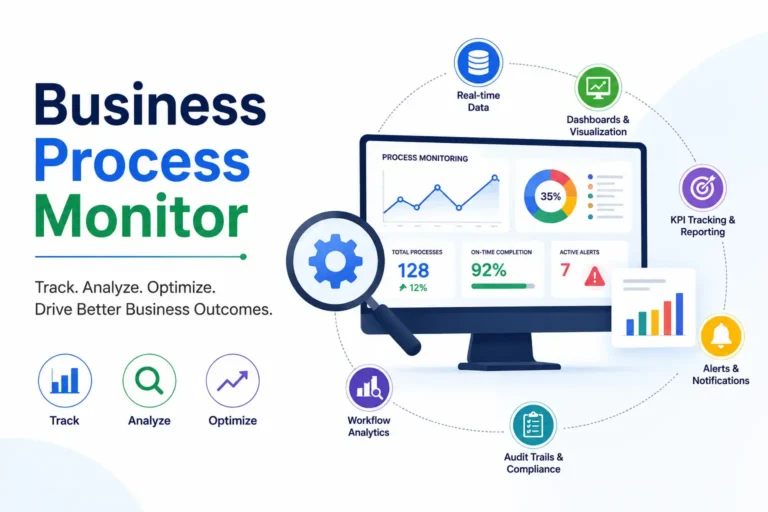
The goal is to stop managing risks in spreadsheets and start managing the behavior of the organization as a whole. This transition requires a robust, technical foundation that acts as a nervous system for the entire company. By integrating your disparate functional areas into a cohesive GRC ecosystem, leadership can finally pull real-time data from every corner of the business into a single, intuitive dashboard. This allows for a new level of analytical depth. Suddenly, the system can flag when a specific regional branch shows a simultaneous spike in turnover, a decrease in training engagement, and an uptick in vendor discrepancies. It stops treating these as three separate issues and identifies them as a single, urgent signal of an emerging ethical crisis.
The Strategic Pivot to Predictive Oversight
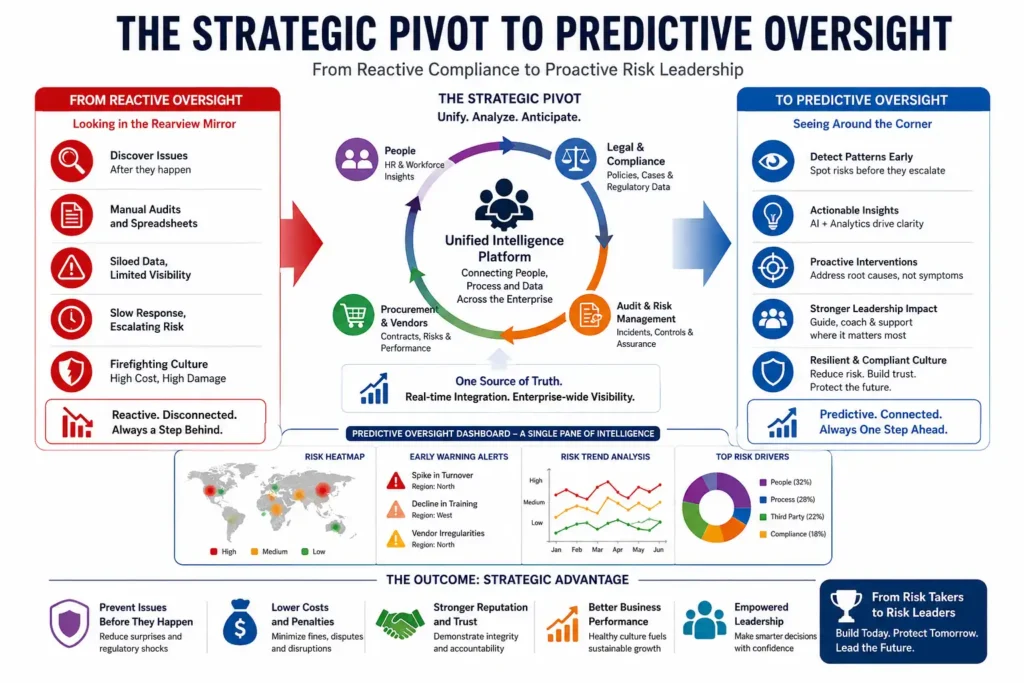
When a firm finally achieves this level of unified visibility, the role of compliance leadership undergoes a radical transformation. They are no longer simple detectives hunting for past errors or auditors collecting signatures for a binder. Now they become strategic advisors who can pinpoint exactly where the culture is buckling. Plus, they can identify the specific departments that require additional leadership coaching, the regional offices that are failing to adapt to new safety policies, and the internal processes that are creating more friction than they are resolving.
True resilience in the modern business environment is not about collecting more data; it is about creating more meaning. It is about acknowledging that the biggest threats are often those that the organization is already tracking, but is currently too fragmented to see. By unifying their internal intelligence and moving toward a truly predictive model, organizations can stop playing defense and start building the long-term, structural integrity that prevents a crisis from ever occurring in the first place.
FAQs
Why are data silos considered a compliance risk?
Data silos become a compliance risk because they prevent organizations from seeing the full picture of internal activity. When HR, legal, and procurement systems operate independently, warning signs remain isolated. A policy violation in one system may look minor, but when combined with other signals, it can indicate a serious regulatory breach. Regulatory bodies are now placing greater emphasis on unified oversight, particularly in sectors such as finance and healthcare, where disjointed reporting systems can result in audit gaps and slower incident detection and response.
How do data silos increase the chance of regulatory breaches?
Data silos increase breach risk by delaying detection and response. If vendor irregularities sit in procurement while employee misconduct sits in HR, no single team can connect the dots. This delay creates blind spots where unethical or non-compliant behavior grows unchecked. Studies from compliance research groups show that organizations with integrated monitoring systems reduce incident response time by up to 40%, which directly lowers the likelihood of escalation into full regulatory investigations or public enforcement actions.
What industries are most affected by siloed data systems?
Highly regulated industries such as banking, insurance, pharmaceuticals, and healthcare are the most affected. These sectors handle sensitive customer data, financial transactions, and strict reporting obligations. Even small gaps between systems can trigger audit failures or fines. For example, financial institutions must comply with frameworks like SOX and GDPR, both of which require traceable and unified data reporting. When systems are fragmented, meeting these standards becomes significantly more complex and error-prone.
Can technology fully eliminate data silos?
Technology can significantly reduce data silos, but it does not eliminate them on its own. Integration platforms, APIs, and governance systems can unify data flows, yet organizational culture plays an equally important role. If departments continue to operate in isolation, even the best technology stack will struggle. Successful transformation requires both technical integration and a shift in mindset where data is treated as a shared enterprise asset rather than departmental property.
🎯 More Helpful Guides: How My Agency Saved 10 Hours Every Week by Using a Social Media Management Tool
Conclusion
Data silos are no longer just an operational inconvenience; they are a strategic liability. In today’s regulatory environment, where enforcement agencies expect transparency and real-time accountability, disconnected systems quietly increase exposure to compliance failures. The real danger is not the absence of data, but the inability to connect it into meaningful insight. Organizations that continue relying on fragmented systems often discover issues only after they have escalated into financial penalties or reputational damage.
The shift forward is about building unified intelligence across the enterprise. When HR, legal, procurement, and audit data flow into a single, connected structure, leadership gains the ability to detect patterns early and act before risks mature. This is where predictive oversight becomes a competitive advantage.
In the end, the organizations that succeed in reducing regulatory risk are not the ones collecting the most data, but the ones making that data work together.
✨ More clarity. More insights. Less noise. Follow Tech Statar.