
Leveraging AI Real Estate Tools for Enhanced Market Analysis
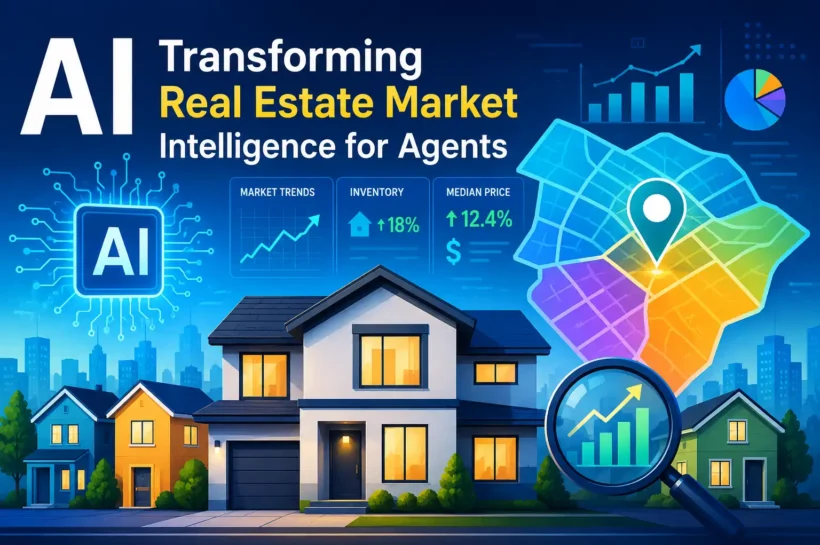
Artificial intelligence is transforming how real estate professionals analyze housing markets. Instead of spending hours collecting information from multiple sources, agents can now access AI-powered insights within minutes. Modern AI real estate tools process large volumes of property, demographic, economic, and consumer behavior data to uncover trends that may otherwise go unnoticed. According to the National Association of Realtors (NAR), data-driven decision-making has become increasingly important as market conditions shift more rapidly than in previous years. By combining machine learning with real-time market intelligence, AI helps agents identify opportunities, understand buyer demand, and make more confident recommendations. This enables professionals to deliver faster, more accurate, and highly informed market analyses.
The Critical Role of Real-Time Housing Data
Real-time housing data has become essential in today’s fast-moving real estate environment. Market conditions can change within days as inventory levels, mortgage rates, and buyer demand fluctuate. AI tools continuously monitor updated property information and market indicators, helping agents access current insights instead of relying on outdated reports. This enables more accurate recommendations for buyers, sellers, and investors.
Elevating Market Analysis with AI-Powered Precision
Traditional market analysis often relies on broad averages that may overlook important local trends. AI-powered platforms improve precision by identifying hidden patterns within large datasets. Machine learning models evaluate factors such as neighborhood performance, pricing behavior, and buyer activity to generate highly detailed market assessments. This enhanced accuracy helps agents provide stronger guidance and better strategic advice.
Achieving Hyper-Local Precision with AI Real Estate Tools
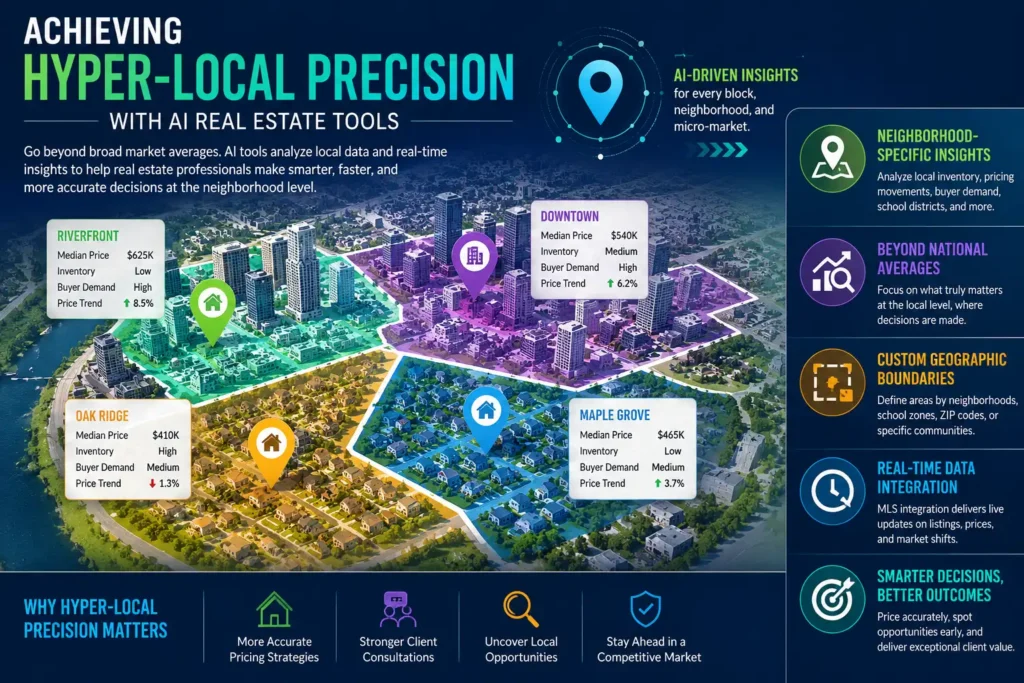
While national housing statistics provide valuable context, real estate decisions are ultimately made at the local level. AI real estate tools help professionals move beyond broad market averages by focusing on neighborhood-specific conditions. These platforms analyze local inventory, pricing movements, buyer demand, school districts, and economic indicators to create highly targeted market insights. Research from McKinsey highlights the growing role of advanced analytics in delivering location-based intelligence across industries. For real estate professionals, this hyper-local approach improves pricing strategies, strengthens client consultations, and uncovers opportunities that may not appear in wider market reports.
Moving Beyond National Generalizations to Micro-Markets
Housing markets often vary significantly between neighborhoods located only a few miles apart. AI enables agents to examine micro-market conditions rather than relying solely on regional or national trends. By analyzing localized data, professionals gain a clearer understanding of pricing behavior, inventory changes, and buyer preferences, leading to more accurate market recommendations and stronger client outcomes.
Defining Custom Areas for Hyper-Local Relevance
Modern AI platforms allow agents to create custom geographic boundaries based on neighborhoods, school zones, ZIP codes, or specific communities. This flexibility produces market insights that are directly relevant to client needs. Instead of reviewing broad market reports, agents can focus on precise areas where buyers and sellers are actively making decisions.
Real-Time MLS Integration for Trend Identification
Many advanced AI tools integrate directly with Multiple Listing Service (MLS) databases, providing access to continuously updated property information. This real-time connection helps agents identify emerging trends, inventory shifts, and pricing changes as they occur. By monitoring fresh listing activity and transaction data, professionals can make timely decisions and stay ahead of local market developments.
💚 You might also like: Top 4 AI Tools to Use for Marketing
The Impact of AI Real Estate Tools on Pricing and Valuations
Accurate pricing remains one of the most important factors in a successful real estate transaction. AI real estate tools help eliminate guesswork by analyzing historical sales, current listings, local market conditions, and buyer behavior patterns. According to industry reports from Zillow and Redfin, data-driven pricing strategies consistently improve market competitiveness. By leveraging machine learning algorithms, agents can develop more precise valuations, set realistic expectations for clients, and adapt quickly to changing market conditions while maintaining a strong competitive advantage.
Ensuring Pricing Precision in Balanced Markets
Balanced markets require careful pricing because buyers and sellers often have similar negotiating power. AI tools evaluate multiple market variables simultaneously, including comparable sales, inventory levels, and demand indicators.
Data-Backed Property Valuations for Accurate Expectations
Modern AI platforms generate valuations using extensive datasets rather than subjective assumptions. By analyzing local sales activity, neighborhood performance, property characteristics, and economic trends, these tools provide more reliable pricing estimates. Accurate valuations help buyers make informed offers and allow sellers to establish realistic expectations before entering the market.
The Three Pillars of Data-Backed Valuation
Effective property valuation depends on several interconnected market indicators. AI systems continuously analyze key metrics that influence pricing and demand. By monitoring these factors together, agents gain a more complete understanding of local market conditions and can make valuation decisions supported by objective, real-time data rather than assumptions.
Price Trends
Price trends reveal how property values have changed over time within a specific market. AI tools track historical and current pricing patterns to identify appreciation rates, seasonal fluctuations, and emerging shifts. Understanding these trends helps agents determine whether values are rising, stabilizing, or declining before making pricing recommendations.
Inventory Levels
Inventory levels indicate the balance between housing supply and buyer demand. Low inventory often increases competition and supports higher prices, while excess inventory may place downward pressure on valuations. AI platforms monitor inventory changes in real time, allowing agents to adjust pricing strategies according to current market conditions.
Days on Market (DOM) and Absorption Rate
Days on Market and absorption rate provide valuable insight into market speed and buyer activity. A lower DOM generally reflects stronger demand, while a higher absorption rate indicates properties are selling quickly. AI analyzes these metrics continuously, helping agents assess market momentum and establish realistic pricing expectations.
AI Real Estate Tools: Driving Data-Driven Decision Making
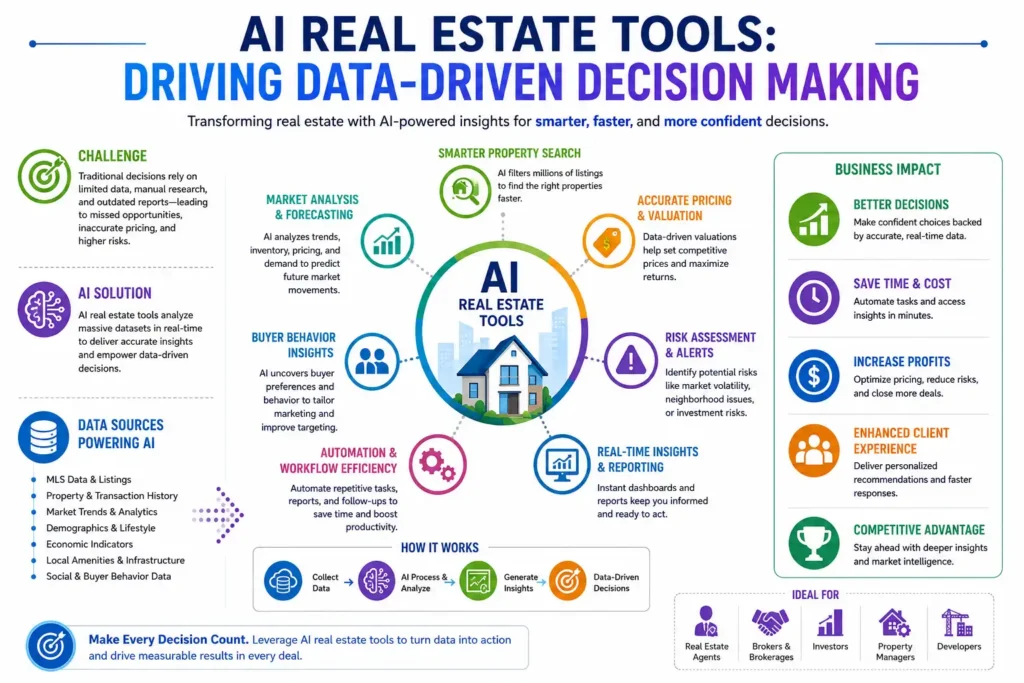
Real estate professionals increasingly rely on data rather than intuition alone when making strategic decisions. AI real estate tools transform vast amounts of information into actionable insights that support pricing, marketing, investment, and client service strategies. Research from Deloitte highlights how predictive analytics and artificial intelligence are improving decision-making across multiple industries, including real estate. By identifying hidden relationships within market data, forecasting future trends, and automating complex analyses, AI empowers agents to make faster, smarter, and more confident decisions while reducing uncertainty in an increasingly competitive marketplace.
Enhancing Data Analysis with Pattern Recognition
AI real estate data can recognize patterns that may be difficult for humans to detect manually. By analyzing thousands of transactions, demographic trends, and buyer behaviors, machine learning models uncover meaningful relationships within market data. These insights help agents identify opportunities, evaluate risks, and better understand the factors driving local market performance.
Predictive Analytics for Future Market Forecasting
Predictive analytics uses historical and current market information to estimate future outcomes. AI models can forecast pricing movements, inventory shifts, and demand trends with increasing accuracy. While no forecast is perfect, these projections help agents and investors prepare for changing conditions and make more strategic decisions.
💚 You might also like: Top 5 AI Innovations Every Tech Professional Should Know
Augmenting Agent Expertise with AI Real Estate Tools
Artificial intelligence is designed to enhance professional expertise rather than replace it. Successful real estate transactions still depend on trust, negotiation skills, local knowledge, and human judgment. AI real estate tools strengthen these capabilities by providing deeper insights, automating repetitive tasks, and improving access to market intelligence. According to the National Association of Realtors, technology adoption continues to help agents improve productivity and client service. When combined with professional experience, AI enables agents to work more efficiently, provide better guidance, and deliver a superior customer experience throughout the buying and selling process.
AI as a Partner, Not a Replacement
AI provides valuable support, but it cannot replace human relationships, emotional intelligence, or negotiation expertise. Clients still rely on agents to interpret data, understand personal circumstances, and provide trusted advice. The most effective professionals use AI as a decision-support tool that enhances rather than replaces their expertise.
Automating Routine Tasks for Relationship Building
AI can automate scheduling, data entry, follow-up communications, and report generation. By reducing time spent on routine tasks, agents can dedicate more attention to building client relationships, strengthening trust, and delivering personalized service.
AI-Powered Platforms for Listing and Client Interaction Support
Modern AI platforms assist with listing descriptions, property recommendations, lead qualification, and customer communication. These tools help agents in giving more fast response. By streamlining interactions and improving information delivery, AI enhances the overall client experience while supporting business growth.
Mastering Client Education and Presentations with AI
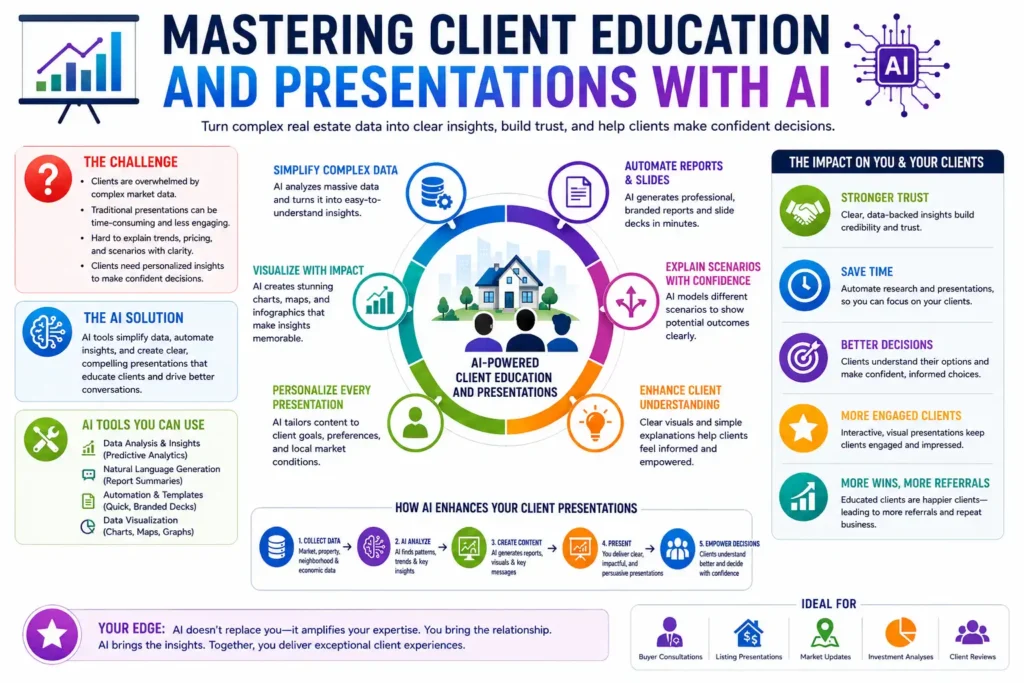
Educating clients effectively has become increasingly important in today’s data-rich real estate environment. Buyers and sellers often face overwhelming amounts of information, making it difficult to understand local market conditions and make confident decisions. AI real estate tools help agents simplify complex datasets by converting numbers, trends, and forecasts into clear, understandable insights. Industry research consistently shows that informed clients are more confident throughout the transaction process. By combining artificial intelligence with professional expertise, agents can deliver engaging presentations, explain market conditions more clearly, and strengthen trust through transparent, data-backed communication.
Transforming Complex Data into Client-Ready Narratives
Raw market data can be difficult for clients to interpret without context. AI tools help transform statistics, charts, and market reports into clear narratives that explain what the information actually means. This storytelling approach makes complex housing trends easier to understand and helps clients make more informed real estate decisions.
AI-Driven Talking Points for Authoritative Presentations
AI platforms can generate relevant talking points based on local market conditions, pricing trends, and buyer activity. These insights help agents prepare professional presentations backed by current data. With well-structured talking points, agents can communicate more confidently, answer questions effectively, and establish greater credibility during client meetings.
The Human-AI Partnership in Client Consultations
While AI provides valuable insights, successful consultations still rely on human expertise and communication skills. Agents use AI-generated information as a foundation while adding local knowledge, market experience, and personalized advice. This partnership creates a more balanced consultation process that combines analytical accuracy with professional judgment and client-focused guidance.
Streamlining Marketing Efforts with AI Real Estate Tools
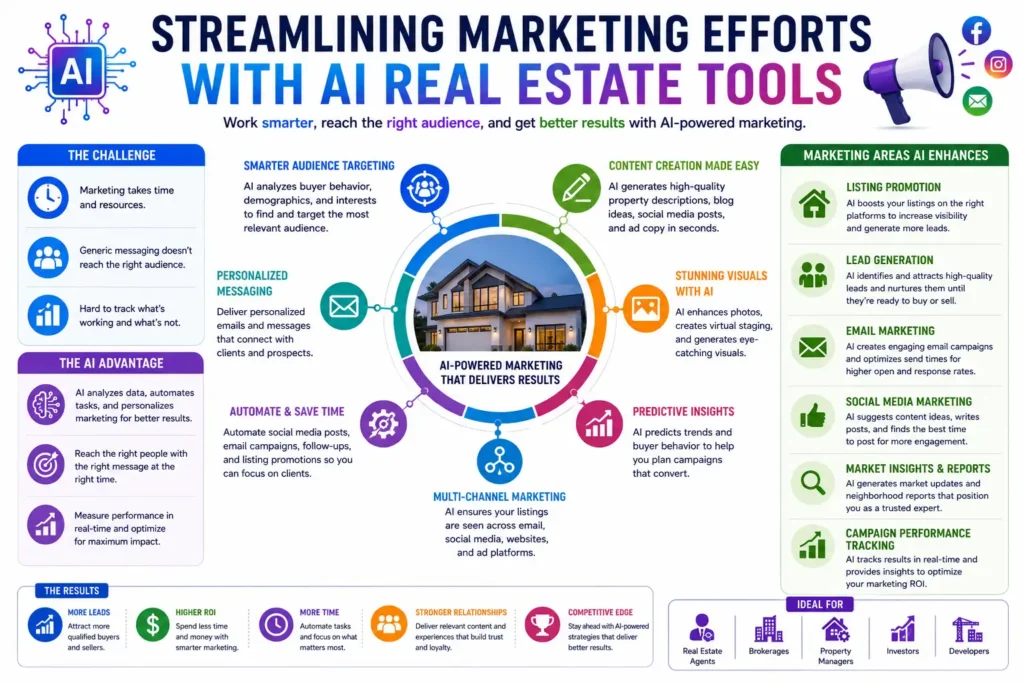
Marketing remains one of the most time-consuming responsibilities for real estate professionals. AI real estate tools simplify this process by automating content creation, audience targeting, campaign optimization, and performance tracking. According to recent marketing studies, personalized and data-driven campaigns consistently outperform generic advertising strategies. AI enables agents to create highly relevant marketing materials tailored to specific neighborhoods and buyer segments. By reducing manual effort and improving targeting accuracy, these tools help professionals increase visibility, attract qualified leads, and maximize the return on their marketing investments while maintaining consistent brand messaging.
Automating Content Creation for Area-Specific Marketing
Creating localized marketing content can require significant time and research. AI tools streamline this process by generating neighborhood-focused blog posts, social media updates, email campaigns, and listing descriptions. This automation helps agents maintain a consistent online presence while delivering content that resonates with specific audiences and local market interests.
Generating Leads Through Targeted Digital Campaigns
AI improves lead generation by identifying audience segments most likely to engage with a property or service. Advanced algorithms analyze online behavior, demographics, and search patterns to optimize advertising campaigns. This targeted approach increases marketing efficiency, reduces wasted spending, and helps agents attract higher-quality leads.
Turning Market Data into Compelling Marketing Assets
Market statistics become far more valuable when presented in a visually engaging format. AI tools can transform housing data into charts, reports, infographics, and presentation materials that capture audience attention. By converting complex information into compelling marketing assets, agents can demonstrate expertise and provide greater value to prospective clients.
Frequently Asked Questions (FAQs)
How does AI help real estate agents understand the market better and faster?
AI helps real estate agents analyze large amounts of market data within minutes. Instead of manually reviewing reports, agents can quickly identify pricing trends, inventory changes, buyer behavior, and neighborhood performance. This allows them to make informed decisions faster and provide clients with accurate, data-driven recommendations based on current market conditions.
Why is real-time housing data so important for agents now?
The housing market can change rapidly due to fluctuations in inventory, mortgage rates, and buyer demand. Real-time data ensures agents are working with the most current information available. This helps them make better pricing recommendations, identify emerging trends, and provide clients with insights that reflect today’s market rather than outdated conditions.
Can AI really help agents figure out the best price for a house?
Yes. AI tools analyze comparable sales, local market activity, inventory levels, property features, and buyer demand to estimate an appropriate listing price. While professional judgment remains important, AI provides data-backed insights that help agents price properties more accurately and reduce the risk of overpricing or underpricing.
Does AI replace the need for experienced real estate agents?
Successful real estate transactions still require negotiation skills, local expertise, relationship building, and personalized guidance. AI enhances these capabilities by providing better data analysis and automation, allowing agents to focus on serving clients more effectively.
How can AI help agents explain market information to their clients?
AI can convert complex market statistics into easy-to-understand reports, charts, and summaries. These tools help agents present information in a clear and engaging way, making it easier for clients to understand pricing trends, market conditions, and investment opportunities. Better communication often leads to greater client confidence and trust.
Can AI tools help agents with marketing their listings?
Absolutely. AI can generate listing descriptions, social media content, email campaigns, and targeted advertisements. It can also analyze audience behavior to improve ad targeting and lead generation. This helps agents market properties more efficiently while reaching potential buyers who are most likely to be interested.
💚 You might also like: How AI Compliance Helps Businesses Meet Regulatory Requirements
Conclusion
AI real estate tools are reshaping how agents analyze markets, price properties, educate clients, and market listings. However, the greatest value comes from combining AI-powered insights with human expertise. Agents who embrace artificial intelligence as a strategic partner can deliver more accurate guidance, stronger client experiences, and better business outcomes in an increasingly competitive real estate market. As technology continues to evolve, AI will become an essential tool for modern real estate success.
✨ This is just the start. Follow Tech Statar for more gems.