

DPSIT – The Complete Guide (2025)
The term DPSIT is increasingly appearing in IT documentation, vendor websites, compliance discussions, and digital payment ecosystems. Yet despite its growing visibility, many professionals struggle to pin down exactly what DPSIT means. Some associate it with digital payment security, others with data processing or system integration, while in many cases it appears as a service or brand name rather than a clearly defined framework.
This lack of clarity is not accidental. DPSIT sits at the intersection of payments, security, and IT infrastructure, three domains that are tightly connected but often explained in isolation. This guide is designed to remove that confusion.
What Does DPSIT Actually Mean?
DPSIT does not have a universally accepted single-definition standard. Instead, it is used in practice across three closely related but distinct contexts.
DPSIT as Digital Payment Security & IT
The most common and commercially relevant usage of DPSIT refers to Digital Payment Security integrated with IT systems. In this sense, DPSIT represents the combined infrastructure responsible for processing digital payments securely while integrating them with backend IT systems such as ERPs, CRMs, analytics platforms, and fraud detection engines.
This interpretation is widely used in enterprises that deal with online payments, card processing, mobile wallets, or cross-border transactions. Here, DPSIT is less about one tool and more about an ecosystem, how payment data flows, how it is secured, and how it interacts with the broader IT environment.
DPSIT as Data Processing and System Integration Technology
In more technical circles, DPSIT is sometimes used as shorthand for data processing systems and IT integration. In this context, the focus shifts from payments specifically to the broader handling of transactional and operational data. It includes workflows such as data ingestion, transformation, validation, storage, and synchronization across systems.
This definition is often used by system integrators, architects, and engineers who are responsible for ensuring that critical business data moves reliably between services, applications, and platforms.
DPSIT as a Service or Company Identifier
Finally, DPSIT also appears as a brand or service label used by IT consultancies, security firms, and integration providers. In these cases, DPSIT is not a standalone framework but a naming convention that reflects a company’s focus on payments, security, and IT solutions. This usage explains why many search results for “DPSIT” lead to vendor pages instead of educational content.
You might also like: Classroom 20X
Why DPSIT Is Becoming So Important
To understand why DPSIT matters now more than ever, it helps to look at how digital systems have evolved over the last decade.
Payments Are No Longer Isolated Systems
Modern payment systems no longer operate independently. A single transaction may interact with payment gateways, fraud engines, accounting systems, customer profiles, compliance logs, and analytics platforms in real time. DPSIT emerges as the infrastructure layer that ensures all these interactions happen securely and reliably.
Any weakness in this chain, slow integrations, poor encryption, or inconsistent data handling can result in failed transactions, compliance violations, or financial loss.
Security Expectations Have Increased Dramatically
Customers, regulators, and partners now expect payment data to be protected by default. Encryption, tokenization, logging, and access controls are no longer optional features; they are baseline requirements. DPSIT implementations exist to meet these expectations without compromising performance or scalability.
As payment fraud grows more sophisticated, organizations can no longer rely on surface-level protections. DPSIT brings security into the core architecture instead of treating it as an afterthought.
Regulatory Pressure Continues to Expand
Payment-related regulations such as PCI DSS, PSD2, and local data protection laws have increased the operational burden on businesses. Compliance now requires more than policy, it requires audit-ready systems, real-time monitoring, and traceable data flows. DPSIT architectures help organizations meet these requirements while maintaining flexibility.
Who Uses DPSIT and Why
DPSIT impacts multiple roles inside an organization, each with different priorities and challenges.
IT and Architecture Teams
For IT leaders and architects, DPSIT represents a way to design systems that are modular, scalable, and secure. Their primary concern is reliability, ensuring payment workflows do not break during peak load or system upgrades.
Security and Compliance Leaders
Security teams view DPSIT through the lens of risk reduction. Their focus is on minimizing data exposure, enforcing access controls, and ensuring audit readiness. A strong DPSIT approach reduces incident response time and regulatory exposure.
Payment and Operations Managers
For operations teams, DPSIT directly affects revenue. Failed transactions, downtime, or delayed reconciliation all have financial consequences. These teams rely on DPSIT systems to ensure payments move smoothly from customers to banks without interruptions.
Procurement and Vendor Management
Procurement teams encounter DPSIT when selecting providers, payment gateways, integration platforms, security tools, or managed services. Understanding DPSIT helps them evaluate vendors beyond marketing claims and assess long-term fit.
You might also like: E-Commerce Development
Common Misconceptions About DPSIT
One of the biggest misconceptions is that DPSIT is a single product or tool. In reality, it is an architectural approach. Another common misunderstanding is assuming that implementing a secure payment gateway alone is sufficient. DPSIT goes further by addressing how data travels through the entire IT ecosystem, not just the moment a payment is authorized.
Some organizations also believe DPSIT is only relevant for large enterprises. In practice, even small digital businesses face payment security risks and integration challenges. The difference lies in scale, not relevance.
Core Architecture Behind a DPSIT System
At its heart, DPSIT architecture exists to move sensitive data safely between systems while maintaining performance and compliance. The structure must support speed, reliability, and observability at the same time.
A typical DPSIT setup begins at the point where a transaction is initiated. This may be an online checkout, a mobile app, or an API request from a partner system. From there, data flows through a controlled processing layer that validates requests, applies security rules, and routes information to external services like payment processors or banks.
Unlike traditional monolithic payment systems, modern DPSIT architectures favor modular design. Each function, payment authorization, fraud screening, logging, and reconciliation, operates as an independent service. This modularity allows teams to update components without disrupting the entire system. It also improves fault tolerance, since failure in one service does not necessarily cascade across the system.
Another defining aspect of DPSIT architecture is visibility. Logs, metrics, and traces must exist at every stage of the transaction lifecycle. Without visibility, detecting fraud, resolving errors, or proving compliance becomes nearly impossible. Observability is no longer optional, it is central to DPSIT design.
You might also like: AI Content Writing
The Role of Integration and Data Flow
Integration is the backbone of DPSIT. Payment systems rarely operate in isolation. They connect to accounting tools, customer databases, fraud engines, reporting dashboards, and compliance systems. Each of these integrations introduces potential latency and risk if not designed carefully.
In a strong DPSIT implementation, integrations are managed through standardized interfaces. API gateways often sit between internal systems and external services to control access, enforce authentication, and limit exposure. Data is normalized as it passes through the integration layer so that downstream systems receive consistent formats.
Data flow design also determines how well a system scales. Synchronous processing may work for low-volume environments, but high-throughput systems often rely on asynchronous messaging and event-driven architectures. By decoupling services, DPSIT systems become more resilient and easier to extend as business requirements evolve.
Security Controls That Define DPSIT
Security is the defining characteristic of DPSIT. Without strong controls, a payment system becomes a liability instead of an asset.
Encryption is the first and most visible layer. Sensitive data must be encrypted both in transit and at rest. Modern DPSIT implementations rely on industry-standard encryption protocols and dedicated key management systems that restrict access and ensure regular rotation.
Tokenization sits above encryption as an additional safety layer. Instead of passing raw payment data across systems, DPSIT frameworks replace it with tokens. This dramatically reduces the scope of compliance and limits the impact of potential breaches. Tokens are useless if intercepted, which makes them ideal for internal system communication.
Access control plays an equally important role. DPSIT systems typically operate on the principle of least privilege, ensuring that users and services can only access the data they require. Role-based access, combined with detailed audit logs, helps organizations track who accessed what and when. These logs become critical during security audits or incident investigations.
Monitoring and anomaly detection round out the security model. Real-time alerts based on unusual transaction patterns, latency spikes, or access anomalies help teams respond before small issues turn into major incidents. DPSIT does not eliminate risk, but it significantly reduces reaction time.
Compliance and Regulatory Considerations
One of the main reasons businesses invest in DPSIT is compliance. Payment data is heavily regulated, and non-compliance carries financial and reputational consequences.
Standards like PCI DSS require organizations to demonstrate consistent control over how cardholder data is processed and stored. DPSIT architectures are often designed specifically to reduce PCI scope by isolating sensitive data and limiting where it can exist. This approach lowers audit complexity and reduces long-term operational burden.
Regulatory requirements continue to evolve, especially with the rise of real-time payments and cross-border transactions. DPSIT provides the structural flexibility needed to adapt without redesigning systems from scratch. When compliance requirements change, updates can be applied to specific components rather than the entire architecture.
You might also like: PLG Supplies
Implementing DPSIT in Real Environments
Implementing DPSIT is as much an organizational challenge as it is a technical one. The first step is clearly defining ownership. Payment flows often span multiple teams, and without clear responsibility, systems become fragmented. Successful implementations assign ownership at both the system and process levels.
Testing is another critical area. Payment systems cannot afford untested changes. DPSIT implementations typically rely on staged environments where integrations, security rules, and failure scenarios are tested rigorously before production deployment. This includes testing network failures, timeouts, and edge cases that may only occur under stress.
Change management also plays a major role. As systems evolve, new integrations are added, or regulatory requirements change, DPSIT architectures must be flexible enough to absorb those changes. Documentation, versioning, and rollback plans ensure that progress does not come at the cost of stability.
Finally, performance must remain a priority. Security controls should not create unnecessary friction for users. A successful DPSIT implementation balances protection with speed, ensuring that transactions remain fast while staying secure.
Why DPSIT Architecture Determines Long-Term Success
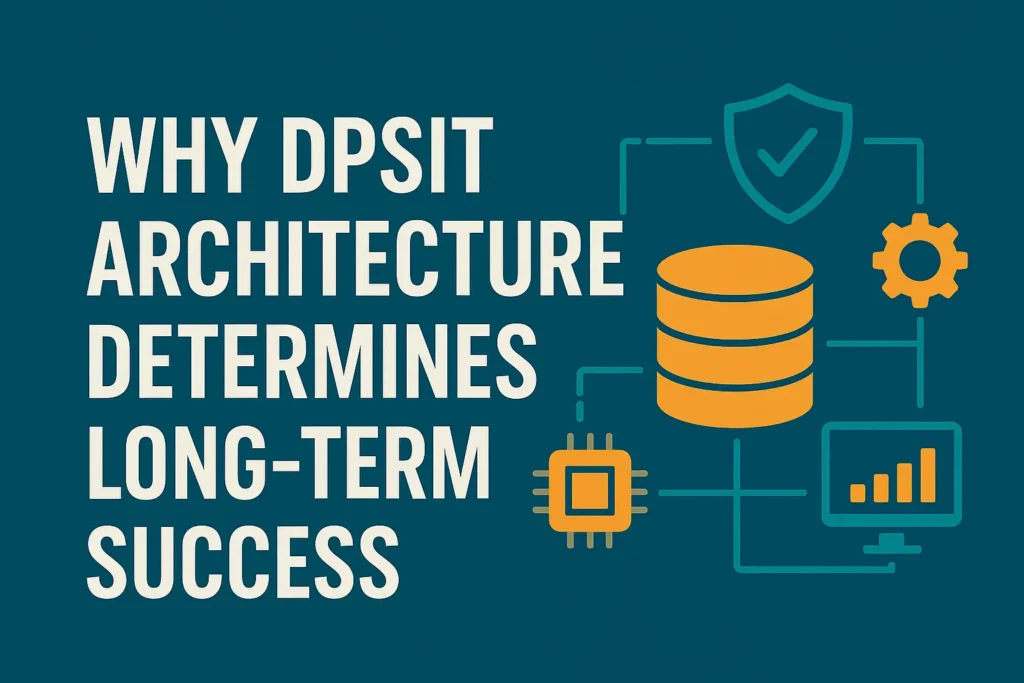
Organizations often focus on features when evaluating payment solutions. But over time, architecture has a far greater impact on success than any individual feature. A robust DPSIT foundation allows teams to scale, adapt, and innovate without constantly reworking their systems. It supports growth instead of slowing it down.
As digital payments continue to evolve, the complexity behind them will only increase. Organizations that invest early in thoughtful DPSIT architecture position themselves to meet future challenges with confidence.
How to Evaluate DPSIT Vendors and Solutions
Not all DPSIT solutions are created equal. On the surface, many vendors promise secure transactions and compliance readiness, but the real difference lies in flexibility, transparency, and operational alignment.
A strong DPSIT vendor should demonstrate clarity in how data moves through their system. If transaction flows, security controls, or failure-handling processes are vague, that’s usually a red flag. Organizations should expect clear documentation, architectural diagrams, and visibility into how sensitive data is isolated and protected.
Scalability is another major factor. A solution that works well for low-volume environments may struggle under higher loads. Evaluating how a vendor handles traffic spikes, retries, and degradation scenarios is critical. This is where mature DPSIT platforms stand out, they are designed to fail gracefully without interrupting the entire transaction lifecycle.
Support and responsiveness are often underestimated. When payment issues occur, minutes matter. Vendors who provide real-time support, proactive monitoring, and incident reporting add tangible value beyond the technology itself. DPSIT is not a “set it and forget it” system; it requires ongoing collaboration.
You might also like: Magic Light AI
Understanding Cost vs. ROI in DPSIT Implementation
DPSIT investments can appear expensive at first glance, especially when organizations compare them to simpler legacy systems. However, cost must be evaluated in context.
The most visible expenses include licensing, infrastructure, and initial integration work. These are typically one-time or predictable costs. The real savings, however, emerge over time. Reduced compliance scope lowers audit expenses. Improved fraud detection minimizes chargebacks. Faster issue resolution reduces operational downtime.
There is also an indirect but significant ROI component: trust. Customers are more likely to complete transactions when systems are fast, reliable, and secure. A well-implemented DPSIT framework reduces checkout friction and builds confidence, both of which directly impact revenue.
Over time, organizations often discover that DPSIT is less about cost optimization and more about risk reduction. Preventing even a single major security incident can justify the entire investment.
Common DPSIT Implementation Mistakes to Avoid
Even strong teams can stumble during DPSIT implementation. One common mistake is overcomplicating the system too early. Adding excessive controls, integrations, or custom logic before establishing a stable core often leads to brittleness rather than security.
Another issue is ignoring operational readiness. Monitoring, alerting, and logging are sometimes treated as secondary concerns. In reality, they are essential. Without real-time insight, teams are effectively blind during incidents, even if the architecture itself is sound.
Poor documentation can also undermine DPSIT efforts. Payment systems are long-lived, and team members change over time. If knowledge exists only in people’s heads rather than written processes, organizations become vulnerable to operational gaps.
Finally, some teams treat DPSIT as purely a technical project. In successful implementations, legal, compliance, security, and operations teams are involved early. DPSIT touches all of them, and siloed decision-making almost always creates friction later.
Applying DPSIT Strategically Across the Organization
DPSIT delivers the most value when it aligns with business goals, not just technical requirements. Organizations should view it as a strategic layer that enables growth rather than a defensive cost center.
For startups, DPSIT provides a scalable foundation that supports rapid expansion without constant rewrites. For established enterprises, it offers a way to modernize legacy systems while maintaining regulatory control.
DPSIT also supports innovation. When payment infrastructure is reliable and secure, teams can focus on launching new features, entering new markets, or experimenting with business models. The system becomes an enabler instead of a constraint.
You might also like: Gayfirir
The Future of DPSIT
As digital payments grow more complex, DPSIT frameworks are evolving alongside them. Real-time payments, cross-border transactions, and embedded finance models all increase the demand for resilient, observable, and secure transaction systems.
Automation and intelligence will play a larger role as well. Future DPSIT implementations are likely to incorporate more predictive monitoring, automated compliance checks, and adaptive security controls. The core principles, however, will remain the same: protect data, ensure reliability, and maintain trust.
Organizations that invest in DPSIT now are not just solving today’s problems, they are preparing for what comes next.
Conclusion
DPSIT is more than a technical framework; it is a strategic approach to managing secure, scalable, and compliant payment transactions. From foundational concepts and architecture to real-world execution and optimization, DPSIT touches every part of the transaction lifecycle.
When implemented thoughtfully, DPSIT reduces risk, improves performance, and enables sustainable growth. Organizations that treat it as a long-term investment, not a quick fix, position themselves to succeed in an increasingly complex digital payments landscape.
Frequently Asked Questions (FAQs)
What does DPSIT stand for?
DPSIT typically refers to a structured framework or system for managing secure digital payment transactions, focusing on data flow, security, and compliance.
Is DPSIT only relevant for large enterprises?
No. Startups and mid-sized businesses can benefit just as much, especially when planning for scale and regulatory requirements early.
How does DPSIT improve payment security?
It combines encryption, tokenization, access control, and monitoring to protect sensitive data at every stage of a transaction.
Does implementing DPSIT reduce compliance workload?
Yes. Proper DPSIT design can significantly reduce compliance scope, making audits simpler and less costly.
How long does a typical DPSIT implementation take?
Timelines vary by complexity, but most implementations range from a few weeks for simple setups to several months for enterprise environments.
Got value? Let’s keep the momentum, follow Tech Statar.






















![Perchance AI Image Generator: A Comprehensive Guide [2025]](https://techstatar.com/wp-content/uploads/2025/10/1750759678367-perchance-ai-review.jpg "Reviews")