

Antennino: The Tiny Board Powering the Next Wireless Revolution
Technology has a way of getting smaller, smarter, and faster with every passing year. From pocket-sized computers to wearable sensors, innovation today is all about packing more power into less space. Enter Antennino, a small but mighty wireless communication board that’s quietly changing how people build and connect devices.
If you’ve ever tinkered with an Arduino, used a smart home sensor, or heard about the Internet of Things (IoT), then you’re already part of the world Antennino was built for. Think of it as a bridge between tiny gadgets and big possibilities. It’s designed for people who want to experiment, automate, and create, without needing a lab full of tools or complex coding knowledge.
In this post, we’ll explore what Antennino is, how it works, where it’s used, and why it’s becoming a favorite among tech hobbyists, students, and developers around the world.
Understanding the Concept of Antennino
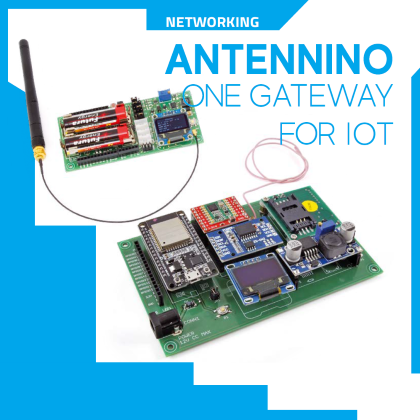
So, what exactly is Antennino? At its core, Antennino is a miniature, open-source wireless board that combines a microcontroller (like those found in Arduino) with a built-in antenna. It’s built for simplicity, yet capable of powering advanced communication projects. The name itself gives away its purpose:
“Antenna” for wireless communication
“-ino” inspired by Arduino, meaning small but powerful
In short, Antennino = a compact board that lets your devices talk to each other wirelessly. You can use it for:
Smart home sensors that send data to your phone
Remote weather stations that report temperature and humidity
DIY robots that communicate through radio signals
IoT devices that share real-time data
It’s flexible, efficient, and best of all, beginner-friendly.
The Technology Behind Antennino

Although Antennino looks tiny, a lot is going on inside. It’s built around low-power wireless technology, allowing devices to exchange data over short to medium ranges without heavy battery use.
The Microcontroller Core
The board usually integrates an ATmega328P chip, the same one used in Arduino Nano, giving users a familiar platform.
This means:
You can use the Arduino IDE to program it. You can reuse your existing Arduino code and libraries. It feels instantly accessible, even for beginners.
Built-in Wireless Module
The defining feature, of course, is the embedded antenna. Antennino typically supports:
LoRa (Long Range) for sending data up to several kilometers
433 MHz RF for simple point-to-point communication
Wi-Fi or Bluetooth (in newer variants)
This eliminates the need for separate radio modules, saving space and setup time.
Power Efficiency
Since Antennino is often used in remote or battery-powered projects, it’s optimized for ultra-low energy consumption. That means your sensor or device can stay online for weeks, sometimes months, on a single charge.
Key Features & Specifications
Let’s break down the features that make Antennino a standout among compact IoT boards.
| Feature | Description |
| Size | Small, pocket-friendly design ideal for embedded projects |
| Processor | ATmega328P (compatible with Arduino) |
| Wireless | Built-in antenna (LoRa / RF / Bluetooth) |
| Programming | Supports Arduino IDE |
| Power Source | USB/battery powered |
| Operating Range | Up to several kilometers (depending on module) |
| Applications | IoT, robotics, automation, remote sensors, smart devices |
But beyond the specs, the real strength of Antennino lies in its open-source community. You’re not just buying a product, you’re joining a worldwide network of creators who are constantly building new things, sharing code, and refining the platform.
You might also like “What Is an IoT Developer Responsible For? [2025 Guide]“
How Antennino Is Used
One of the biggest reasons for Antennino’s popularity is how versatile it is. It’s not limited to a single purpose, it’s a toolkit for creativity.
Let’s look at how people are using it in the real world 👇
IoT (Internet of Things) Projects
Antennino is perfect for small-scale IoT experiments. Example: Building a wireless soil moisture sensor that notifies you when your plants need water. The device can:
Collect moisture data
Send it wirelessly to a base station
Trigger a pump to water your plants automatically
Robotics
Students and hobbyists use Antennino to control robots wirelessly, like sending commands to move, sense obstacles, or share data between multiple bots. Because it’s lightweight and power-efficient, it’s great for mobile systems.
Environmental Monitoring
DIY weather stations, air-quality sensors, and temperature loggers all rely on wireless data transfer, and that’s where Antennino excels. It can transmit readings from remote areas without needing Wi-Fi, making it useful for rural projects or research purposes.
Smart Home Devices
Want to build your own motion detector or garage door sensor? Antennino allows you to design small, reliable communication between devices like lights, alarms, or thermostats, all from scratch.
Comparing Antennino with Other Micro Boards
You might be wondering: “Why should I use Antennino when I already have an Arduino or Raspberry Pi?”
Here’s a quick comparison:
| Feature | Antennino | Arduino Nano | ESP32 | Raspberry Pi Pico |
| Size | Very small | Small | Medium | Medium |
| Wireless | Built-in antenna | Requires module | Wi-Fi & BT built-in | No wireless |
| Power Use | Ultra low | Low | Moderate | Low |
| Programming | Arduino IDE | Arduino IDE | Arduino / MicroPython | MicroPython |
| Range | Long (LoRa/RF) | Limited | Medium | N/A |
| Ideal For | Wireless projects | Prototyping | IoT/Wi-Fi apps | Basic electronics |
As you can see, Antennino fills a unique niche. It’s not as powerful as a full microcomputer, but it’s far more efficient and portable for wireless communication tasks. That makes it perfect for IoT tinkerers, students, and even professional engineers working on low-cost prototypes.
The Maker Community Around Antennino
One thing that sets Antennino apart is its community spirit. It was born from the maker movement, a culture built on curiosity, collaboration, and creativity. Thousands of developers and hobbyists contribute to the Antennino ecosystem through:
GitHub repositories with open-source code
Online tutorials and project demos
Electronics forums sharing schematics and troubleshooting tips
Many makers even 3D-print custom cases and mounts to protect their boards, proving how passionate the community is about evolving this technology. The Antennino GitHub page is full of example projects like:
Smart garden systems
Remote environmental loggers
Radio-controlled LED arrays
Low-cost IoT hubs
This collective knowledge makes learning faster and easier. You’re never truly “stuck” when working with Antennino; there’s always someone online ready to help.
The Evolution of Wireless Communication (and Where Antennino Fits In)
Before we look ahead, it’s worth understanding where we came from. Wireless communication has gone through massive transformations in just a few decades:
Early 1900s: Radio waves revolutionized how information traveled.
Mid-20th century: Television and satellite signals went global.
2000s: Wi-Fi and Bluetooth made connectivity accessible to everyone.
2020s: IoT, smart devices, and low-power sensors are everywhere.
Each phase aimed to make devices more connected, efficient, and miniaturized and that’s exactly where Antennino enters the scene. It represents the next generation of DIY and professional communication tools: small, affordable, and incredibly energy-efficient.
Instead of large routers or complex transmitters, you can now create tiny networks of intelligent devices that talk to each other seamlessly, whether in your home, your garden, or an industrial setup.
Why Antennino Is So Popular Among Makers and Developers
Antennino isn’t a corporate giant or a mass-market gadget. It’s a community-born innovation. That’s part of its charm, and also its strength.
Let’s explore a few reasons behind its growing popularity:
Open Source = Freedom to Create
Unlike many proprietary platforms, Antennino is completely open-source. You can:
Modify the hardware design
Tweak the firmware
Share improvements with others
This transparency gives creators full control, ideal for both learning and innovation.
Simplicity Without Limitations
You don’t need to be a coding wizard to use it. If you’ve written a few lines of Arduino code, you can already start building with Antennino. The learning curve is short, but the creative potential is endless.
Extremely Power Efficient
For IoT applications, power is everything. Antennino can run on small batteries for extended periods, thanks to its energy-saving modes. This means less maintenance, longer uptime, and sustainable design, a key advantage in outdoor or remote projects.
Compact and Portable
Size matters in electronics, and Antennino’s tiny footprint makes it a winner. It fits inside sensors, wearable devices, and enclosures where traditional boards simply can’t.
Active Community Support
With hundreds of tutorials, YouTube demos, and forum threads, users can find help at every stage, from setup to advanced project builds.
Common Use Cases (with Real-World Examples)
To understand Antennino’s real impact, let’s look at some practical use cases where this mini board is making life easier (and cooler!).
Smart Farming
Farmers are using Antennino-based systems to:
– Measure soil moisture
– Track temperature and humidity
– Send wireless alerts when conditions change
By integrating sensors with Antennino, they can monitor their crops remotely, without needing expensive infrastructure.
Smart Cities
Imagine streetlights that automatically adjust brightness, or parking sensors that report available spots in real time. Antennino helps make these ideas possible, connecting multiple small devices into one intelligent network.
Education and Research
Engineering students love Antennino because it’s inexpensive and easy to learn. They can build projects involving sensors, wireless control, or data logging, gaining hands-on experience in IoT development.
Environmental Science
From tracking air quality in urban areas to recording water levels near rivers, Antennino boards help scientists collect and transmit critical environmental data in real-time.
Home Automation
Hobbyists use it to create custom automation systems, like turning lights on via motion sensors or checking door status remotely. Every use case demonstrates how a small device can make a big difference.
The Challenges and Limitations
Of course, like every technology, Antennino isn’t perfect. Here are a few challenges developers often face:
1. Range Limitations
While LoRa versions can reach kilometers, basic RF models have a shorter range, usually under a few hundred meters. This can be restrictive in large environments unless repeaters or mesh networks are added.
2. Processing Power
Antennino’s microcontroller isn’t built for heavy computing tasks. If your project involves AI or advanced image processing, a Raspberry Pi or ESP32 might be more suitable.
3. Signal Interference
RF signals can face interference from walls, metal surfaces, or other wireless devices. Proper placement and frequency tuning are essential for stable communication.
4. Limited Memory
Compared to advanced boards, the ATmega328P chip has limited memory, which can be a bottleneck for complex projects.
But here’s the good news: Each of these challenges can be managed with a bit of optimization, modular upgrades, or creative engineering, which is exactly what the Antennino community thrives on.
You might also like “HP Laptop 14-bs0xx Specs: A Full Upgrade Guide (2025) “
The Future of Antennino (and Why It’s Exciting)

Antennino isn’t standing still. Developers and enthusiasts are already working on new versions and extensions that will make it even more capable.
Here’s what the future might look like 👇
Enhanced Connectivity
Expect support for more modern wireless standards, like:
LoRaWAN for long-distance IoT
BLE 5.0 for faster, low-energy Bluetooth communication
Wi-Fi 6 for better integration with smart home ecosystems
Modular Design
Future Antennino boards might adopt a plug-and-play style, allowing users to connect sensors, GPS modules, or cameras directly without extra wiring.
Cloud Integration
Cloud connectivity will become smoother, letting users visualize their data in dashboards or apps with zero configuration.
Edge Intelligence
With AI becoming more accessible, we might soon see Antennino boards equipped to perform basic edge processing, filtering, and analyzing data before sending it.
In short:
The Antennino ecosystem is growing, and it’s shaping the future of low-cost, high-efficiency wireless communication.
Why Antennino Matters in Today’s Tech World
We often focus on flashy, high-end gadgets, smartphones, tablets, and AI robots. But innovation doesn’t always mean bigger or more expensive. Antennino proves that small-scale engineering can have a global impact.
Here’s why it truly matters:
It democratizes technology, anyone can build connected devices affordably. It encourages creativity, users design their own tools, not just consume products. It supports sustainability. Its energy efficiency and longevity reduce waste. It bridges the gap between education, hobby, and professional engineering.
In a world chasing complex tech, Antennino reminds us that simplicity can be powerful too.
Expert Opinions & Community Voices
If you browse online forums or maker groups, you’ll see consistent praise for Antennino.
Here’s what enthusiasts and developers often say:
“It’s the easiest way to build wireless prototypes without extra modules.”
“I used it for a weather station project, it’s been running on a single battery for over two months!”
“The open-source support is amazing. You can find help for literally any issue.”
Tech reviewers also note how it fills a unique gap between Arduino and ESP32, offering long-range, low-power connectivity without complexity. Many even call it “the wireless board for everyone.”
Frequently Asked Questions (FAQs)
Is Antennino the same as Arduino?
No, but it’s compatible. Antennino is based on Arduino principles but adds built-in wireless capability.
Can beginners use Antennino easily?
Absolutely. If you can follow a basic Arduino tutorial, you can start working with Antennino.
What’s the maximum range of Antennino?
Depending on the version, RF: up to 300 meters, LoRa: up to 5–10 kilometers in open areas.
Is it suitable for industrial use?
Yes, especially for low-cost IoT prototypes, automation systems, and environmental sensors.
Where can I get one?
Antennino boards are available through online electronics stores, open-source communities, or direct from maker hubs.
Final Thoughts
Antennino isn’t just a small board, it’s a big leap for innovation. It symbolizes how far open-source technology has come: Empowering anyone, anywhere, to create devices that communicate, automate, and simplify life.
From hobbyists and students to engineers and startups, Antennino brings wireless power to everyone’s fingertips. And in a future where everything will be connected, boards like Antennino will be the quiet force making it all possible.
Found Insightful? Follow Tech Statar for more topics like this…























![What Is Nastia AI? A Detailed Guide [2025]](https://techstatar.com/wp-content/uploads/2025/11/nastia-ai-honest-review-of-the-uncensored-ai-companion-1757572191.jpg "Reviews")