
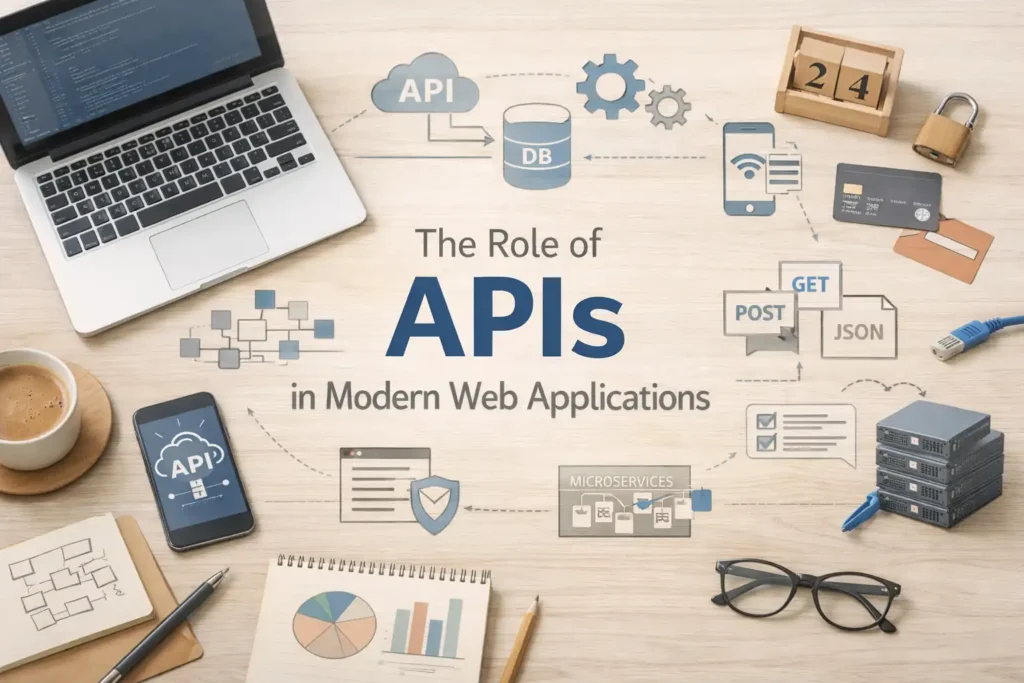

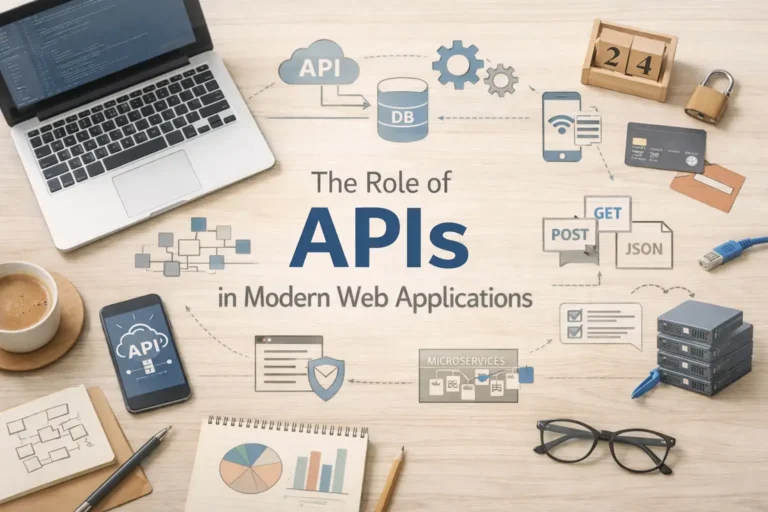
The Role of APIs in Modern Web Applications
Modern web applications are no longer built as single, self-contained systems. Instead, they rely on multiple services working together behind the scenes. At the center of this ecosystem are APIs. APIs serve as the communication bridge between software components, enabling applications to share data and functionality securely and efficiently. Whether you are ordering food, logging into a SaaS dashboard, or processing an online payment, APIs are doing the heavy lifting. Understanding how APIs power modern web applications helps developers build scalable, flexible, and future-ready digital products that meet user expectations in today’s fast-paced online environment.
Understanding the Basics of APIs
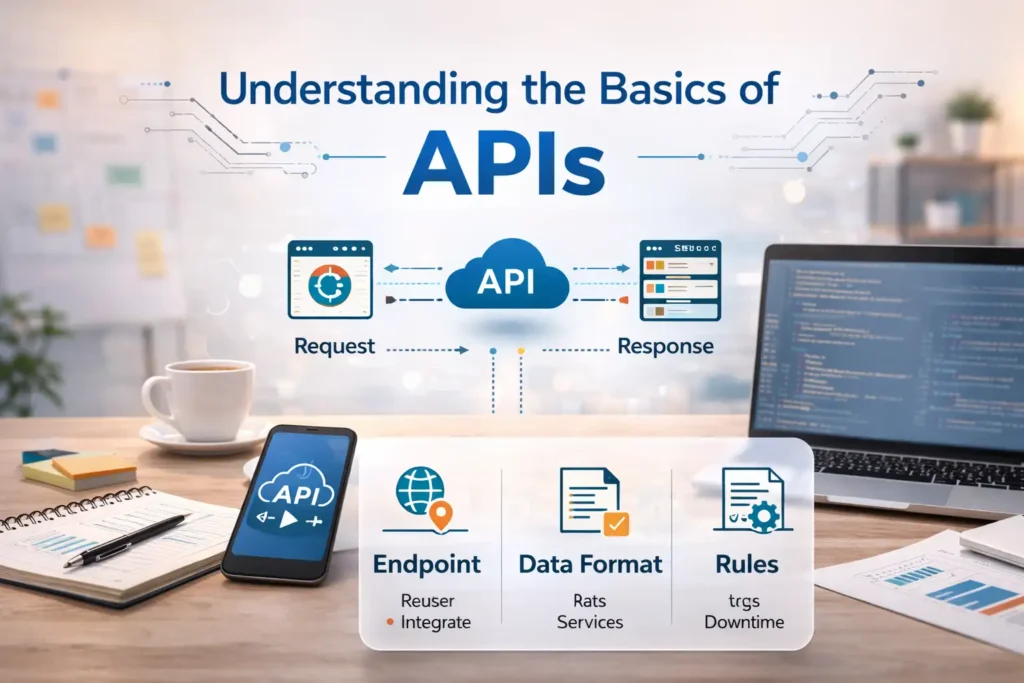
Before diving into advanced architecture and performance strategies, it is important to understand what APIs actually do. APIs are not just technical tools for developers; they are structured communication systems that allow applications to request and exchange information in a standardized way. They define rules, endpoints, and data formats that ensure consistent interaction between systems. In modern web development, APIs make it possible to separate the frontend from the backend, reuse services across platforms, and integrate third-party solutions without rebuilding everything from scratch. This foundation makes API-driven development faster, more organized, and highly scalable.
What Does API Stand For?
API stands for Application Programming Interface. In simple terms, it is a set of rules that allows one software application to interact with another. Instead of exposing internal code, an API provides specific access points where requests can be made, and responses are returned. This structured communication keeps systems secure, controlled, and efficient while enabling seamless integration across platforms.
How APIs Work
APIs operate through a request and response model. A client, such as a web browser or mobile app, sends a request to a server using a defined endpoint. The server processes the request and returns a response, usually in JSON format. HTTP methods like GET, POST, PUT, and DELETE define the type of action being performed within the system.
Types of APIs
There are several types of APIs used in modern web applications. Public APIs are open to external developers, while partner APIs are shared with specific business collaborators. Internal APIs operate within organizations to connect services. Composite APIs combine multiple requests into a single call, improving efficiency and performance in complex systems.
👉 You might also like: Role of AI in SaaS Product Development
Role of APIs in Modern Web Applications
APIs are the main part of modern web applications today because they enable modular and distributed development. Instead of building everything as one tightly connected system, developers can create independent services that communicate through APIs. This approach supports Single Page Applications, mobile apps, and cloud-based systems that all rely on the same backend infrastructure. APIs also make it easier to integrate payment gateways, analytics tools, authentication systems, and marketing platforms. By decoupling frontend and backend layers, APIs give teams the flexibility to innovate faster, scale independently, and deliver consistent digital experiences across devices and platforms.
Frontend and Backend Communication
In modern web apps, the frontend focuses on user experience while the backend manages logic and data. APIs connect these two layers. A frontend built with frameworks like React or Vue sends requests to backend APIs to fetch or update data. This separation allows teams to work independently and deploy updates without breaking the entire system.
Enabling Mobile and Multi-Platform Integration
APIs allow the same backend to serve web apps, mobile applications, and even IoT devices. Instead of creating separate systems for each platform, businesses can build once and distribute everywhere. This multi-platform capability reduces development costs, improves consistency, and ensures users receive the same experience across different devices.
API Architectures Used in Modern Web Apps
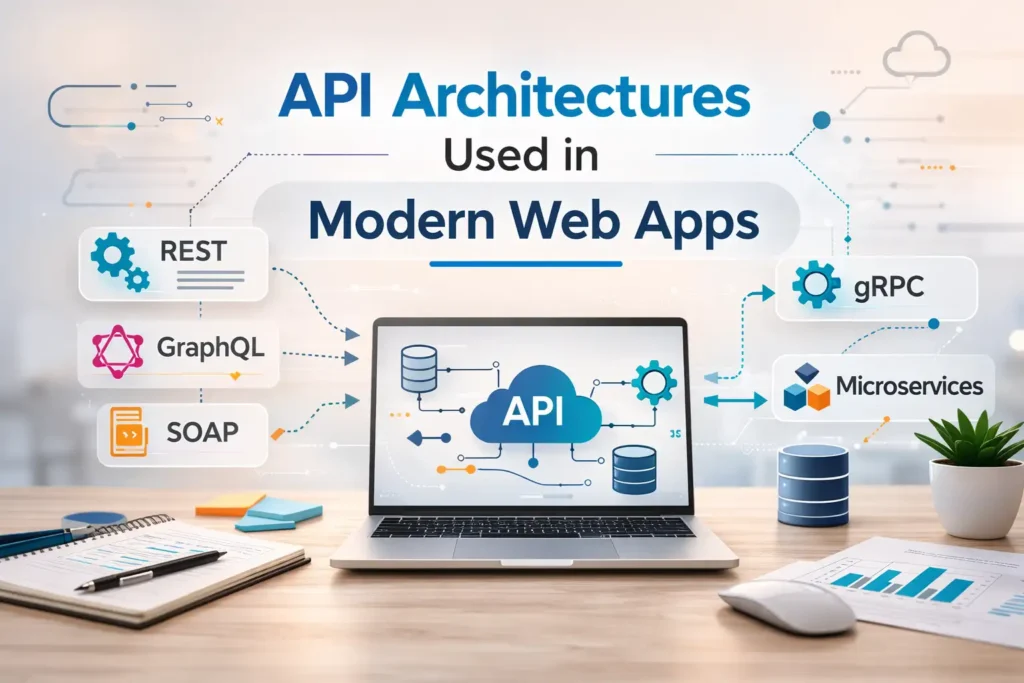
As web applications become more complex, choosing the right API architecture becomes critical. The architecture defines how data is structured, requested, and delivered between systems. Modern applications prioritize speed, flexibility, and scalability, which is why different API styles exist for different use cases. From REST to GraphQL and high-performance protocols, each approach solves specific challenges. Understanding these architectures helps developers design systems that reduce latency, handle large traffic volumes, and deliver optimized user experiences. The right API structure can significantly impact performance, maintainability, and long-term scalability of a web application.
REST APIs
REST, or Representational State Transfer, is the most widely used API architecture in modern web development. It follows a stateless communication model and relies on standard HTTP methods. REST APIs typically return JSON data, making them lightweight and easy to integrate. Their simplicity and scalability make them ideal for web and mobile applications across industries.
GraphQL APIs
GraphQL offers a more flexible alternative to REST by allowing clients to request exactly the data they need. This reduces over-fetching and under-fetching issues common in traditional APIs. It is especially useful in applications with complex data relationships, improving performance and giving frontend developers greater control over data queries.
SOAP APIs
SOAP, or Simple Object Access Protocol, is a protocol-based API architecture often used in enterprise environments. It relies on XML messaging and strict standards for security and transaction handling. While heavier than REST, SOAP remains relevant for applications that require high reliability, compliance, and formal contracts between systems.
gRPC and Modern High-Performance APIs
gRPC is a high-performance framework designed for fast communication between services. It uses Protocol Buffers for efficient data serialization and supports real-time streaming. Modern microservices architectures often rely on gRPC because of its speed, low latency, and ability to handle large-scale distributed systems efficiently.
👉 You might also like: Grammarly AI: Improve Writing Quality Fast in 2026
APIs and Microservices Architecture
Microservices architecture has reshaped how modern web applications are built. Instead of developing one large monolithic system, developers break applications into smaller, independent services. Each service focuses on a specific part and communicates with others via APIs. This modular approach increases agility and makes scaling easier. APIs serve as the communication layer that keeps these services connected without tightly coupling them together. As businesses grow and user demands increase, microservices powered by APIs provide the flexibility to update, deploy, and scale individual components without disrupting the entire system.
What Are Microservices?
Microservices are small, independent services that handle specific business functions within an application. For example, authentication, payment processing, and product management can operate as separate services. Each service can be developed, deployed, and scaled independently, making the overall system more resilient and adaptable to change.
APIs as the Communication Layer
APIs allow microservices to communicate in a structured and secure way. When one service needs data from another, it sends an API request instead of directly accessing internal code. This loose coupling improves flexibility, reduces system dependencies, and supports continuous deployment in fast-moving development environments.
Benefits of API-Driven Microservices
API-driven microservices improve scalability because individual services can handle traffic independently. They also support faster development cycles, as teams can work on separate components simultaneously. This structure enhances fault isolation, meaning if one service fails, the entire application does not necessarily go down.
👉 You might also like: HubSpot AI for Marketing Automation in 2026: Complete Guide
Security in APIs
Security is a critical aspect of modern API development. Since APIs expose data and functionality to external systems, they must be protected against unauthorized access and abuse. Poor API security can lead to data breaches, downtime, and serious reputational damage. Modern web applications implement layered security strategies that include authentication, authorization, encryption, and traffic control. By securing APIs properly, businesses ensure safe communication between services while maintaining performance and usability. Strong API security builds trust with users and protects sensitive information across web and mobile platforms.
Authentication and Authorization
Authentication verifies the identity of a user or system, while authorization determines what actions they are allowed to perform. Common methods include API keys, OAuth protocols, and JSON Web Tokens. These mechanisms ensure that only approved users or services can access protected resources within an application.
Rate Limiting and Throttling
Rate limiting restricts the number of requests a client can send within a defined time period. It helps prevent system abuse, reduces the risk of denial-of-service attacks, and maintains fair access for all users. Throttling helps maintain system stability by managing traffic spikes and preserving performance under heavy load conditions.
Data Encryption
Encryption protects data while it travels between clients and servers. HTTPS ensures secure communication by encrypting requests and responses. This prevents sensitive information, such as login credentials and payment details, from being intercepted or manipulated during transmission across networks.
Performance Optimization with APIs
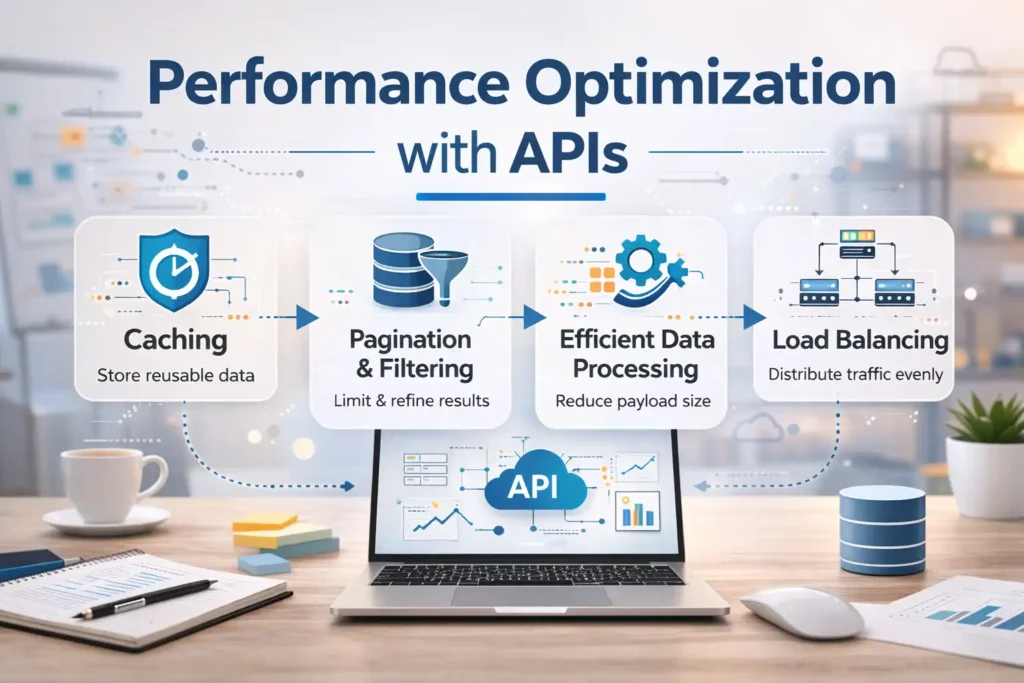
Slow APIs can cause delays, broken interfaces, and frustrated users. To maintain responsiveness, developers optimize APIs using strategies that reduce payload size and improve response times. Efficient data handling, caching, and traffic management play key roles in high-performing systems. When APIs are properly optimized, applications can handle thousands or even millions of requests without sacrificing speed. Strong performance optimization ensures reliability, scalability, and smooth user interactions across different devices and network conditions.
Caching Strategies
Caching stores frequently requested data temporarily, reducing the need to repeatedly fetch it from the database. This significantly improves response times and lowers server load. Server-side caching and content delivery networks are commonly used techniques to enhance API performance in high-traffic environments.
Pagination and Filtering
Pagination limits the amount of data returned in a single request, improving speed and reducing bandwidth usage. Filtering allows clients to request only relevant data fields. Together, these strategies optimize performance and create more efficient interactions between clients and backend services.
Load Balancing
Load balancing distributes incoming traffic across multiple servers. This helps any single server from becoming overloaded. By spreading requests evenly, applications maintain stability and ensure consistent performance even during high traffic spikes or seasonal demand increases.
APIs and Cloud Computing
Cloud computing and APIs naturally go together. Modern web applications are rarely hosted on a single physical server. Instead, they run on a distributed cloud infrastructure that relies heavily on APIs for provisioning, scaling, monitoring, and service communication. Cloud providers expose services like storage, databases, authentication, and machine learning through APIs, allowing developers to integrate powerful tools without managing hardware. This API-driven cloud model makes applications more resilient, flexible, and cost-efficient. As businesses adopt cloud-native strategies, APIs become the control layer that connects services, automates workflows, and enables rapid innovation across dynamic environments.
APIs in Cloud-Native Applications
Cloud-native applications are designed to run in scalable, containerized environments. APIs allow these applications to communicate with managed databases, storage systems, and external services without tight dependencies. This flexibility supports continuous deployment, faster releases, and automatic scaling based on real-time traffic demands.
API Gateways
An API gateway acts as a central entry point for all API requests. It handles authentication, routing, rate limiting, and monitoring in one place. By centralizing these tasks, API gateways improve security, simplify management, and provide better visibility into system performance and usage patterns.
👉 You might also like: Embedding Amazon Data into B2B Analytics Platforms
Real-World Use Cases of APIs in Modern Web Applications
APIs are not just technical components hidden behind code. They directly power many features that users interact with daily. From online shopping to SaaS dashboards and social media feeds, APIs handle data exchange in real time. They connect payment processors, inventory systems, analytics platforms, and messaging tools into a single seamless experience. Businesses rely on APIs to expand functionality without rebuilding core systems. By integrating specialized services through APIs, companies can innovate faster and deliver richer user experiences while keeping their internal development processes efficient and scalable.
E-commerce Platforms
In e-commerce applications, APIs connect product databases, payment gateways, shipping providers, and recommendation engines. When a user places an order, multiple API calls process payments, update inventory, and generate shipping details instantly. This coordinated communication ensures smooth transactions and accurate order management.
SaaS Applications
SaaS platforms rely on APIs to integrate CRM systems, marketing automation tools, analytics dashboards, and customer support software. APIs allow data to sync across platforms in real time. This interconnected environment helps businesses centralize operations while maintaining flexibility in choosing specialized software solutions.
Social Media Platforms
Social media applications use APIs to manage user authentication, content feeds, notifications, and third-party integrations. Real-time updates, messaging features, and external app connections all depend on APIs. This infrastructure enables scalable communication across millions of active users simultaneously.
Benefits of Using APIs in Modern Web Development

APIs provide significant advantages that directly impact business growth and technical performance. They accelerate development by allowing teams to reuse existing services instead of building everything from scratch. APIs also improve scalability, since different components can expand independently based on demand. This modular structure enhances reliability and reduces system downtime. Additionally, APIs support innovation by making it easier to test new features and integrate emerging technologies. For companies building modern web applications, APIs are not optional tools. They are strategic assets that support long-term flexibility, performance, and digital transformation goals.
Faster Development Cycles
By using pre-built services and third-party integrations, developers reduce coding time and focus on core features. APIs streamline collaboration between frontend and backend teams. This efficiency shortens development timelines and allows businesses to release updates or new products more quickly.
Improved Scalability
APIs support distributed architectures where services scale independently. If traffic increases in one part of the application, only that specific service needs additional resources. This targeted scaling improves performance while keeping infrastructure costs under control.
Common Challenges with APIs
Despite their advantages, APIs introduce certain challenges that must be managed carefully. Dependency on third-party APIs can create risks if external services experience downtime. Versioning issues may break compatibility between systems if updates are not handled properly. Security vulnerabilities can also arise if authentication and data validation are weak. Additionally, monitoring multiple APIs across distributed systems can become complex. Addressing these challenges requires clear documentation, strong governance policies, and proactive monitoring strategies to maintain reliability and performance.
Versioning Issues
When APIs evolve, changes can disrupt applications that rely on older versions. Proper versioning strategies maintain backward compatibility while introducing improvements. Clear documentation and structured release cycles help minimize integration conflicts and unexpected system failures.
Dependency Management
Relying on external APIs means trusting third-party uptime and security practices. If a provider experiences outages, your application may be affected. Building fallback mechanisms and monitoring external services reduces operational risk and ensures continuity.
👉 You might also like: How AI Is Shaping SEO in 2026 – Detailed Guide
Best Practices for Building and Managing APIs
Building powerful APIs is only part of the process. Managing them effectively is equally important. Clear documentation, consistent naming conventions, and standardized response formats improve developer experience and reduce errors. Monitoring tools help track performance metrics and detect anomalies early. Version control ensures stable updates without breaking integrations. Strong governance policies maintain security and compliance across systems. By following structured best practices, organizations can create APIs that remain reliable, secure, and scalable as their applications grow and evolve over time.
Clear Documentation
Comprehensive documentation explains endpoints, parameters, authentication methods, and response formats. Well-documented APIs reduce onboarding time for developers and prevent misuse. Good documentation also improves collaboration between internal teams and external partners.
Monitoring and Analytics
Continuous monitoring helps track API performance, response times, and error rates. Analytics provide insights into usage patterns and traffic behavior. These insights support data-driven decisions that improve scalability, reliability, and overall user experience.
The Future of APIs in Web Applications
The future of web development is strongly API-first. Organizations are designing systems where APIs are planned before frontend interfaces are built. Headless architectures separate presentation layers from backend logic, enabling greater flexibility across devices and channels. Artificial intelligence services are increasingly delivered through APIs, allowing rapid integration of advanced capabilities. Automation, real-time data processing, and distributed cloud systems will continue to expand API usage. As digital ecosystems grow more interconnected, APIs will remain the foundation that powers innovation, scalability, and seamless user experiences across modern web applications.
Conclusion
APIs power modern web applications by enabling communication, integration, and scalability across distributed systems. They connect frontend interfaces with backend logic, link internal services with external platforms, and support cloud-native infrastructure. From e-commerce and SaaS to social media and enterprise systems, APIs drive the seamless experiences users expect today. While challenges such as security and dependency management exist, strong architecture and best practices ensure long-term success. In today’s digital landscape, understanding how APIs power modern web applications is essential for building flexible, high-performing, and future-ready online platforms.
Frequently Asked Questions (FAQs)
What is an API in simple terms?
An API, or Application Programming Interface, is a structured way for different software systems to communicate with each other. It acts like a messenger that takes a request from one application, sends it to another system, and then returns the response. APIs allow web applications to share data and functionality securely without exposing internal code or system logic.
Why are APIs important for modern web applications?
APIs are essential because they connect different parts of a web application and enable third-party integrations. They allow frontend interfaces, mobile apps, and backend services to work together smoothly. Without APIs, modern features like online payments, real-time updates, cloud storage, and external tool integrations would be difficult to implement efficiently.
What is the difference between REST and GraphQL?
REST is a widely used API architecture that provides fixed endpoints for accessing data. It is simple and scalable, but may sometimes return more data than needed. GraphQL allows clients to request exactly the data they want in a single query. This flexibility reduces unnecessary data transfer and improves performance in complex applications.
How do APIs improve scalability?
APIs support modular and microservices-based architectures. Each service can scale independently depending on traffic and demand. If one part of an application experiences heavy usage, only that specific service needs additional resources. This approach improves efficiency, reduces costs, and ensures consistent performance during traffic spikes.
Are APIs secure?
APIs can be highly secure when proper measures are implemented. Security techniques such as authentication, authorization, HTTPS encryption, and rate limiting protect data from unauthorized access and abuse. Regular monitoring, testing, and updates are also important to maintain strong API security over time.
What are common challenges when using APIs?
Common challenges include versioning conflicts, dependency on third-party services, and potential security vulnerabilities. Poor documentation can also create integration issues. These challenges can be managed through structured version control, strong monitoring systems, fallback mechanisms, and clear API documentation.
How do APIs support cloud computing?
Cloud platforms expose services like storage, databases, and machine learning tools through APIs. Developers use these APIs to integrate powerful cloud features without managing physical servers. This allows web applications to scale automatically, deploy faster, and operate efficiently in distributed environments.
What does API-first development mean?
API-first development means designing and building APIs before creating the frontend interface. This approach ensures that systems are structured, reusable, and scalable from the beginning. It also allows different teams to work simultaneously, speeding up development and improving long-term flexibility.
✨ Want more clarity, less confusion? Follow Tech Statar.





















![What Is an IoT Developer Responsible For? [2025 Guide]](https://techstatar.com/wp-content/uploads/2025/10/The-Internet-of-Things-Benefits-and-Challenges-of-IoT-for-Business-SOCIAL-1024x536.png "Latest Trends")