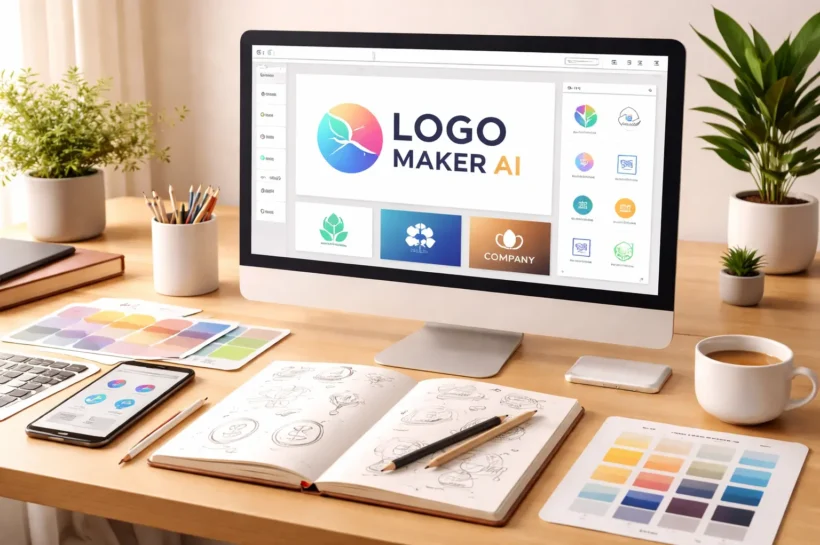

Logo Maker AI 2026: Revolutionizing Modern Branding
In today’s hyper-competitive digital landscape, a logo maker is no longer just a simple online template tool; it’s a sophisticated piece of innovation powered by artificial intelligence that democratizes professional branding. Whether you’re a startup founder bootstrapping your first venture or a marketing team iterating on brand assets at scale, modern logo makers deliver studio-quality results in minutes, not weeks.
As we stand in early 2026, these tools represent a perfect intersection of machine learning, cloud computing, and user-centric design systems. They solve the timeless problem of visual identity creation while pushing the boundaries of what’s possible in real-time personalization and adaptive branding.
The Evolution of Logo Makers: From Templates to Intelligent Systems
Traditional logo design once meant hiring a graphic designer, enduring multiple revision rounds, and paying anywhere from $500 to $5,000+. Early digital logo makers in the 2010s offered drag-and-drop templates functional but rigid and often generic.
The breakthrough came with AI integration. By 2023-2024, tools began leveraging generative models. In 2026, the best logo makers operate as complete creative ecosystems. They don’t just remix icons; they understand brand context, industry psychology, and design principles through massive, curated training datasets.
This shift from static software to intelligent, adaptive platforms marks one of the most significant innovations in digital design this decade.
How Modern Logo Makers Work: The Technology Under the Hood
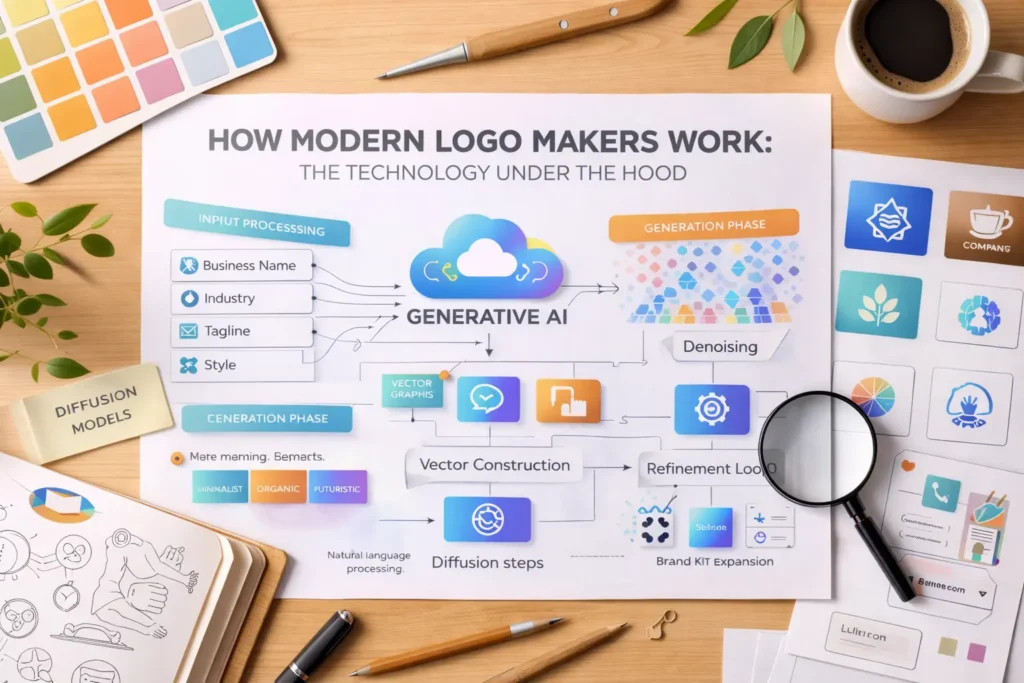
At their core, today’s advanced logo maker platforms rely on generative AI, primarily diffusion models, the same family of algorithms powering tools like Stable Diffusion and custom variants such as Canva’s Dream Lab.
Here’s the step-by-step mechanism in simple terms:
- Input Processing: You enter your business name, industry, tagline, preferred colors, and style descriptors (minimalist, futuristic, organic, etc.). Natural language processing (NLP) parses this into semantic embeddings.
- Generation Phase: Diffusion models start with pure noise and iteratively “denoise” it over dozens of steps, guided by your prompt and the model’s training on thousands of professionally designed logos. Specialized tools like Logo Diffusion train exclusively on clean, designer-curated vector datasets to ensure outputs follow strict logo rules, scalability, simplicity, and balance.
- Vector Construction: Unlike general image generators that output raster pixels, premium logo makers convert results into true SVG vectors. This means your logo remains crisp at any size from favicon to billboard.
- Refinement Loop: Magic editors, prompt-based tweaks, and one-click variations let you iterate. Some tools even offer “image-to-logo” conversion, turning a rough sketch or mood board into a polished mark.
- Brand Kit Expansion: Once finalized, the system auto-generates full branding assets, business cards, social templates, website favicons, and even animated versions for digital use.
This entire process runs in the cloud, often completing in under 30 seconds, thanks to optimized GPU clusters and edge computing.
Canva’s AI logo generator, for example, lets you upload a reference image to maintain aesthetic consistency while experimenting with styles ranging from 3D renders to clean vector illustrations.
Standout Features Defining 2026 Logo Makers
Leading tools in 2026 share powerful capabilities:
- Prompt Intelligence: Describe your brand in plain English and watch dozens of unique concepts appear.
- True Vector + High-Res Exports are essential for print and digital scalability.
- AI Mockup Generators: See your logo on merchandise, signage, or app icons instantly.
- Full Brand Kits: Automatic color palettes, typography pairings, and guideline PDFs.
- Collaboration & Version History: Real-time team editing with cloud sync.
- Integration Ecosystems: Seamless hooks into Shopify, Wix, Adobe Express, and social platforms.
Tools like Logo Diffusion, Looka, Wix Logo Maker, Design.com, and Adobe Express lead the pack, each excelling in different niches from hyper-custom vector precision to e-commerce-focused simplicity.
Real-World Applications and Business Impact
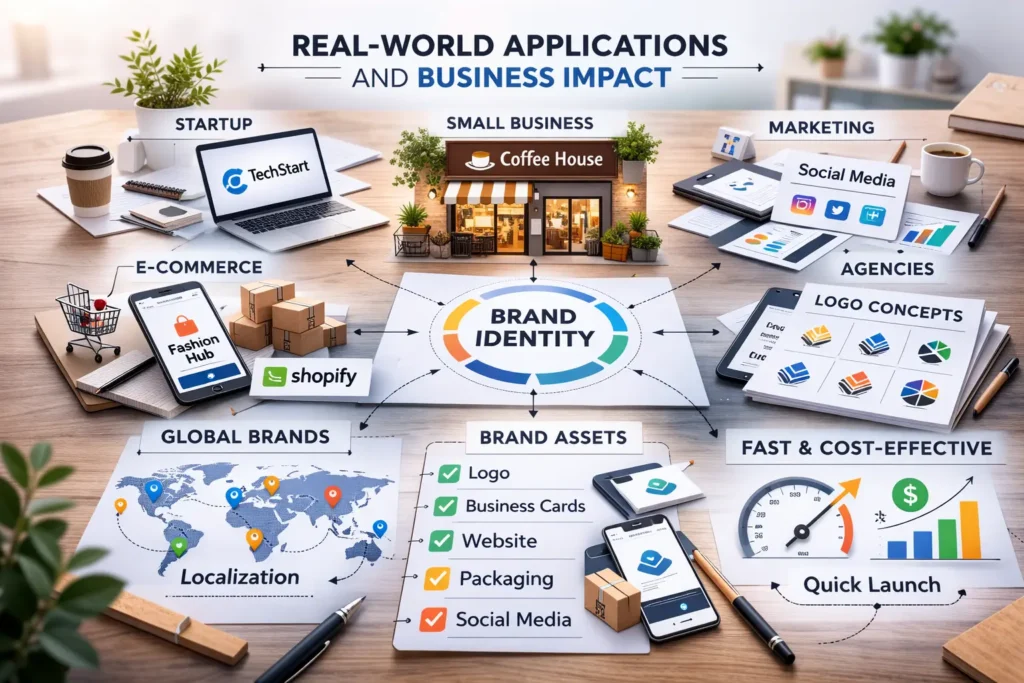
Startups use logo makers to launch MVPs with polished identities on shoestring budgets. E-commerce brands on Shopify generate logos that match their product aesthetic in one afternoon. Freelancers and agencies speed up client onboarding by presenting 20+ concepts before the first call.
Larger enterprises leverage them for sub-branding or regional variants. Imagine generating 50 localized versions of a global logo while maintaining core DNA.
One practical insight I’ve observed: companies that start with an AI logo maker often iterate faster toward their final identity because the low-friction generation process encourages experimentation that traditional workflows discourage due to cost.
Key Benefits That Make Logo Makers Essential
- Speed: From idea to downloadable assets in under 10 minutes.
- Cost Efficiency: Free tiers or one-time payments under $100 versus thousands for custom work.
- Accessibility: No design degree required, perfect for non-designers.
- Scalability: Vector outputs work everywhere; responsive versions adapt to dark/light modes automatically in advanced tools.
- Data-Driven Design: Some platforms analyze industry trends to suggest colors and shapes proven to perform in your sector.
Limitations and Smart Ways to Address Them
No technology is perfect. AI outputs can occasionally feel “safe” or similar to existing designs if prompts lack specificity. Copyright ownership remains a gray area; always purchase commercial rights and run trademark checks.
The solution? Treat the logo maker as a brilliant first draft generator, not the final authority. Combine AI speed with human taste: refine typography, adjust proportions, and add that unique spark only a founder or designer can provide.
👉 You might also like: 7 Best AI Coding Platforms in 2026
Logo Maker vs. Traditional Design: Side-by-Side Comparison
| Aspect | Traditional Designer | Modern AI Logo Maker (2026) |
| Time to First Concept | 3–14 days | 10–60 seconds |
| Cost | $500–$10,000+ | $0–$99 one-time or subscription |
| Revisions | Limited by budget | Unlimited & instant |
| Vector Quality | Excellent | Excellent (specialized tools) |
| Originality | High (human creativity) | High with good prompting |
| Brand Kit Included | Extra fee | Usually included |
| Best For | Complex, nuanced projects | 90% of modern businesses |
The Future Potential: Beyond Static Logos
Looking ahead, logo makers will evolve into dynamic identity systems. Expect:
- Adaptive Logos that change shape or color based on context (weather, time of day, user mood via AR).
- AR/VR Integration for immersive brand experiences.
- Hyper-Personalization where logos subtly adjust per customer segment.
- Blockchain-Verified Originality for ironclad IP protection.
- Multimodal Generation combining text, voice, and even 3D scans.
These advancements will blur the line between logo and living brand asset, making visual identity as fluid and responsive as the digital world it inhabits.
FAQ
What is a logo maker in technology?
A logo maker is an AI-powered software platform that uses machine learning and generative models to create custom, professional logos from user prompts and preferences, essentially an intelligent design assistant available 24/7.
How does a logo maker work?
It processes your inputs through NLP, generates concepts via diffusion models or similar generative AI, constructs vector graphics, and offers instant editing and export options. Advanced versions train on curated logo datasets for precision.
Is a logo maker safe or reliable?
Yes, reputable tools include content filters and deliver consistent, high-quality results. Reliability improves with clear prompts. Always verify trademark availability and purchase commercial licenses for full legal protection.
Who should use a logo maker?
Startups, small businesses, freelancers, marketers, educators, and anyone needing fast, affordable branding. Even agencies use them for rapid prototyping.
What problems does a logo maker solve?
It eliminates high costs, long wait times, and skill barriers of traditional design while providing scalable, consistent assets that support multi-channel marketing from day one.
What are the latest updates or future developments?
2026 brings better vector fidelity, AI mockup generators, full brand-kit automation, and early experiments with context-aware adaptive logos. Expect deeper integration with no-code website builders and AR platforms.
Is an AI-generated logo less “authentic” than a hand-crafted one?
Not necessarily. Authenticity comes from how you use and evolve the mark. Many iconic brands started with simple concepts the technology simply accelerates the journey.
Conclusion: Your Next Brand Identity Starts Here
The modern logo maker stands as one of the most practical innovations in digital technology today. It compresses what once took weeks and thousands of dollars into an accessible, empowering experience that puts professional branding within reach of every entrepreneur and creator.
As AI continues maturing, these tools won’t replace human creativity; they’ll amplify it, freeing us to focus on strategy, storytelling, and connection rather than pixel-pushing.
✨ Want smarter takes like this? Tap follow on Tech Statar.







![What Is Nastia AI? A Detailed Guide [2025]](https://techstatar.com/wp-content/uploads/2025/11/nastia-ai-honest-review-of-the-uncensored-ai-companion-1757572191.jpg "Tech")