

HubSpot AI for Marketing Automation in 2026: Complete Guide
HubSpot’s AI ecosystem is designed to connect marketing automation, CRM data, and customer insights into one intelligent system. Rather than using AI as a standalone feature, the platform embeds machine learning and predictive intelligence across email marketing, content creation, workflows, and analytics. This integration allows marketers to automate tasks while still maintaining personalization and strategic control. The ecosystem learns continuously from user interactions, campaign performance, and lifecycle data, helping businesses optimize campaigns, improve targeting accuracy, and create more relevant experiences that align with how modern buyers actually behave online.
Evolution of AI Features Inside HubSpot
HubSpot started with basic automation workflows but gradually evolved into a full AI-powered marketing platform. Over time, it introduced predictive lead scoring, smart content tools, and AI-assisted campaign optimization. These upgrades transformed simple automation into intelligent automation that adapts based on real-time user behavior. The platform now uses AI to recommend actions, refine targeting, and automate repetitive marketing decisions without removing human oversight or strategic flexibility.
Core AI Technologies Powering the Platform
HubSpot relies on machine learning, natural language processing, and predictive analytics to power its automation features. Machine learning analyzes behavioral patterns and campaign data, while NLP supports content generation and conversational chat tools. Predictive analytics helps forecast lead quality and campaign performance. Together, these technologies allow marketers to automate complex processes like segmentation, personalization, and lead nurturing with greater accuracy and efficiency.
How AI Integrates Across HubSpot Hubs (Marketing, Sales, CRM)
AI is deeply integrated across HubSpot’s Marketing Hub, Sales Hub, and CRM system. This unified integration ensures that customer data flows seamlessly between marketing automation, sales pipelines, and engagement tracking. As a result, AI can personalize emails, prioritize leads, and recommend next actions based on complete customer profiles. This cross-hub intelligence creates more consistent messaging and stronger alignment between marketing and sales efforts.
Key AI-Powered Marketing Automation Features in HubSpot
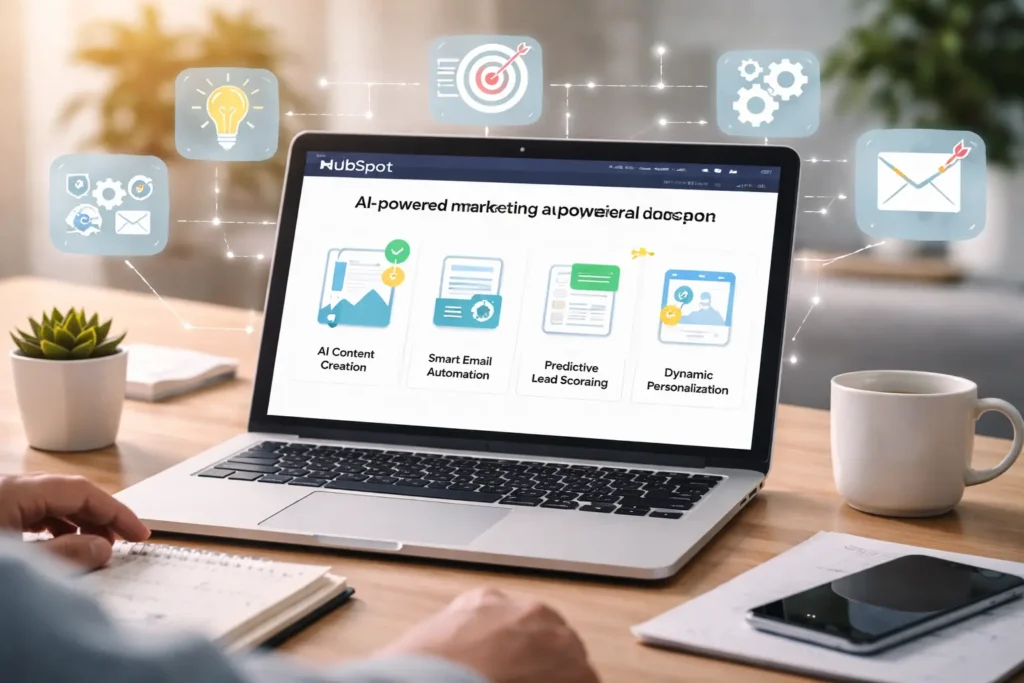
HubSpot uses AI to automate core marketing activities while improving precision and personalization. From content generation to intelligent workflows, AI reduces manual workload and enhances campaign performance. Instead of relying on static automation rules, the platform adapts based on user engagement, lifecycle stages, and predictive insights. This allows marketers to create smarter campaigns that respond dynamically to audience behavior, optimize engagement timing, and deliver highly relevant messaging across email, landing pages, and multi-channel marketing funnels.
AI-Powered Content Creation and Optimization
HubSpot’s AI tools assist with blog writing, email copy, and landing page optimization by analyzing tone, intent, and performance data. Marketers can generate drafts, refine messaging, and receive optimization suggestions that improve readability and conversions. This speeds up content production while maintaining consistency and SEO relevance. The AI also identifies keyword opportunities and content gaps to help marketers create more search-friendly and engaging marketing assets.
Smart Email Marketing Automation with AI
AI enhances email marketing by optimizing subject lines, personalization tokens, and send times based on user behavior. Instead of blasting emails at fixed schedules, the system predicts when contacts are most likely to engage. It also tailors messaging based on lifecycle stage and past interactions. This leads to higher open rates, better click-through performance, and more effective automated email sequences that feel relevant rather than automated.
AI-Driven Workflow Automation
HubSpot’s AI-powered workflows go beyond simple triggers by using behavioral data and predictive logic to automate complex customer journeys. Workflows can adjust based on user actions, engagement levels, and conversion signals. This allows marketers to nurture leads automatically with personalized emails, follow-ups, and content recommendations. The result is a more adaptive automation system that reacts in real time instead of following rigid, pre-defined marketing paths.
👉 You might also like: Embedding Amazon Data into B2B Analytics Platforms
How HubSpot Uses AI for Lead Generation and Qualification
AI plays a major role in how modern marketers capture, qualify, and prioritize leads without relying on manual filtering. Inside HubSpot, AI analyzes behavioral data, engagement signals, and demographic attributes to identify high-intent prospects automatically. This reduces guesswork and helps marketing teams focus on leads that are more likely to convert. Instead of treating all contacts equally, AI-driven lead generation systems continuously learn from user interactions, improving targeting accuracy and ensuring that automation workflows nurture the right audience at the right stage of the funnel.
Predictive Lead Scoring
Predictive lead scoring uses machine learning to rank leads based on their likelihood to convert. HubSpot evaluates factors like website visits, email engagement, form submissions, and CRM activity to assign dynamic scores. This helps marketers prioritize sales-ready prospects while still nurturing colder leads automatically. The system updates scores in real time, making lead qualification smarter, faster, and more aligned with actual buyer intent rather than static rules.
Smart Forms and Chatbots
AI-powered forms and chatbots improve lead capture by creating interactive and personalized user experiences. Instead of static forms, smart forms adjust fields based on visitor data and previous interactions. Chatbots use conversational AI to answer queries, qualify leads, and guide users toward relevant offers. This reduces friction in the conversion process and increases form completion rates while maintaining a natural and engaging user journey.
Automated Lead Segmentation Using AI
AI automatically segments leads based on behavior, engagement level, demographics, and lifecycle stage. Rather than manually creating lists, marketers can rely on intelligent segmentation that updates in real time. This ensures that each contact receives relevant messaging and targeted campaigns. As a result, automation becomes more precise, improving email relevance, personalization accuracy, and overall campaign performance across multiple audience groups.
AI-Powered Personalization in HubSpot Marketing Automation
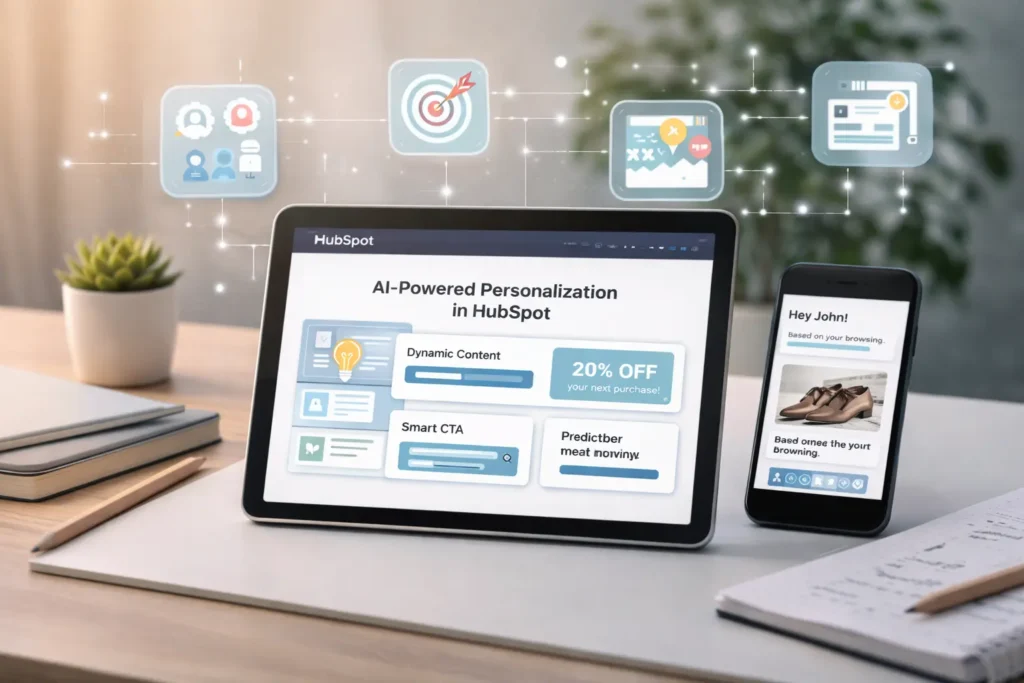
Personalization is one of the strongest advantages of AI-driven marketing automation. HubSpot uses AI to tailor content, emails, and website experiences based on individual user behavior and preferences. Instead of generic campaigns, marketers can deliver dynamic experiences that change according to audience data. This level of personalization improves engagement, strengthens customer relationships, and increases conversion rates. By analyzing real-time interactions, AI ensures that every touchpoint feels relevant, contextual, and aligned with the user’s interests throughout the entire customer journey.
Dynamic Website Content Personalization
HubSpot’s AI enables dynamic website content that adapts based on visitor behavior, location, and lifecycle stage. Returning visitors can see different CTAs, offers, or messages compared to new users. This creates a more personalized browsing experience that feels tailored rather than generic. Over time, AI refines these variations using engagement data, helping marketers continuously improve relevance and on-site conversion performance.
Behavioral Targeting and Smart CTAs
AI-driven behavioral targeting allows marketers to display smart CTAs based on how users interact with content, emails, or landing pages. Instead of showing the same call-to-action to every visitor, HubSpot adjusts offers according to engagement patterns and intent signals. This increases click-through rates and improves lead nurturing by guiding users toward the most relevant next step in their journey.
AI-Based Audience Segmentation
AI-based audience segmentation groups contacts into highly specific segments using real-time behavioral and CRM data. It identifies patterns that manual segmentation might miss, such as engagement frequency or content preferences. This allows marketers to deliver hyper-targeted campaigns that resonate with each audience cluster. The result is improved personalization, higher engagement rates, and more efficient marketing automation workflows.
HubSpot AI for Campaign Optimization and Performance Tracking
Campaign optimization becomes significantly more efficient when AI analyzes performance data continuously. HubSpot uses AI-driven analytics to monitor campaign metrics, detect trends, and recommend improvements automatically. Instead of manually reviewing reports, marketers receive actionable insights that help refine targeting, messaging, and timing. This data-driven approach enhances ROI and reduces wasted ad spend. AI also helps identify underperforming assets, forecast results, and optimize campaigns in real time, making marketing automation more strategic and performance-focused.
AI Analytics and Reporting Dashboards
HubSpot’s AI-powered dashboards provide real-time insights into campaign performance, engagement metrics, and conversion trends. These dashboards automatically highlight key data points, anomalies, and growth opportunities. Marketers can quickly understand what is working and what needs adjustment without deep manual analysis. This simplifies decision-making and helps teams optimize strategies using clear, data-backed insights.
Predictive Campaign Performance Insights
Predictive analytics helps marketers forecast campaign outcomes before they fully scale. HubSpot’s AI evaluates historical data, audience behavior, and engagement patterns to predict which campaigns are likely to succeed. This allows teams to allocate resources more effectively and refine messaging early. By reducing uncertainty, predictive insights make marketing automation more strategic and less reliant on trial and error.
A/B Testing Automation with AI
AI enhances A/B testing by automatically identifying winning variations based on performance data. Instead of manually analyzing multiple tests, the system detects patterns and recommends the best-performing subject lines, CTAs, and content formats. This accelerates optimization cycles and improves campaign efficiency. Over time, AI learns from past experiments, helping marketers create more effective and conversion-focused campaigns with less manual effort.
👉 You might also like: Affordable Web Design Services vs Cheap Website Builders
AI in HubSpot CRM for Marketing Alignment
AI-powered CRM intelligence helps marketing and sales teams stay aligned by centralizing customer data, behavioral insights, and engagement history in one place. Within HubSpot, AI analyzes interactions across emails, website visits, and campaigns to create unified customer profiles. This shared visibility allows marketing automation to become more accurate and sales outreach to be more personalized. Instead of working in silos, both teams can rely on AI-driven insights to understand customer intent, improve communication timing, and deliver consistent messaging throughout the buyer journey.
Unified Customer Data Intelligence
Unified data intelligence allows AI to analyze customer interactions across multiple touchpoints and channels. HubSpot’s CRM collects behavioral, demographic, and engagement data to build a complete customer profile. This centralized intelligence helps marketers create more targeted automation campaigns. By understanding how users interact with content and emails, AI enables smarter personalization, improved segmentation, and more relevant marketing communication.
AI-Powered Contact Insights and Enrichment
AI automatically enriches contact records by analyzing engagement patterns and external data signals. It identifies key attributes such as interests, lifecycle stage, and interaction frequency. These insights help marketers tailor campaigns more effectively without manual research. As contact profiles become more detailed over time, automation workflows become more precise, resulting in better targeting and improved lead nurturing outcomes.
Sales and Marketing Alignment Through AI Automation
AI bridges the gap between sales and marketing by automating lead handoffs, engagement tracking, and follow-up triggers. When a lead shows strong intent signals, the system can automatically notify sales teams and assign priorities. This alignment ensures that high-quality leads receive timely attention. It also improves conversion rates by synchronizing marketing automation efforts with real-time sales insights and actions.
How HubSpot Uses AI for Customer Journey Automation

Customer journey automation becomes more effective when AI maps user behavior and predicts the next best actions at each stage. HubSpot uses AI to track interactions across emails, landing pages, chatbots, and CRM touchpoints to build dynamic journey paths. Instead of fixed funnels, marketers can create adaptive journeys that respond to real-time engagement. This allows automation to guide prospects naturally from awareness to conversion while maintaining personalized experiences that match user intent and engagement level.
Mapping the Customer Journey with AI
AI maps the customer journey by analyzing behavioral data, engagement timelines, and conversion signals. HubSpot identifies patterns in how users interact with content and campaigns, helping marketers understand key decision points. This insight allows for better automation planning and more effective nurturing sequences. As AI learns from ongoing interactions, journey mapping becomes more accurate and continuously optimized.
Automated Multi-Channel Campaign Orchestration
HubSpot’s AI enables automated orchestration across multiple marketing channels, including email, social media, ads, and website interactions. Instead of managing each channel separately, AI coordinates messaging based on user behavior and engagement signals. This ensures consistent communication across platforms. The result is a cohesive marketing automation strategy that delivers timely, relevant messages throughout the customer lifecycle.
Lifecycle Marketing Automation with AI
Lifecycle automation uses AI to deliver targeted messaging at each stage of the buyer journey, from awareness to retention. HubSpot automatically adjusts workflows based on lifecycle stage, engagement level, and customer activity. This ensures that users receive relevant content and offers as they progress. It helps marketers nurture leads more effectively while improving customer experience and long-term retention.
👉 You might also like: How AI Is Shaping SEO in 2026
Real-World Use Cases of HubSpot AI in Marketing Automation
Businesses across industries use HubSpot’s AI tools to streamline marketing automation, improve targeting, and scale personalization. From SaaS companies to e-commerce brands, AI helps automate repetitive tasks while maintaining strategic control. These real-world applications show how intelligent automation can enhance efficiency, reduce manual workload, and improve conversion rates. By leveraging predictive insights and behavioral data, marketers can create smarter campaigns that adapt to customer needs and market trends.
SaaS Marketing Automation
SaaS companies use HubSpot AI to automate lead nurturing, onboarding emails, and product education campaigns. AI tracks user behavior inside the funnel and delivers personalized content based on engagement patterns. This helps SaaS businesses shorten sales cycles and improve product adoption. Automated workflows also ensure that trial users receive relevant communication that encourages conversion into paying customers.
E-commerce Personalization and Automation
E-commerce brands leverage AI to personalize product recommendations, abandoned cart emails, and promotional campaigns. HubSpot analyzes browsing behavior, purchase history, and engagement data to deliver targeted offers. This level of automation improves customer experience and increases repeat purchases. AI-driven segmentation also helps brands send highly relevant campaigns that boost conversions and customer lifetime value.
B2B Lead Nurturing Automation
B2B companies use AI-powered automation to nurture long sales cycle leads through educational content, email sequences, and personalized follow-ups. HubSpot’s AI identifies decision-maker behavior and engagement signals to deliver relevant messaging. This structured nurturing approach builds trust over time and increases the chances of conversion while reducing manual outreach and follow-up efforts.
Content Marketing Automation at Scale
AI helps marketing teams scale content distribution by automating blog promotion, email newsletters, and content recommendations. HubSpot analyzes content performance and audience preferences to suggest optimization strategies. This ensures that high-performing content reaches the right audience segments. As a result, marketers can maintain consistent content engagement while saving time on manual campaign management.
Benefits of Using HubSpot AI for Marketing Automation
Using AI in marketing automation offers significant advantages, including improved efficiency, deeper personalization, and data-driven decision-making. HubSpot’s AI reduces repetitive manual tasks while enhancing campaign accuracy and targeting precision. Marketers can automate workflows, optimize content, and analyze performance in real time. This leads to better engagement, good conversion rates, and better customer relationships. Additionally, AI-powered insights help businesses refine their strategies continuously, ensuring that automation efforts remain aligned with evolving customer behavior and marketing goals.
Best Practices for Using HubSpot AI in Marketing Automation
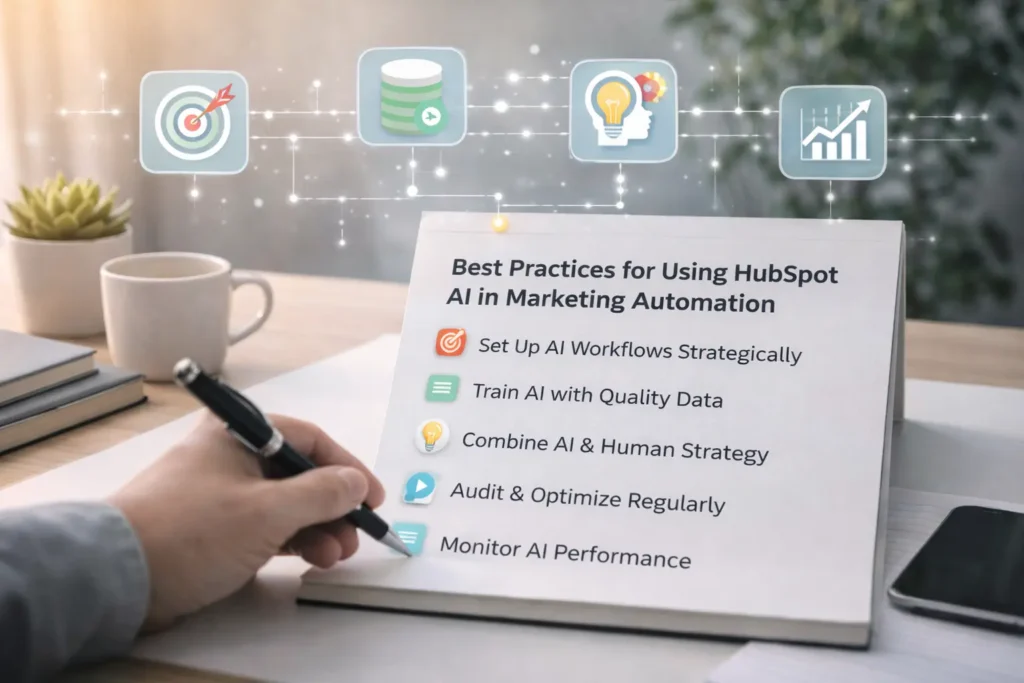
To maximize results, marketers should use AI strategically rather than relying on full automation without oversight. Start by setting clear goals, maintaining clean data, and testing workflows regularly. HubSpot’s AI performs best when guided by a strong content strategy and audience insights. Combining automation with continuous optimization ensures long-term success. Businesses should also monitor performance metrics and refine campaigns based on AI-driven recommendations to achieve better engagement and conversion outcomes.
Setting Up AI Workflows Strategically
Strategic workflow setup involves defining clear triggers, segmentation logic, and personalization paths. HubSpot’s AI can optimize workflows, but initial planning is essential for effectiveness. Marketers should align automation sequences with customer journey stages. This ensures that messaging remains relevant and timely while maximizing engagement and lead-nurturing efficiency.
Training AI with Quality Data
Training AI with accurate and well-structured data improves automation performance significantly. HubSpot learns from historical engagement, CRM records, and behavioral signals. The more relevant the data, the smarter the automation becomes. Regular data updates and segmentation audits help maintain accuracy and ensure better personalization across campaigns.
Combining AI Insights with Human Strategy
The most effective marketing automation strategies combine AI-driven insights with human creativity and decision-making. HubSpot provides recommendations, but marketers should refine messaging, campaign angles, and content tone. This collaboration ensures automation remains strategic rather than robotic, resulting in campaigns that feel authentic while still benefiting from AI-powered efficiency.
👉 You might also like: Logo Maker AI 2026: Revolutionizing Modern Branding
HubSpot AI vs Traditional Marketing Automation Tools
Compared to traditional automation platforms, AI-powered systems offer deeper personalization, predictive insights, and adaptive workflows. HubSpot stands out by embedding AI across its CRM and marketing tools rather than treating it as an add-on feature. Traditional tools rely on fixed rules, while AI-driven automation evolves with user behavior. This makes campaigns more dynamic, efficient, and aligned with modern customer expectations.
Key Differences in Automation Intelligence
Traditional automation follows static rules and predefined triggers, whereas AI-driven automation adapts based on real-time behavioral data. HubSpot’s intelligent automation identifies patterns, predicts outcomes, and adjusts workflows automatically. This shift from rule-based to data-driven automation improves targeting precision and overall marketing effectiveness.
Competitive Advantages of AI-Driven Automation
AI-driven automation provides a competitive edge by improving personalization, scalability, and campaign optimization. HubSpot enables marketers to automate complex processes while maintaining relevance and engagement. This leads to better ROI, faster execution, and stronger customer relationships compared to conventional automation tools.
When to Choose AI-Powered Automation
Businesses should choose AI-powered automation when they need scalable personalization, advanced analytics, and smarter lead nurturing. HubSpot is particularly effective for companies with growing customer data and multi-channel marketing strategies. AI automation becomes most valuable when manual processes limit efficiency and personalization capabilities.
Future of AI in HubSpot Marketing Automation
The future of marketing automation is closely tied to advancements in AI, especially in predictive analytics and generative content. HubSpot continues to expand its AI capabilities to enhance personalization, automation intelligence, and real-time decision-making. As AI evolves, marketing platforms will become more proactive, anticipating customer needs rather than reacting to them. This will allow businesses to deliver highly contextual experiences, automate complex journeys, and make faster, data-driven marketing decisions with greater accuracy.
Conclusion
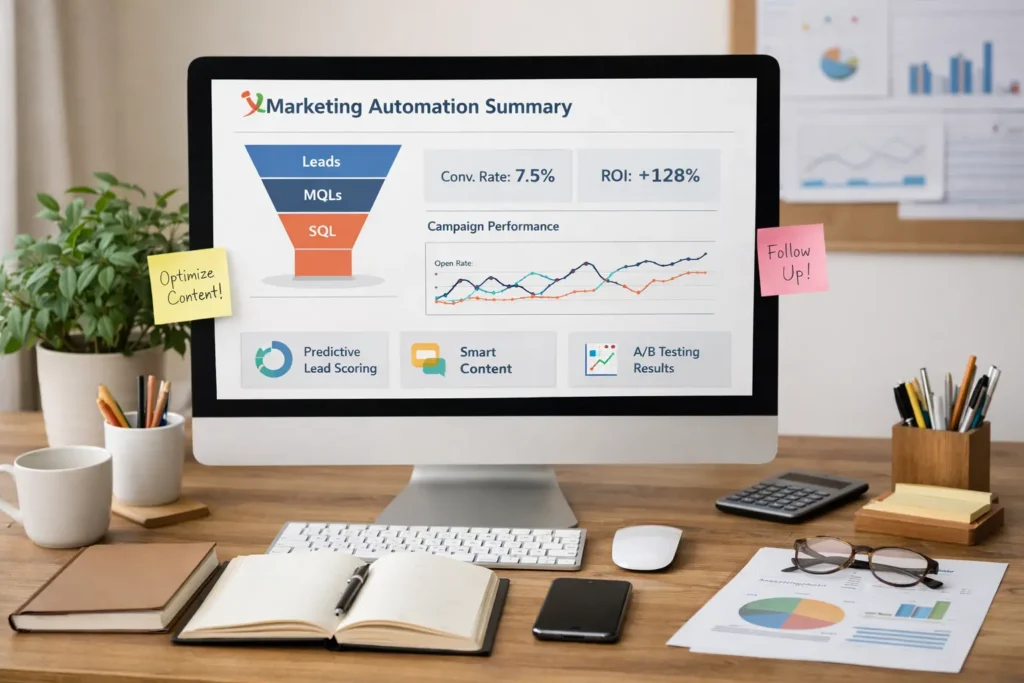
HubSpot’s AI-powered marketing automation offers a strong combination of personalization, predictive analytics, and workflow intelligence that modern businesses need to scale efficiently. Automating repetitive tasks and improving targeting accuracy help marketers focus on strategy and creativity. While it requires quality data and strategic implementation, the long-term benefits in efficiency, engagement, and conversion make it a valuable solution for businesses aiming to build smarter, data-driven marketing automation systems.
FAQs
How is AI changing modern tech platforms?
AI is transforming tech platforms by making them smarter, more personalized, and automation-driven. Instead of static tools, platforms now analyze user behavior, predict needs, and automate workflows in real time. This shift is helping SaaS platforms, marketplaces, and social apps deliver faster and more relevant user experiences.
Will AI replace traditional SaaS platforms?
Not exactly. AI is not replacing SaaS platforms. It is evolving them. Modern platforms are integrating AI features like automation, predictive analytics, and intelligent recommendations to stay competitive rather than being replaced.
What role does AI play in SaaS platform growth?
AI helps SaaS platforms scale by improving user onboarding, customer support, data analysis, and personalization. Companies like Salesforce and HubSpot already use AI to automate marketing, CRM insights, and customer journeys, which increases retention and efficiency.
How does AI improve user experience on digital platforms?
AI enhances user experience through personalized content, smart search, chatbots, and recommendation engines. Platforms can now understand user intent and deliver tailored results instead of generic experiences, which boosts engagement and satisfaction.
Is AI making tech platforms more automated?
Yes, automation is one of the biggest impacts of AI on tech platforms. From automated emails to AI-driven dashboards and workflow automation, platforms are reducing manual work and increasing operational efficiency for businesses and users.
What are the biggest risks of AI in tech platforms?
The main risks include data privacy concerns, algorithm bias, over-automation, and heavy dependence on AI decision-making. Platforms must balance AI efficiency with ethical data usage and transparency to maintain user trust.
How will AI shape the future of digital ecosystems?
AI will lead to fully integrated ecosystems where platforms communicate with each other, automate processes, and deliver predictive insights. This means smarter marketplaces, AI-native SaaS tools, and more interconnected digital services.
Are AI-powered platforms better for businesses?
In most cases, yes. AI-powered platforms provide better analytics, faster decision-making, and scalable automation. This allows businesses to reduce costs, improve targeting, and optimize performance without increasing manual workload.
How is AI affecting platform competition in the tech industry?
AI is raising the competitive bar. Platforms that adopt AI faster gain an advantage through better personalization, automation, and innovation, while slower platforms risk losing users to smarter AI-driven alternatives.
What should businesses look for in an AI-powered platform?
Businesses should focus on AI capabilities like automation, integrations, data insights, customization, and scalability. A strong AI platform should enhance workflows without making systems overly complex or difficult to manage.
✨ Good read? Better ones are coming, follow Tech Statar.