


Grammarly AI: Improve Writing Quality Fast in 2026
High-quality content is no longer optional. Whether you are writing blog posts, sales pages, academic papers, or client emails, clarity and precision directly impact credibility and conversions. Artificial intelligence has changed how we edit and refine text, moving beyond simple spell checks to intelligent writing support. Grammarly stands at the center of this shift, combining machine learning, natural language processing, and generative AI to improve writing in real time.
In this guide, we will break down how Grammarly’s AI works, what technologies power it, and how it improves grammar, clarity, tone, and overall content quality.
The Evolution of AI in Writing Assistance
Writing tools have come a long way from red underlines beneath misspelled words. Early digital editors relied on fixed grammar rules and dictionary databases. They could catch obvious spelling errors but often failed to understand context, tone, or intent. Modern AI-powered writing assistants operate differently. Instead of relying solely on predefined rules, they analyze patterns across massive datasets to predict better wording, structure, and phrasing. This shift from static correction to contextual intelligence allows today’s tools to function more like real editors, offering suggestions that improve clarity, flow, and engagement rather than simply correcting surface-level mistakes.
From Basic Spell Checkers to Intelligent Writing Tools
Traditional spell checkers scanned text against a dictionary and flagged unfamiliar words. Grammar tools used rule-based systems that often misunderstood context. They could not recognize tone, audience, or purpose. AI-driven tools changed that. By learning from billions of sentences, modern systems identify patterns in language and suggest improvements that align with meaning, not just rules.
The Rise of Machine Learning and NLP in Content Editing
Machine learning and natural language processing transformed digital editing. Instead of hard-coded rules, AI models analyze syntax, semantics, and sentence relationships. NLP allows software to interpret meaning, detect awkward phrasing, and recommend clearer alternatives. Over time, these systems improve through data training, making suggestions more accurate and context-aware with every update.
Core AI Technologies Behind Grammarly
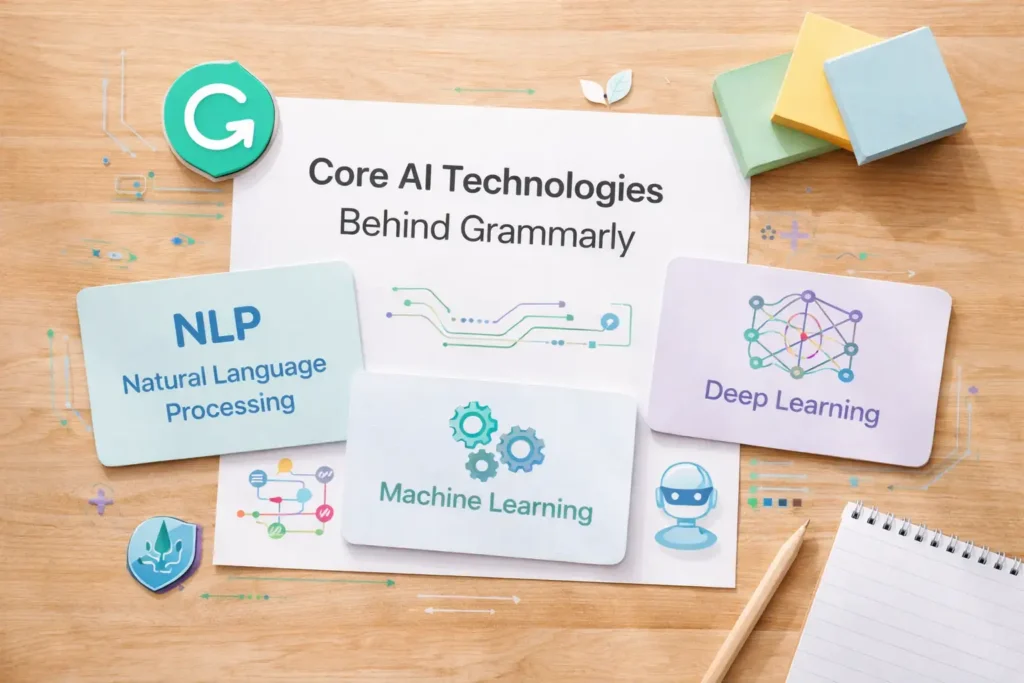
Grammarly’s performance is built on advanced AI architecture. At its core, the platform combines natural language processing, deep learning, and large-scale machine learning models. These systems evaluate writing across multiple layers, including grammar accuracy, sentence structure, tone, clarity, and engagement. Instead of analyzing sentences in isolation, Grammarly reviews the broader context to determine whether suggestions align with user intent. This layered analysis enables it to offer smart rewrites, tone adjustments, and vocabulary enhancements. By continuously refining its algorithms, Grammarly ensures that suggestions remain relevant, adaptive, and aligned with modern communication standards.
Natural Language Processing (NLP)
NLP enables Grammarly to interpret sentence meaning rather than simply scanning for keywords. It evaluates syntax, word relationships, and semantic intent. This allows the system to detect misplaced modifiers, unclear references, and awkward constructions. By understanding how language functions in context, NLP helps generate precise, meaningful suggestions that improve overall readability.
Machine Learning Models
Grammarly trains its machine learning models on extensive datasets containing diverse writing styles. These models identify patterns associated with effective communication. When users write, the system compares text against learned patterns to predict improvements. Continuous model updates ensure that suggestions evolve alongside changing language trends and usage behaviors.
Deep Learning and Contextual Understanding
Deep learning networks help Grammarly process complex language structures. Instead of evaluating isolated words, these models consider surrounding sentences and broader context. This improves accuracy when detecting nuanced grammar errors, tone mismatches, or clarity issues. Contextual awareness allows the tool to recommend edits that strengthen coherence and logical flow.
👉 You might also like: HubSpot AI for Marketing Automation in 2026: Complete Guide
How Grammarly Improves Content Quality Step by Step
Grammarly does more than underline grammar mistakes. Its AI evaluates writing through multiple quality layers, including correctness, clarity, engagement, and delivery. Each sentence is analyzed in context, allowing the system to suggest improvements that strengthen flow and readability. Instead of overwhelming users with random edits, suggestions are prioritized based on impact. This structured approach helps writers move from basic error correction to strategic refinement. Whether drafting a blog post, marketing copy, or professional email, Grammarly guides users through incremental improvements that make content clearer, more concise, and aligned with audience expectations.
Real-Time Grammar and Spelling Correction
Grammarly scans text instantly, identifying grammar errors, punctuation mistakes, and contextual spelling issues. Unlike traditional tools, it distinguishes between similar words based on meaning within a sentence. This real-time feedback prevents small mistakes from disrupting readability and ensures polished communication before content is published or shared.
Clarity and Concise Enhancements
AI models detect wordy phrases, redundant expressions, and complex constructions that weaken readability. Grammarly suggests streamlined alternatives that simplify structure without changing intent. By tightening sentences and removing unnecessary filler, the tool improves flow, making content easier to understand and more engaging for readers.
Tone Detection and Tone Suggestions
Tone plays a critical role in communication. Grammarly analyzes word choice, sentence rhythm, and punctuation to identify emotional cues. It then classifies tone, such as confident, neutral, formal, or conversational. When needed, it recommends adjustments to better match audience expectations and communication goals.
Vocabulary Enhancement
Strong vocabulary increases clarity and authority. Grammarly highlights repetitive wording and suggests more precise alternatives. These recommendations are context-aware, ensuring replacements fit naturally within the sentence. This improves engagement, strengthens messaging, and helps writers avoid flat or generic phrasing.
Style and Consistency Checks
Consistency builds trust in written communication. Grammarly reviews punctuation usage, formatting patterns, and stylistic choices to maintain uniformity throughout a document. It also supports customized style guides for teams, ensuring brand voice and editorial standards remain consistent across all content.
Plagiarism Detection System
Grammarly includes an AI-powered plagiarism detection feature that compares text against billions of web pages and academic sources. This process helps writers confirm originality before publishing. By identifying potential duplication, the system protects credibility and supports ethical content creation practices.
Grammarly’s AI Writing Assistant Features
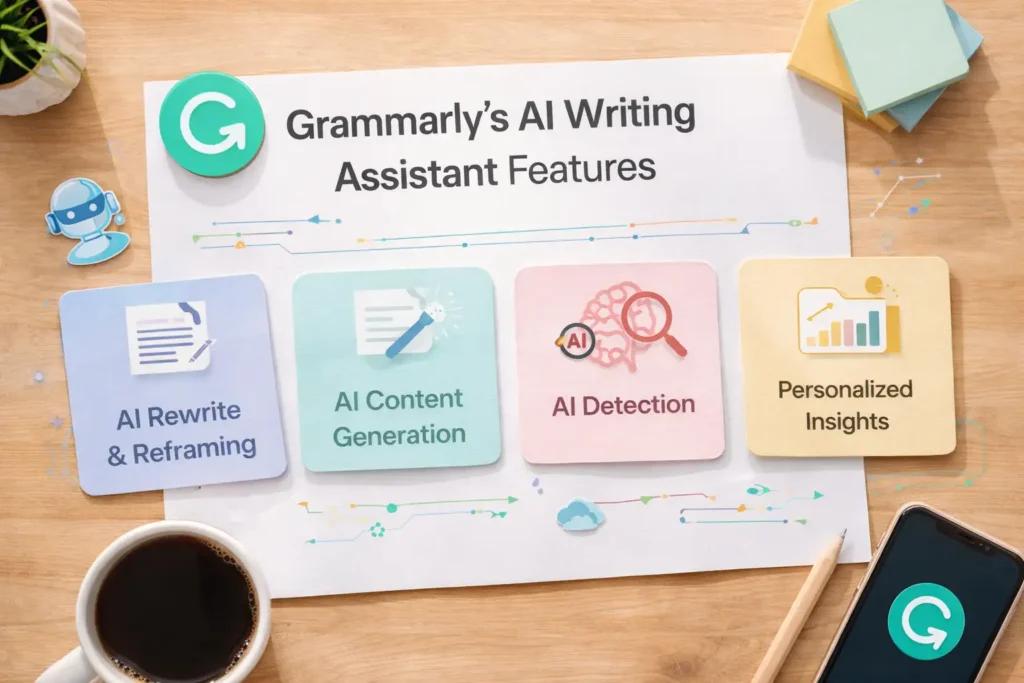
Beyond editing, Grammarly now functions as a full AI writing assistant. It supports drafting, rewriting, and refining content across various formats. Powered by generative AI models, the platform can expand short inputs into structured paragraphs or rephrase complex sentences for clarity. These features allow users to move from idea to polished draft faster. Instead of replacing creativity, Grammarly enhances it by offering intelligent suggestions that improve structure and impact. The result is a smoother writing workflow that combines automation with human judgment.
AI Rewrite and Sentence Reframing
Grammarly provides one-click rewrites that improve clarity, tone, or length. Users can choose between alternative phrasings depending on intent. This flexibility helps refine messaging without starting from scratch and supports quick optimization of marketing, academic, or professional content.
AI Content Generation
With prompt-based generation, Grammarly assists in drafting emails, outlines, and short-form content. Users provide instructions, and the AI produces structured text aligned with the request. This feature accelerates content creation while still allowing writers to edit and personalize the final output.
Personalized Writing Insights
Grammarly tracks writing patterns and offers performance insights over time. Users receive feedback on vocabulary usage, clarity improvements, and recurring errors. These analytics encourage continuous improvement and help writers develop stronger communication skills in the long term.
How Grammarly Adapts to Different Writing Contexts

Effective communication changes depending on audience, industry, and intent. Grammarly’s AI adjusts suggestions based on writing goals such as academic, business, or casual communication. By analyzing vocabulary, structure, and tone signals, the system tailors feedback to match context. This flexibility makes it useful for students, marketers, corporate teams, and content creators alike. Instead of offering generic corrections, Grammarly aligns recommendations with purpose. The result is writing that feels appropriate for the situation, whether it requires formal precision, persuasive clarity, or conversational warmth. Context-aware intelligence ensures that improvements enhance meaning rather than distort it.
Academic Writing
In academic contexts, clarity and formal tone are critical. Grammarly detects informal phrasing, vague claims, and structural inconsistencies. It suggests revisions that strengthen argument flow and maintain objectivity. This helps students and researchers produce polished work while preserving scholarly credibility and logical consistency.
Business and Professional Writing
Professional communication demands precision and confidence. Grammarly refines emails, proposals, and reports by improving clarity and tone alignment. It reduces ambiguity and ensures wording sounds confident yet respectful. This supports stronger workplace communication and improves overall brand perception.
Marketing and Content Creation
Marketing content requires engagement and readability. Grammarly highlights passive voice, weak verbs, and repetitive phrases that reduce impact. By suggesting stronger alternatives and clearer structure, it helps marketers craft persuasive messages optimized for audience attention and digital readability.
Social Media and Casual Writing
Casual platforms still benefit from clarity. Grammarly ensures posts remain grammatically correct while preserving a conversational tone. It balances personality with professionalism, helping users communicate naturally without sacrificing coherence or readability.
👉 You might also like: How AI Is Shaping SEO in 2026 – Detailed Guide
Data, Privacy, and Ethical AI Considerations
As AI tools become more integrated into daily workflows, privacy and responsible development matter more than ever. Grammarly emphasizes secure data handling and transparent AI practices. Its systems are designed to process text efficiently while protecting user information. Ethical AI development also includes minimizing bias in language suggestions and ensuring fairness across writing styles and dialects. By prioritizing responsible innovation, Grammarly aims to build trust alongside technological advancement. This balance between performance and protection strengthens user confidence and supports sustainable adoption of AI writing tools.
Data Security Practices
Grammarly uses encryption and a secure infrastructure to protect user content. Text processing occurs within safeguarded systems designed to prevent unauthorized access. These measures help maintain confidentiality across personal, academic, and professional documents.
Responsible AI Development
AI suggestions must remain fair and unbiased. Grammarly continuously evaluates model behavior to reduce unintended bias in recommendations. Ongoing refinement improves accuracy while promoting inclusive language and balanced communication standards.
Benefits of Using AI for Content Quality Improvement

AI-powered editing offers measurable advantages for individuals and organizations. Grammarly accelerates proofreading, improves clarity, and reduces errors before publication. This leads to higher reader trust and stronger engagement. Enhanced readability can lower bounce rates on digital platforms and improve message retention. For businesses, consistent communication strengthens brand authority. For individuals, polished writing enhances professional credibility. By combining automation with contextual intelligence, Grammarly enables writers to focus on ideas while the system handles refinement. This collaborative approach increases productivity without replacing human creativity or strategic thinking.
Increased Productivity
Automated suggestions reduce time spent on manual proofreading. Writers can focus on strategy and creativity instead of surface-level corrections. This streamlines content production workflows and shortens revision cycles.
Higher Engagement and Readability
Clearer sentences and stronger vocabulary improve the reader experience. When content flows naturally, audiences stay engaged longer. This directly supports better performance across blogs, emails, and marketing campaigns.
Professional Credibility
Error-free writing builds trust. Grammarly helps eliminate inconsistencies and awkward phrasing, strengthening overall presentation. Professional communication improves reputation and reinforces authority in competitive industries.
Limitations of AI in Writing Tools
While AI editing is powerful, it is not perfect. Automated systems may occasionally misinterpret context, especially in highly technical or creative writing. Over-reliance on suggestions can also dilute personal voice. Writers should review edits critically rather than accepting every recommendation automatically. Human judgment remains essential for strategic messaging and emotional nuance. AI works best as a collaborative assistant, not a replacement for thoughtful editing. Recognizing these limitations ensures balanced usage and maintains authentic communication.
Grammarly vs Traditional Editing Tools
Traditional grammar tools focus primarily on surface-level corrections. Grammarly goes further by integrating contextual analysis, tone detection, and generative AI capabilities. Instead of simply flagging errors, it recommends strategic improvements that enhance clarity and engagement. This broader scope makes it suitable for professional teams and content-driven businesses. By combining editing, rewriting, and analytical insights, Grammarly positions itself as a comprehensive writing enhancement platform rather than a basic spell checker.
👉 You might also like: Best AI Content Writing Guide for SEO Success in 2025
The Future of AI in Content Quality Enhancement
AI writing tools continue to evolve rapidly. Future advancements will likely include deeper personalization, improved multilingual support, and tighter integration with productivity platforms. As machine learning models grow more sophisticated, contextual understanding will become even more accurate. Grammarly is positioned to expand its AI capabilities while maintaining focus on responsible innovation. The long-term vision centers on seamless collaboration between human creativity and intelligent systems. As digital communication increases across industries, AI-driven content optimization will become a standard part of professional workflows.
Conclusion
Grammarly uses advanced AI technologies, including natural language processing, machine learning, and generative models, to improve writing at every level. From grammar correction to tone refinement and content generation, its system enhances clarity, engagement, and credibility. While AI cannot replace human creativity, it significantly strengthens the editing process. By combining automation with thoughtful review, writers can produce high-quality content that resonates with audiences and performs well in search engines.
Frequently Asked Questions (FAQs)
How does Grammarly work with AI?
Grammarly uses AI powered by natural language processing and machine learning to analyze text in real time. It checks grammar, clarity, tone, and word choice by understanding context, not just rules. The system then suggests edits, rewrites, or improvements to make writing clearer and more effective.
How does Grammarly train its AI?
Grammarly trains its AI models on large datasets that include different writing styles and sentence structures. Machine learning helps the system recognize strong communication patterns. Engineers continuously update and refine the models to improve accuracy, reduce bias, and adapt to evolving language use.
Is Grammarly good at detecting AI content?
Grammarly offers an AI detection feature that estimates whether content may be AI-generated. It analyzes writing patterns and provides a likelihood score. While helpful, results are not 100 percent accurate and should be reviewed alongside human judgment.
How to check AI-generated content with Grammarly?
You can use Grammarly’s AI detection tool by pasting or uploading text into the platform. It scans the content and provides a report indicating possible AI involvement. Review flagged sections and edit them to ensure originality and natural tone.
✨ Save time, learn faster, follow Tech Statar.