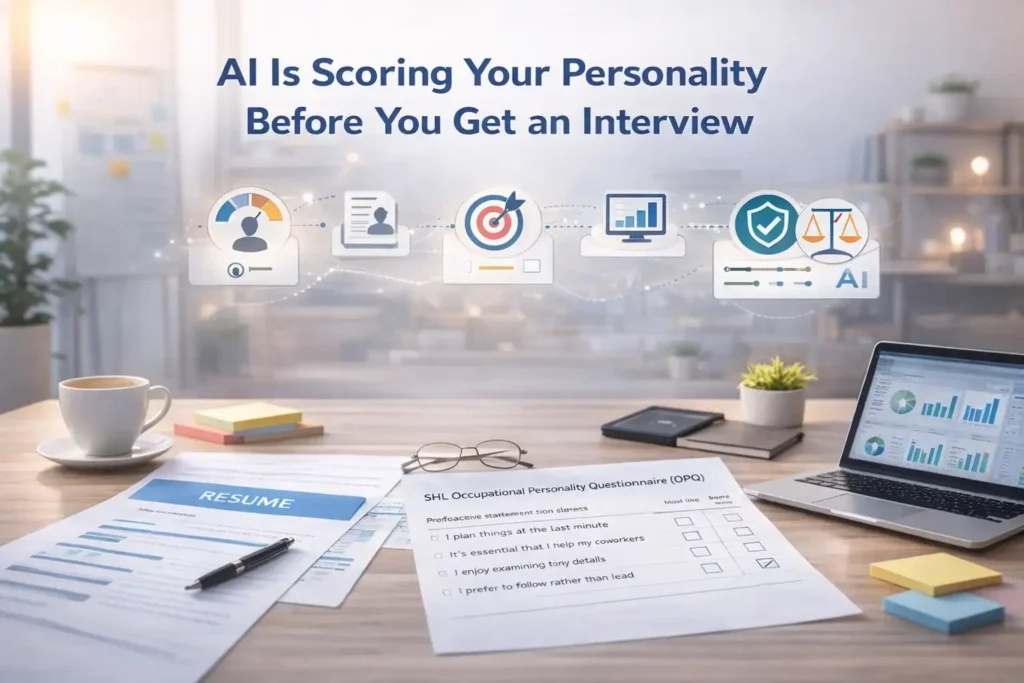

AI Is Scoring Your Personality Before You Get an Interview
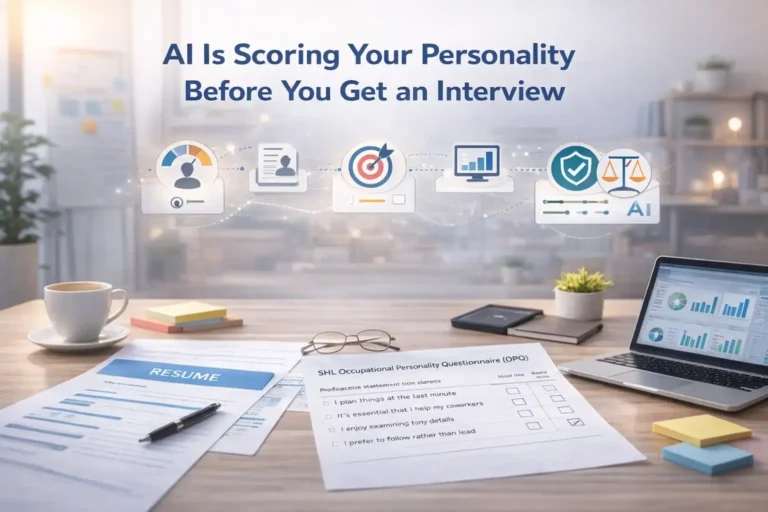
You spent two hours tailoring your resume. You wrote a cover letter that actually sounded like a human being. You hit submit, and within minutes, an algorithm started building a psychological profile of you based on how you answered a 25-minute questionnaire. No recruiter has seen your application yet. No hiring manager read your name. But a machine already decided whether your personality fits the role.
That’s not a Black Mirror episode. That’s what happens every day inside companies like Deloitte, Unilever, HSBC, and thousands of others that use AI-driven psychometric assessments during hiring. And the most widely deployed tool doing this? A system called the SHL Occupational Personality Questionnaire, or OPQ.
35 Million Assessments a Year and Counting
Founded in 197, SHL has quietly become one of the most influential players in HR technology. Their platform processes over 35 million assessments annually across 150 countries and 37 languages. But the company’s real shift happened when they started layering machine learning on top of decades of psychometric data.
The OPQ itself measures 32 distinct personality characteristics grouped into how you relate to people, your thinking style, your emotional patterns, and your energy levels. It’s a forced-choice questionnaire where you’re given sets of statements and asked to pick which one sounds most like you and which sounds least like you. There are no objectively right answers, but the AI scoring system knows exactly which trait combinations predict success in specific roles.
What makes this interesting from a tech perspective isn’t the questionnaire itself. It’s what happens after you submit your answers.
The Algorithm Decides Before the Recruiter Does
SHL’s backend runs your responses through predictive models trained on millions of completed assessments linked to actual job performance data. The system doesn’t just score you on individual traits. It compares your profile against a success model built for that specific role at that specific company.
So when a consulting firm looks for analytical thinkers who handle pressure well, and you scored high on detail orientation but low on resilience, the algorithm flags that mismatch before any human being reviews your file. Your application might get deprioritized without a single person making that call.
SHL has also introduced adaptive testing, where the difficulty adjusts in real time based on your performance, and AI-powered video interviews that analyze speech patterns and response quality. The entire pipeline from application to shortlist can now run with minimal human intervention.
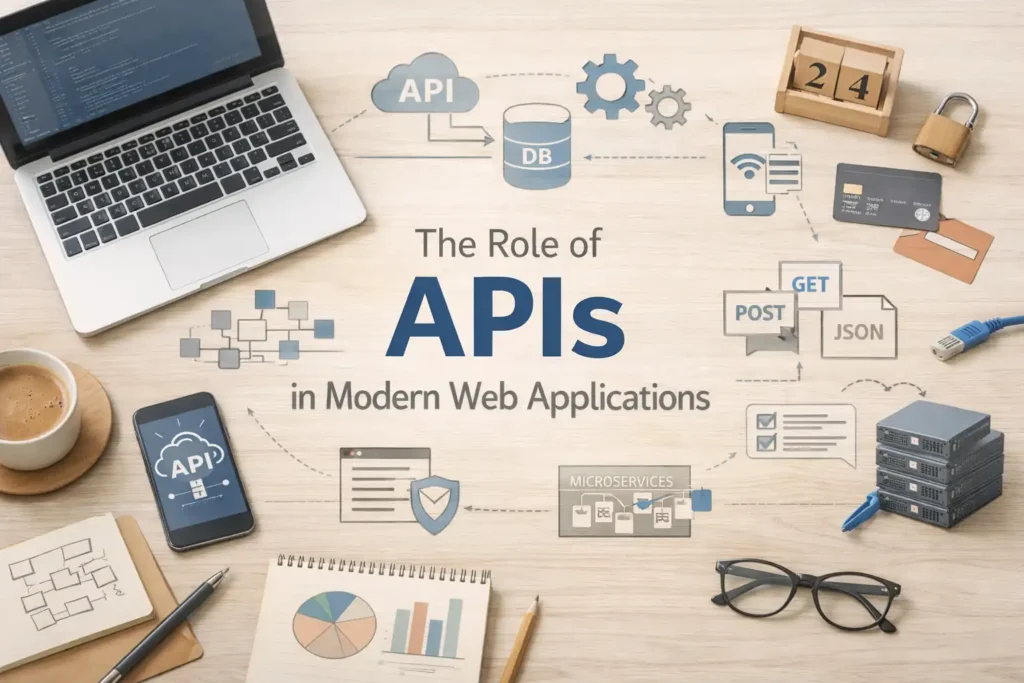
👉 You might also like: The Role of APIs in Modern Web Applications in 2026
The Fairness Question Nobody Wants to Answer
This raises an obvious concern: is it actually fair? According to SHL, their algorithms are constantly checked for bias across demographics. They publish validation studies and say the OPQ reduces subjective decision-making in hiring. That seems like progress on paperpersonality data taking the place of intuition.
However, detractors point out that you run the danger of embedding the same biases that were present in previous employment decisions when you train models on historical data. If a company historically hired a certain type of person for leadership roles, the AI learns to prefer that type. The tool doesn’t create bias from nothing, but it can amplify patterns that were already there.
It’s a tension that the entire HR tech industry is wrestling with right now, and there’s no clean resolution yet.
What This Means If You’re Job Hunting in Tech
If you’re applying to mid-size or enterprise companies in 2026, there’s a decent chance you’ll encounter an SHL assessment somewhere in the process. Understanding how the system works gives you a genuine edge, not because you can game a personality test, but because knowing the format eliminates the surprise factor.
Taking an SHL OPQ practice test before the real thing helps you understand the forced-choice format, which trips up a lot of first-time test takers. When you’ve never seen four personality statements stacked together and been told to rank them, the time pressure alone can throw off your responses. Familiarity with the structure lets you focus on answering honestly rather than figuring out the mechanics on the fly.
Beyond the OPQ specifically, the broader trend is worth paying attention to. More companies are stacking multiple AI-scored assessments, cognitive ability, situational judgment, personality, and video interviews into a single hiring pipeline. If you’re not prepared for that kind of multi-stage evaluation, browsing online practice tests for the specific assessments you’ll face is the smartest use of your prep time.
The Bigger Picture
AI-driven hiring isn’t slowing down. SHL alone serves over 10,000 organizations, and competitors like HireVue, Pymetrics, and Criteria Corp are pushing in the same direction. The question isn’t whether algorithms will screen you before a human does; they already do. The question is whether job seekers and regulators will keep up with how fast this technology is moving.
For now, the best thing you can do is understand the tools being used on you. Because in a hiring process increasingly run by machines, knowing how the machine thinks is the closest thing to a real advantage.
✨ Save time, learn faster, follow Tech Statar.