
Introduction
Choosing the right website development approach is a critical decision that directly impacts performance, scalability, SEO, and long-term growth. Businesses today usually compare custom web development and WordPress because both offer strong but very different advantages. One focuses on full flexibility and tailored functionality, while the other emphasizes speed, affordability, and ease of use. Understanding how each option works helps you avoid costly mistakes and choose a platform that aligns with your business goals, technical needs, and future expansion plans rather than just short-term convenience.
This guide is ideal for business owners, startups, marketers, and decision-makers who are planning to build or redesign a website. Whether you need a simple business site, a scalable SaaS platform, or a high-performance ecommerce store, understanding the differences between WordPress and custom development will help you make a smarter, future-proof decision.
What Is Custom Web Development?
Custom web development refers to the process of designing and building a website entirely from the ground up based on specific business requirements. Unlike template-based platforms, it gives complete control over design, functionality, performance, and integrations. This approach is commonly used by enterprises, SaaS companies, and businesses that need advanced features, high scalability, and unique user experiences that cannot be achieved through standard CMS platforms like WordPress or other website builders.
Definition of Custom Web Development
Custom web development is a tailored approach where developers create a website using coding languages like HTML, CSS, JavaScript, and backend technologies. Every feature, layout, and function is built according to project needs instead of relying on pre-made templates. This results in a unique, highly optimized website that offers better flexibility, control, and long-term scalability for complex digital products.
How Custom Websites Are Built (Tech Stack, Frameworks, Coding)
Custom websites are developed using modern frameworks and technologies such as React, Angular, Node.js, Laravel, and other scalable stacks. Developers plan architecture, design UI/UX, and build frontend and backend systems from scratch. This structured development process ensures better performance, cleaner code, and advanced integrations that align precisely with business workflows and technical requirements.
Types of Custom Web Development (Frontend, Backend, Full-Stack)
Custom development includes frontend development for user interfaces, backend development for server logic and databases, and full-stack development that combines both. Each layer plays a key role in website performance and functionality. Businesses with complex features like dashboards, portals, or SaaS tools often require full-stack development to ensure seamless operations and scalable architecture.
Common Technologies Used in Custom Development (React, Laravel, Node, etc.)
Developers use a wide range of technologies depending on project complexity and performance needs. Popular frontend tools include React and Vue, while backend solutions often involve Node.js, PHP, or Python frameworks like Django and Laravel. These technologies allow businesses to create secure, fast, and highly customizable websites that outperform generic CMS-based solutions in scalability and functionality.
What Is WordPress?
WordPress is one of the most popular content management systems used to build websites quickly without extensive coding knowledge. It offers thousands of themes, plugins, and customization options that make it accessible for beginners and businesses alike. From blogs and portfolios to e-commerce stores and corporate websites, WordPress provides a flexible and cost-effective solution that balances usability, scalability, and SEO capabilities for a wide range of digital projects.
Introduction to WordPress as a CMS
WordPress is an open-source CMS that allows users to create, manage, and publish website content through an intuitive dashboard. It eliminates the need for deep coding knowledge by offering drag-and-drop builders, plugins, and customizable themes. This makes it a practical choice for businesses looking for a manageable and efficient website solution with minimal technical barriers.
How WordPress Websites Work (Themes, Plugins, CMS Structure)
WordPress operates through a core CMS structure supported by themes for design and plugins for added functionality. Users can customize layouts, SEO settings, and features without building everything from scratch. This modular ecosystem enables fast website deployment, though excessive plugins can sometimes impact performance, security, and long-term site stability if not properly managed.
Types of WordPress Websites (Blog, Business, E-commerce, Portfolio)
WordPress supports multiple website types, including blogs, corporate websites, ecommerce stores, portfolios, and membership platforms. Its flexibility makes it suitable for small to medium-sized businesses that need quick deployment and content-focused websites. With plugins like WooCommerce, WordPress can also handle online stores, though scalability depends heavily on hosting and optimization strategies.
WordPress.org vs WordPress.com – Key Differences
WordPress.org is a self-hosted platform offering full control over customization, themes, and plugins, making it ideal for businesses seeking flexibility and scalability. WordPress.com is a hosted solution with limited customization but easier setup and maintenance. Most professional businesses prefer WordPress.org because it provides better SEO control, design freedom, and long-term growth potential compared to the hosted alternative.
Custom Web Development vs WordPress: Key Differences
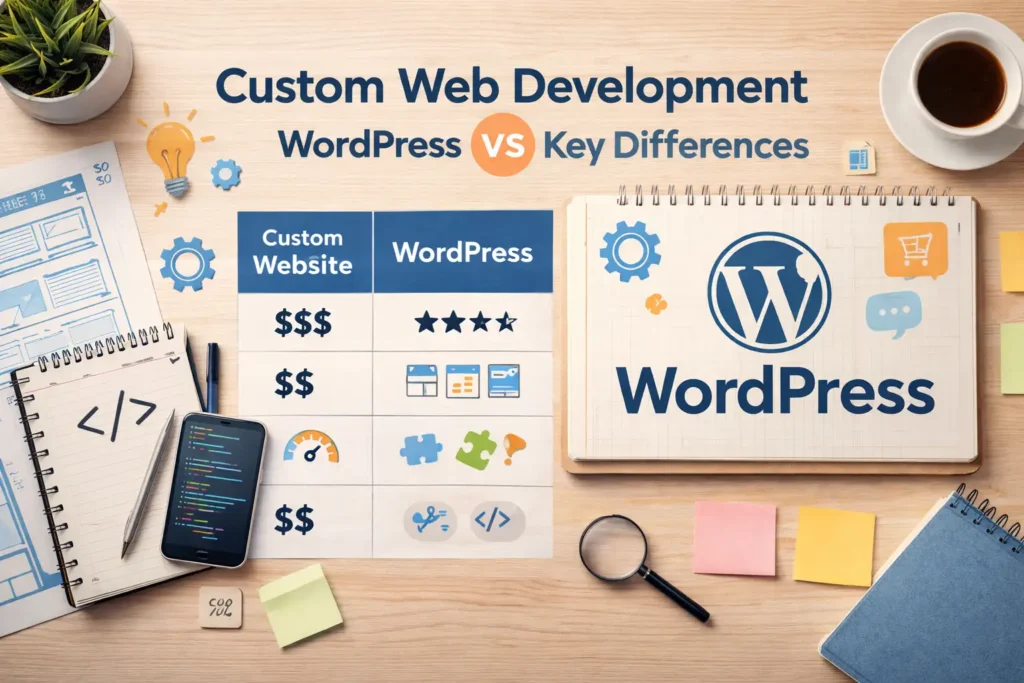
When comparing custom web development and WordPress, the core differences revolve around flexibility, scalability, cost, performance, and ease of management. Custom websites are built specifically for unique business requirements, while WordPress offers a pre-structured system that speeds up development. Businesses that prioritize full control and advanced functionality often lean toward custom solutions, whereas those needing quick deployment and lower initial costs usually prefer WordPress. Understanding these distinctions helps stakeholders evaluate which platform aligns better with long-term growth, technical needs, and digital marketing strategies.
Quick Comparison Table (Features, Cost, Flexibility, SEO, Performance)
A comparison between WordPress and custom development shows clear trade-offs. WordPress is cost-effective, faster to launch, and user-friendly, while custom websites provide higher flexibility, better performance, and unlimited scalability. In terms of SEO and optimization, both can perform well, but custom development allows deeper technical control that enhances performance, security, and long-term search visibility when implemented correctly.
Core Philosophy: Open Source CMS vs Fully Custom Code
WordPress is built on an open-source CMS model designed for accessibility and quick deployment, using themes and plugins to extend functionality. Custom web development follows a code-first philosophy where every feature is intentionally designed and implemented. This difference directly affects customization, security, and performance, making custom development more suitable for complex digital products and scalable platforms.
Scalability and Future Growth Comparison
Custom websites are designed with scalability in mind, allowing businesses to expand features, integrations, and infrastructure without structural limitations. WordPress can scale with proper optimization and hosting, but large-scale platforms often face plugin conflicts and performance challenges. For startups with growth ambitions or enterprise-level operations, scalability planning plays a major role in choosing the right development approach.
👉 You might also like: How AI Is Shaping SEO in 2026 – Detailed Guide
Design Flexibility and Customization Comparison
Design flexibility is one of the biggest factors when choosing between custom web development and WordPress. Custom development allows businesses to create fully unique interfaces aligned with brand identity and user experience goals. WordPress offers strong design capabilities through themes and page builders, but customization may become limited when highly specific design requirements or interactive features are needed. The level of creative freedom required often determines which platform is the better fit.
Design Freedom in Custom Web Development
Custom web development offers complete creative freedom, enabling designers and developers to build unique layouts, animations, and user experiences without template restrictions. Every element can be tailored to match brand guidelines and business goals. This approach is ideal for companies that want a distinctive digital presence and advanced UI/UX functionality that goes beyond standard theme-based designs.
Theme-Based Limitations in WordPress
WordPress themes provide convenience but can introduce limitations in layout flexibility and performance customization. While premium themes offer advanced features, deep customization often requires additional coding or plugin support. This dependency can create design constraints and technical complexity when businesses aim to implement highly customized visual experiences or interactive user interfaces.
UI/UX Customization Capabilities
Custom development allows complete control over user journeys, navigation structure, and interactive elements, resulting in a highly optimized user experience. WordPress supports UI/UX customization through builders and plugins, but achieving advanced interactions may require third-party tools. Businesses focused on conversion optimization and user engagement often benefit more from fully customized interface design strategies.
Brand-Specific Design Requirements: Which Platform Wins?
For businesses with strict branding and unique digital experiences, custom web development clearly provides the advantage. It enables pixel-perfect design and tailored interactions that align with brand identity. WordPress works well for standard business websites, but brands seeking differentiation and premium design experiences typically prefer custom-built solutions for long-term consistency and creative flexibility.
Performance and Speed: Which One Is Faster?
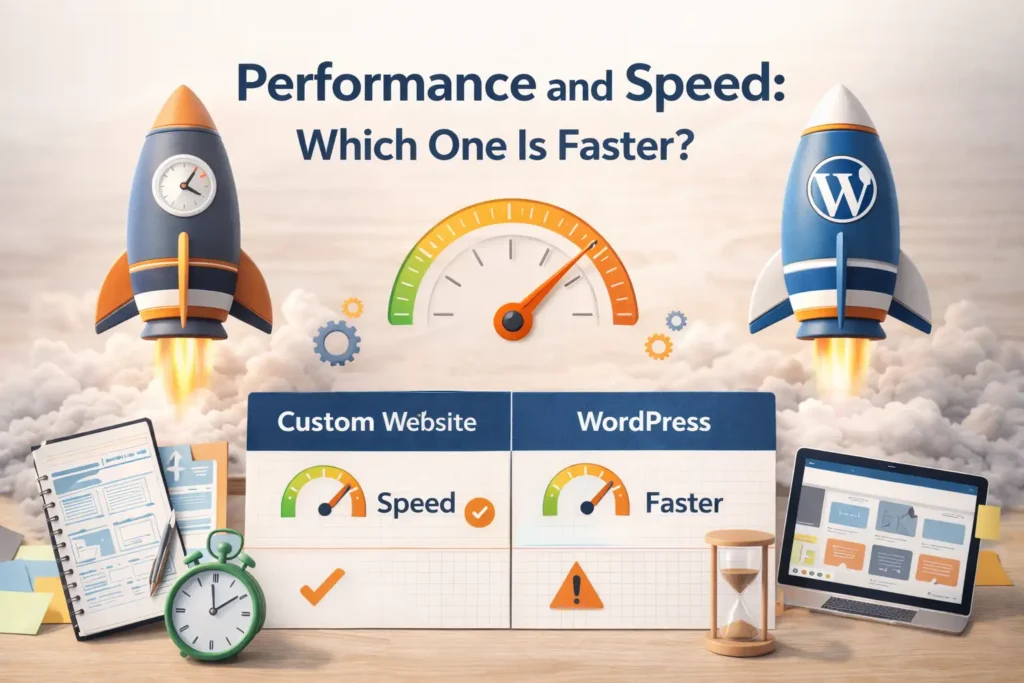
Website performance directly impacts user experience, bounce rates, and search engine rankings. Custom websites are generally faster because they are built with optimized code and only necessary features. WordPress websites can also achieve strong performance, but speed often depends on hosting quality, theme optimization, and plugin management. A well-optimized platform, regardless of type, ensures better Core Web Vitals, faster load times, and improved engagement metrics.
Performance Optimization in Custom Websites
Custom websites are optimized at the code level, ensuring lightweight architecture and faster loading speeds. Developers can remove unnecessary scripts, optimize databases, and implement advanced caching strategies. This results in superior performance, especially for high-traffic websites, web applications, and platforms that require complex functionality and seamless user interactions across multiple devices.
WordPress Speed Challenges (Plugins, Themes, Hosting)
WordPress performance can be affected by heavy themes, excessive plugins, and poor hosting environments. Each plugin adds additional scripts and database queries that may slow down the website. Without proper optimization, this can impact page speed and user experience. However, with managed hosting, caching tools, and optimized themes, WordPress websites can still achieve competitive loading speeds.
Core Web Vitals and Page Load Speed Comparison
Core Web Vitals metrics such as Largest Contentful Paint, First Input Delay, and Cumulative Layout Shift are easier to optimize in custom-built websites due to clean coding structures. WordPress can also perform well, but it requires careful optimization practices. Faster page load speed improves user satisfaction, reduces bounce rates, and strengthens overall SEO performance significantly.
Impact of Performance on SEO and User Experience
Website speed is a critical ranking factor that influences both SEO and user engagement. Faster websites provide smoother navigation, better mobile experience, and higher conversion rates. Custom websites often excel in performance consistency, while WordPress requires ongoing optimization. A high-performing website not only ranks better in search engines but also builds trust and credibility among users.
SEO Capabilities
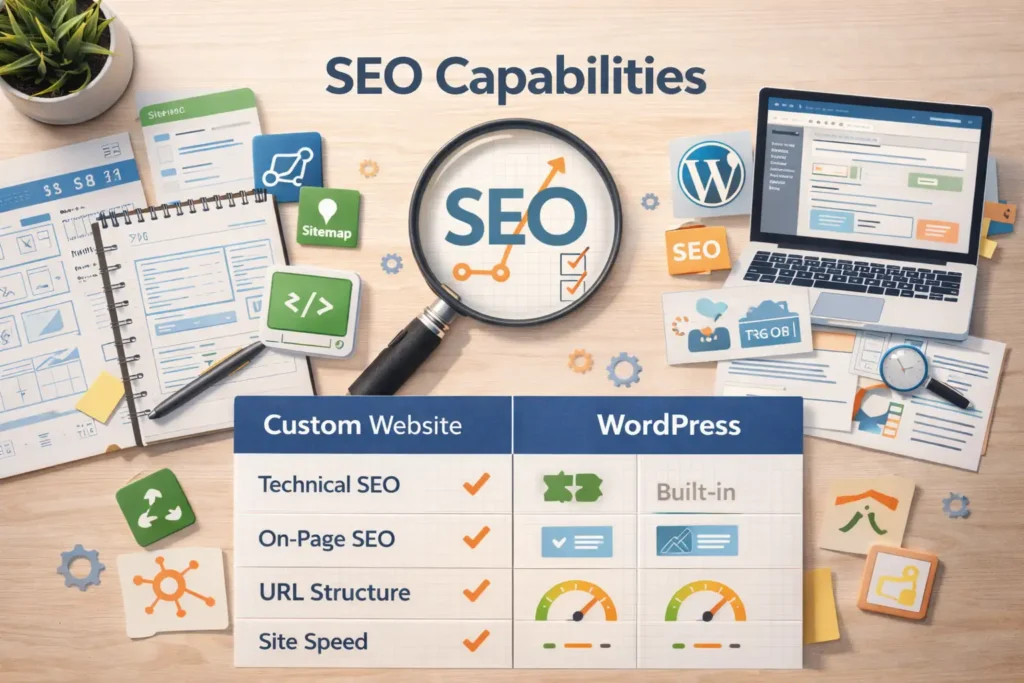
Both custom web development and WordPress can deliver strong SEO performance when implemented strategically. WordPress offers built-in SEO plugins and easy content management, making it ideal for content-driven websites. Custom websites provide deeper technical SEO control, including optimized code structure, advanced schema implementation, and faster indexing. The best choice depends on whether your focus is on content scalability, technical SEO precision, or long-term search growth.
Built-in SEO Features in WordPress
WordPress provides powerful SEO plugins that simplify on-page optimization, meta tags, XML sitemaps, and schema markup. Tools like SEO plugins help non-technical users manage content optimization effectively. This makes WordPress a strong option for blogs, content marketing websites, and businesses that rely heavily on publishing optimized articles and landing pages regularly.
Advanced Technical SEO Control in Custom Development
Custom development allows full control over technical SEO elements such as site architecture, clean URL structures, and lightweight code. Developers can implement advanced optimization techniques without plugin limitations. This level of control is especially beneficial for large-scale websites, SaaS platforms, and businesses that require precise technical SEO configurations for better indexing and ranking.
URL Structure, Schema, and Code Optimization
Custom websites offer complete flexibility in structuring URLs, implementing structured data, and optimizing code for search engines. WordPress also supports SEO-friendly URLs and schema through plugins, but customization may be limited by theme and plugin compatibility. Proper code optimization improves crawlability, indexing efficiency, and overall search engine visibility.
Which Platform Is Better for Long-Term SEO Growth?
For long-term SEO growth, both platforms can perform well depending on execution. WordPress is excellent for consistent content publishing and blog-driven SEO strategies. Custom development is better suited for technical SEO, high-performance platforms, and competitive industries. Businesses aiming for scalable organic growth often evaluate their content strategy, technical requirements, and competition before making a final decision.
👉 You might also like: Why US Communities Are Pushing Back on AI Data Centers
Cost Comparison
Cost is a major deciding factor when choosing between custom web development and WordPress. WordPress generally has lower upfront costs due to ready-made themes and plugins, making it ideal for small and medium businesses. Custom development requires a higher initial investment because everything is built from scratch. However, long-term value, scalability, and reduced dependency on third-party tools can make custom websites more cost-efficient over time for businesses with complex digital requirements and growth-focused strategies.
Initial Development Cost Breakdown
The initial cost of a WordPress website is usually lower because businesses can use pre-built themes and plugins to speed up development. Custom web development involves planning, design, coding, and testing from the ground up, which increases upfront expenses. However, this investment results in a tailored solution that aligns perfectly with business needs and long-term digital goals.
Maintenance and Ongoing Costs
WordPress requires regular updates for plugins, themes, and core files to maintain security and performance. These ongoing maintenance tasks can accumulate costs over time. Custom websites also require maintenance, but they are typically more stable because they are built with controlled features. Long-term maintenance depends on project complexity and the level of ongoing technical support needed.
Plugin, Theme, and Licensing Costs in WordPress
Although WordPress itself is free, premium themes, plugins, and third-party integrations often come with recurring licensing fees. Businesses relying on multiple plugins may face increasing costs and compatibility issues over time. These hidden expenses can make WordPress less budget-friendly in the long run, especially for feature-heavy websites that require advanced functionality and continuous upgrades.
ROI Comparison for Small vs Large Businesses
For small businesses, WordPress offers a faster return on investment due to lower development costs and quick deployment. Large businesses and enterprises often benefit more from custom development because it supports scalability, advanced integrations, and long-term performance optimization. The overall ROI depends on business size, growth plans, and the complexity of website features required.
Security: Which Platform Is More Secure?
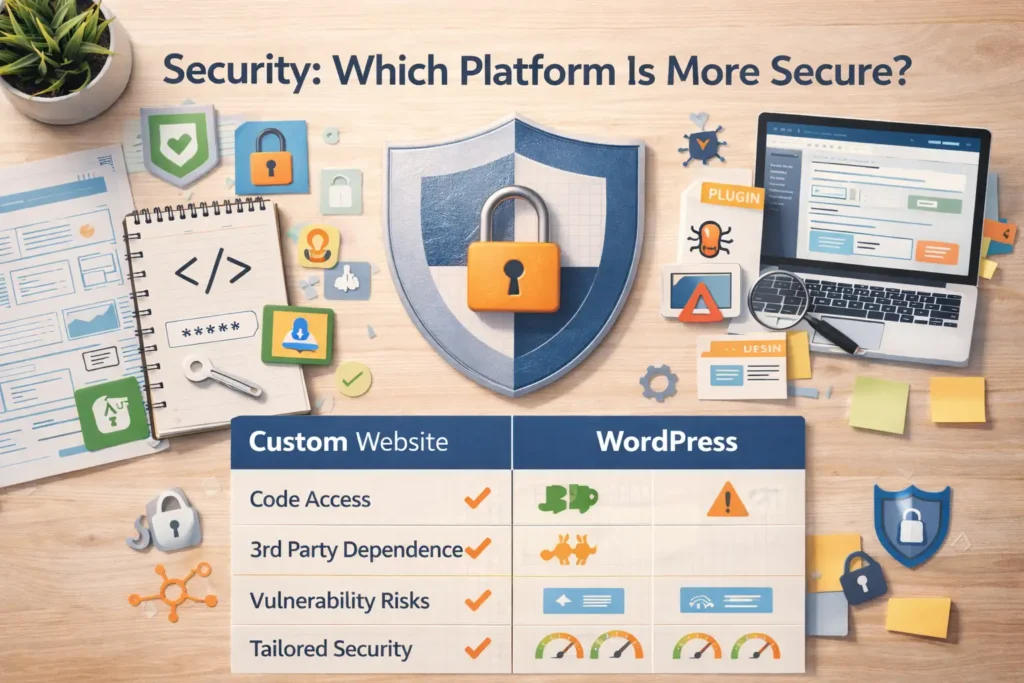
Website security is essential for protecting user data, maintaining trust, and ensuring stable operations. Custom websites are generally considered more secure because they have fewer vulnerabilities and no dependency on third-party plugins. WordPress websites can also be secure, but they are frequent targets due to their popularity. Proper security measures, regular updates, and secure hosting environments play a critical role in protecting both types of websites from cyber threats and potential data breaches.
Security Strength of Custom-Coded Websites
Custom-coded websites offer stronger security because developers control the entire codebase and can implement advanced protection measures. With fewer third-party dependencies, there are fewer entry points for vulnerabilities. Security protocols such as encryption, secure authentication, and firewall configurations can be tailored specifically to the business requirements and risk level.
WordPress Security Risks and Vulnerabilities
WordPress websites are commonly targeted by hackers due to widespread usage and plugin vulnerabilities. Outdated plugins, weak passwords, and poorly coded themes can expose security risks. However, with proper security plugins, regular updates, and secure hosting, WordPress websites can maintain a strong security posture and protect sensitive data effectively.
Plugin and Theme Security Issues
Third-party plugins and themes can introduce vulnerabilities if they are outdated or poorly maintained. Each additional plugin increases the attack surface of a WordPress website. Businesses must carefully choose trusted developers and regularly update components to minimize risks. In contrast, custom websites reduce such dependency risks by using purpose-built functionalities.
Best Practices to Secure Both Platforms
Both WordPress and custom websites require proactive security strategies, including SSL encryption, regular backups, strong authentication, and secure hosting. Routine monitoring and timely updates help prevent vulnerabilities. Implementing security best practices ensures long-term protection, stable performance, and user trust regardless of the development platform chosen.
Scalability and Business Growth Considerations
Scalability determines how well a website can handle increased traffic, new features, and expanding business operations. Custom web development is built with scalability in mind, allowing seamless integration of complex functionalities and high-performance infrastructure. WordPress can scale with optimization and managed hosting, but large-scale platforms may encounter performance limitations. Businesses planning long-term growth should prioritize scalability to avoid costly redesigns and technical constraints in the future.
Scalability of Custom Web Applications
Custom web applications are designed with a flexible architecture that supports future expansion and advanced integrations. Developers can optimize databases, servers, and backend systems to handle high traffic and complex workflows. This makes custom development ideal for SaaS platforms, enterprise websites, and digital products that require continuous feature upgrades and performance scalability.
WordPress Scalability Limitations
WordPress can handle moderate traffic efficiently, but large-scale growth may require extensive optimization and premium hosting solutions. Heavy plugin usage and database load can impact performance as the website expands. While scalable with the right infrastructure, WordPress may face technical limitations when handling highly dynamic features and enterprise-level operations.
Handling High Traffic and Complex Features
Custom websites are better equipped to manage high traffic volumes and complex functionalities because they are built with optimized architecture and performance-focused coding. WordPress can support high traffic with caching and CDN integration, but complex features may require additional plugins, which can affect speed, stability, and overall performance consistency.
Enterprise-Level Growth: Which Is More Future-Proof?
For enterprise-level growth and digital transformation, custom web development is generally more future-proof due to its flexibility and scalability. It supports evolving business needs, advanced integrations, and high-performance infrastructure. WordPress remains a practical choice for content-focused and mid-sized websites, but enterprises often prefer custom solutions for long-term technological adaptability.
👉 You might also like: Logo Maker AI 2026: Revolutionizing Modern Branding
Ease of Use and Website Management
Ease of use is a key factor for businesses that manage content frequently and prefer minimal technical involvement. WordPress offers a user-friendly dashboard that simplifies content updates, media management, and basic customization. Custom websites may require developer assistance for updates and modifications. The choice depends on whether the business prioritizes convenience and self-management or advanced customization and technical flexibility.
User-Friendliness of WordPress Dashboard
WordPress is widely known for its intuitive dashboard that allows users to update pages, publish blogs, and manage media without technical expertise. This accessibility makes it ideal for marketers, bloggers, and business owners who want full control over content without relying heavily on developers for routine website management tasks.
Managing a Custom Website (Technical Dependency)
Custom websites often require technical knowledge or developer support for updates, feature changes, and maintenance. While this provides more control and customization, it also increases dependency on development teams. Businesses with in-house technical resources usually find this manageable, especially when advanced functionalities and tailored systems are involved.
Content Updates and Workflow Comparison
WordPress streamlines content workflows with built-in editors, scheduling tools, and plugin integrations for SEO and marketing. Custom websites can also support content management systems, but they may require custom-built dashboards. The efficiency of content updates largely depends on how the website is structured and the level of automation implemented.
Learning Curve for Non-Technical Users
WordPress has a minimal learning curve, making it accessible for beginners and non-technical users. Custom websites may require training or documentation to manage effectively. Businesses that prefer quick onboarding and easy content control often choose WordPress, while those needing specialized systems prioritize custom development despite the steeper learning curve.
Conclusion
The final choice between custom web development and WordPress depends on business goals, budget, scalability needs, and technical complexity. WordPress is ideal for quick launches, content-driven websites, and budget-conscious businesses. Custom development is better for high-performance platforms, unique functionalities, and long-term scalability. Instead of asking which platform is universally better, businesses should evaluate their specific requirements, growth plans, and digital strategy to make a well-informed and future-ready decision.
FAQs: Custom Web Development vs WordPress
Is WordPress better than custom coding?
WordPress is better for quick deployment, ease of use, and content-focused websites, while custom coding is better for advanced functionality and scalability. The better option depends on project complexity, budget, and long-term growth goals rather than a one-size-fits-all approach.
Which is cheaper, WordPress or a custom website?
WordPress is generally cheaper in terms of initial development costs due to pre-built themes and plugins. Custom websites require a higher upfront investment but may offer better long-term value by reducing dependency on third-party tools and providing scalable infrastructure tailored to business needs.
Can WordPress handle large-scale websites?
Yes, WordPress can handle large-scale websites with proper hosting, caching, and optimization strategies. However, performance and scalability depend heavily on infrastructure and plugin management. Highly complex platforms with dynamic features often perform better with custom development solutions.
Which platform is better for SEO?
Both WordPress and custom websites can achieve strong SEO performance when optimized correctly. WordPress is excellent for content-driven SEO, while custom development offers deeper technical SEO control. The best platform depends on whether the focus is content marketing, technical optimization, or long-term organic growth.
Should startups choose WordPress or custom development?
Startups often choose WordPress because it allows faster launch, lower costs, and easy content management. However, startups planning rapid scaling or building complex digital products may benefit more from custom development to avoid future redesign costs and technical limitations as the business grows.
✨ Don’t stop here, follow Tech Statar for daily upgrades.